Key facts in brief
- The register lists 55 plants from our blog articles with the German name, the accepted scientific name with author, the family, common synonyms and, where a source names them, look-alikes.
- Every name was checked on 24 October 2026 via the GBIF Backbone API. Only names with match type EXACT and status ACCEPTED are included.1
- A second table lists 11 poisonous plants and look-alikes, with the classification of the Giftzentrale Bonn (Bonn poison information centre).
- The register is not a smoking recommendation. A plant appearing here says nothing about its smoke.
Table of contents
- Loading...
Looking up plant names in Latin: that is what this page is for. For every plant in our articles you will find the scientific name, the family and the synonyms under which it appears in older sources. There are no plant portraits here; those are in the linked articles.
Latin plant names: why the common name is not enough
A common name is convenient, but not always unambiguous. According to the Giftzentrale Bonn, the savin juniper (German: Sadebaum) is also called Sevenbaum, Stinkwacholder, Jungfernrosmarin and Mägdebaum: one species, five names.8 Conversely, a name can mislead: according to the Giftzentrale, cherry laurel belongs to the rose family, not the laurel family.81 The scientific name is meant to identify a species clearly.
How do you read a scientific name?
In short: how is a scientific plant name built?
Scientific species names always consist of two words: the capitalised genus name and the lower-case species epithet, for example Laurus nobilis.3 An abbreviated author name often follows; for Laurus nobilis it is “L.” for Linné.4, 1
Carl von Linné first used consistently two-part names for plant species in 1753, in Species Plantarum.4 A multiplication sign × marks hybrids.6 GBIF lists peppermint as Mentha × piperita L.1
What is a synonym, and why do names change?
In short: what is a synonym in plant names?
We speak of synonyms when different scientific names refer to the same taxon. If several published names exist for the same taxon, the priority rule says that, as a rule, the one published first is the correct one.5
It is not quite that simple. For rosemary, Linné published the name Rosmarinus officinalis in 1753. The new combination Salvia rosmarinus dates from 1835 and was made by Fridolin Carl Leopold Spenner.7 GBIF now lists Salvia rosmarinus Spenn. as the accepted name and Rosmarinus officinalis L. as a synonym.1 For hollyhock it is the other way round: Alcea rosea L. is accepted, Althaea rosea (L.) Cav. is a synonym.1 That is why you keep finding old names in books and sources even when they are no longer accepted.
Which plants are in the register?
The list comes from the titles and texts of our blog articles; for round-up articles it contains the species named in the article text. Only names that GBIF has confirmed for the species are given as synonyms. A dash under “Look-alike risk” means: the sources we opened say nothing on this. It does not mean there is no look-alike. The German names in brackets are the ones used in our German articles.
| English name (German) | Scientific name with author1 | Family | Common synonyms | Look-alike risk (documented) | Our article |
|---|---|---|---|---|---|
| Anise (Anis) | Pimpinella anisum L. | Apiaceae | Anisum vulgare Hill | Poison hemlock (Conium maculatum): AGES lists anise plants among the look-alikes.9 | Article |
| Basil (Basilikum) | Ocimum basilicum L. | Lamiaceae | – | – | Article |
| Aztec tobacco (Bauerntabak) | Nicotiana rustica L. | Solanaceae | – | – | Article |
| Tasmanian blue gum (Blauer Eukalyptus) | Eucalyptus globulus Labill. | Myrtaceae | – | – | Article |
| Blackberry (species aggregate) (Brombeere (Artengruppe)) | Rubus fruticosus L. | Rosaceae | – | – | Article |
| Ceylon cinnamon (Ceylon-Zimt) | Cinnamomum verum J.Presl | Lauraceae | Cinnamomum zeylanicum Nees | – | Article |
| Damask rose (Damaszener-Rose) | Rosa × damascena Mill. | Rosaceae | – | – | Article |
| Bearberry (Echte Bärentraube) | Arctostaphylos uva-ursi (L.) Spreng. | Ericaceae | Arbutus uva-ursi L. | – | Article |
| German chamomile (Echte Kamille) | Matricaria chamomilla L. | Asteraceae | Matricaria recutita L. | – | Article |
| Vanilla (Echte Vanille) | Vanilla planifolia Andrews | Orchidaceae | Vanilla fragrans Ames | – | Article |
| Common walnut (Echte Walnuss) | Juglans regia L. | Juglandaceae | – | – | Article |
| Common hop (Echter Hopfen) | Humulus lupulus L. | Cannabaceae | – | – | Article |
| Common jasmine (Echter Jasmin) | Jasminum officinale L. | Oleaceae | – | – | Article |
| True lavender (Echter Lavendel) | Lavandula angustifolia Mill. | Lamiaceae | – | – | Article |
| Bay laurel (Echter Lorbeer) | Laurus nobilis L. | Lauraceae | – | – | Article |
| Common sage (Echter Salbei) | Salvia officinalis L. | Lamiaceae | – | – | Article |
| Common thyme (Echter Thymian) | Thymus vulgaris L. | Lamiaceae | – | – | Article |
| Common vervain (Echtes Eisenkraut) | Verbena officinalis L. | Verbenaceae | – | – | Article |
| Fennel (Fenchel) | Foeniculum vulgare Mill. | Apiaceae | – | – | Article |
| Common juniper (Gemeiner Wacholder) | Juniperus communis L. | Cupressaceae | – | – | Article |
| Yarrow (Gewöhnliche Schafgarbe) | Achillea millefolium L. | Asteraceae | – | Poison hemlock (Conium maculatum): AGES lists yarrow among the look-alikes.9 | Article |
| Mugwort (Gewöhnlicher Beifuß) | Artemisia vulgaris L. | Asteraceae | – | – | Article |
| Clove (Gewürznelke) | Syzygium aromaticum (L.) Merr. & L.M.Perry | Myrtaceae | Eugenia caryophyllata Thunb.; Caryophyllus aromaticus L. | – | Article |
| Dense-flowered mullein (Großblütige Königskerze) | Verbascum densiflorum Bertol. | Scrophulariaceae | Verbascum thapsiforme Schrad. | – | Article |
| Stinging nettle (Große Brennnessel) | Urtica dioica L. | Urticaceae | – | – | Article |
| Bilberry (Heidelbeere) | Vaccinium myrtillus L. | Ericaceae | – | – | Article |
| Raspberry (Himbeere) | Rubus idaeus L. | Rosaceae | – | – | Article |
| Coltsfoot (Huflattich) | Tussilago farfara L. | Asteraceae | – | – | Article |
| Sacred lotus (Indian lotus) (Indische Lotosblume) | Nelumbo nucifera Gaertn. | Nelumbonaceae | Nelumbium speciosum Willd. | – | Article |
| Common mullein (Kleinblütige Königskerze) | Verbascum thapsus L. | Scrophulariaceae | – | – | Article |
| Coriander (Koriander) | Coriandrum sativum L. | Apiaceae | – | – | Article |
| Turmeric (Kurkuma) | Curcuma longa L. | Zingiberaceae | Curcuma domestica Valeton | – | Article |
| Mango (Mango) | Mangifera indica L. | Anacardiaceae | – | – | Article |
| Yerba mate (Mate) | Ilex paraguariensis A.St.-Hil. | Aquifoliaceae | – | – | Article |
| Myrrh (Myrrhe) | Commiphora myrrha (T.Nees) Engl. | Burseraceae | Balsamodendrum myrrha T.Nees | – | Article |
| Peppermint (Pfefferminze) | Mentha × piperita L. | Lamiaceae | – | – | Article |
| Pot marigold (Ringelblume) | Calendula officinalis L. | Asteraceae | – | – | Article |
| Rooibos (Rooibos) | Aspalathus linearis (Burm.f.) R.Dahlgren | Fabaceae | – | – | Article |
| Roselle (hibiscus) (Roselle (Hibiskus)) | Hibiscus sabdariffa L. | Malvaceae | – | – | Article |
| Rosemary (Rosmarin) | Salvia rosmarinus Spenn. | Lamiaceae | Rosmarinus officinalis L. | – | Article |
| Black elder (Schwarzer Holunder) | Sambucus nigra L. | Viburnaceae | – | Red elder (Sambucus racemosa) and dwarf elder (Sambucus ebulus): named by the BZfE (German Federal Centre for Nutrition) as poisonous look-alikes; Giftzentrale Bonn: both slightly toxic.10, 8 | Article |
| Large-leaved linden (Sommerlinde) | Tilia platyphyllos Scop. | Malvaceae | – | – | Article |
| Ribwort plantain (Spitzwegerich) | Plantago lanceolata L. | Plantaginaceae | – | – | Article |
| Hollyhock (Stockrose) | Alcea rosea L. | Malvaceae | Althaea rosea (L.) Cav. | – | Article |
| Licorice (Süßholz) | Glycyrrhiza glabra L. | Fabaceae | – | – | Article |
| Tea plant (Teestrauch) | Camellia sinensis (L.) Kuntze | Theaceae | Thea sinensis L. | – | Article |
| Common tobacco (Virginia tobacco) (Virginischer Tabak) | Nicotiana tabacum L. | Solanaceae | – | – | Article |
| Wild cherry (Vogelkirsche) | Prunus avium (L.) L. | Rosaceae | – | – | Article |
| Wild strawberry (Wald-Erdbeere) | Fragaria vesca L. | Rosaceae | – | – | Article |
| Sweet woodruff (Waldmeister) | Galium odoratum (L.) Scop. | Rubiaceae | Asperula odorata L. | – | Article |
| Frankincense (Boswellia sacra) (Weihrauch (Boswellia sacra)) | Boswellia sacra Flück. | Burseraceae | – | – | Article |
| West Indian lemongrass (Westindisches Zitronengras) | Cymbopogon citratus (DC.) Stapf | Poaceae | – | – | Article |
| Small-leaved linden (Winterlinde) | Tilia cordata Mill. | Malvaceae | – | – | Article |
| Lemon balm (Zitronenmelisse) | Melissa officinalis L. | Lamiaceae | – | – | Article |
| Lemon verbena (Zitronenverbene) | Aloysia citrodora Paláu | Verbenaceae | Aloysia triphylla Britton; Lippia citriodora (Lam.) Kunth | – | Article |
The families explained in context: Plant families of smoking herbs: mint, mallow and more.
Poisonous plants and look-alikes
The second table lists plants that appear in our articles as look-alikes or warning examples. The classification comes from the Giftzentrale Bonn, each with a link. It has no page of its own for poison hemlock; there the statement of the Austrian authority AGES applies.9 More on this: Poisonous plants to smoke? These plants do not belong in a smoking blend
| English name (German) | Scientific name with author1 | Family | Classification | Relation to table 1 | Our article |
|---|---|---|---|---|---|
| Monkshood (Blauer Eisenhut) | Aconitum napellus L. | Ranunculaceae | very toxicGIZ | Mentioned as a poisonous plant in the mugwort article; a look-alike is not documented in the sources checked (Giftzentrale, AGES, BfR). | Article |
| Poison hemlock (Gefleckter Schierling) | Conium maculatum L. | Apiaceae | AGES: strongly toxic9 | Anise, yarrow: AGES names both among the look-alikes. AGES: all parts of the plant are strongly toxic. | Article |
| Common yew (Gemeine Eibe) | Taxus baccata L. | Taxaceae | toxic to very toxicGIZ | Example in the article on poisonous plants; not a look-alike of any entry in table 1. | Article |
| Jimsonweed (Gemeiner Stechapfel) | Datura stramonium L. | Solanaceae | very toxicGIZ | Example in the article on poisonous plants; not a look-alike of any entry in table 1. | Article |
| Cherry laurel (Kirschlorbeer) | Prunus laurocerasus L. | Rosaceae | toxicGIZ | Mentioned as a poisonous plant in the bay laurel article; the name is deceptive, as the Giftzentrale lists it as a member of the rose family. A look-alike is not documented in the sources checked. | Article |
| Oleander (Oleander) | Nerium oleander L. | Apocynaceae | toxicGIZ | Example in the article on poisonous plants; not a look-alike of any entry in table 1. | Article |
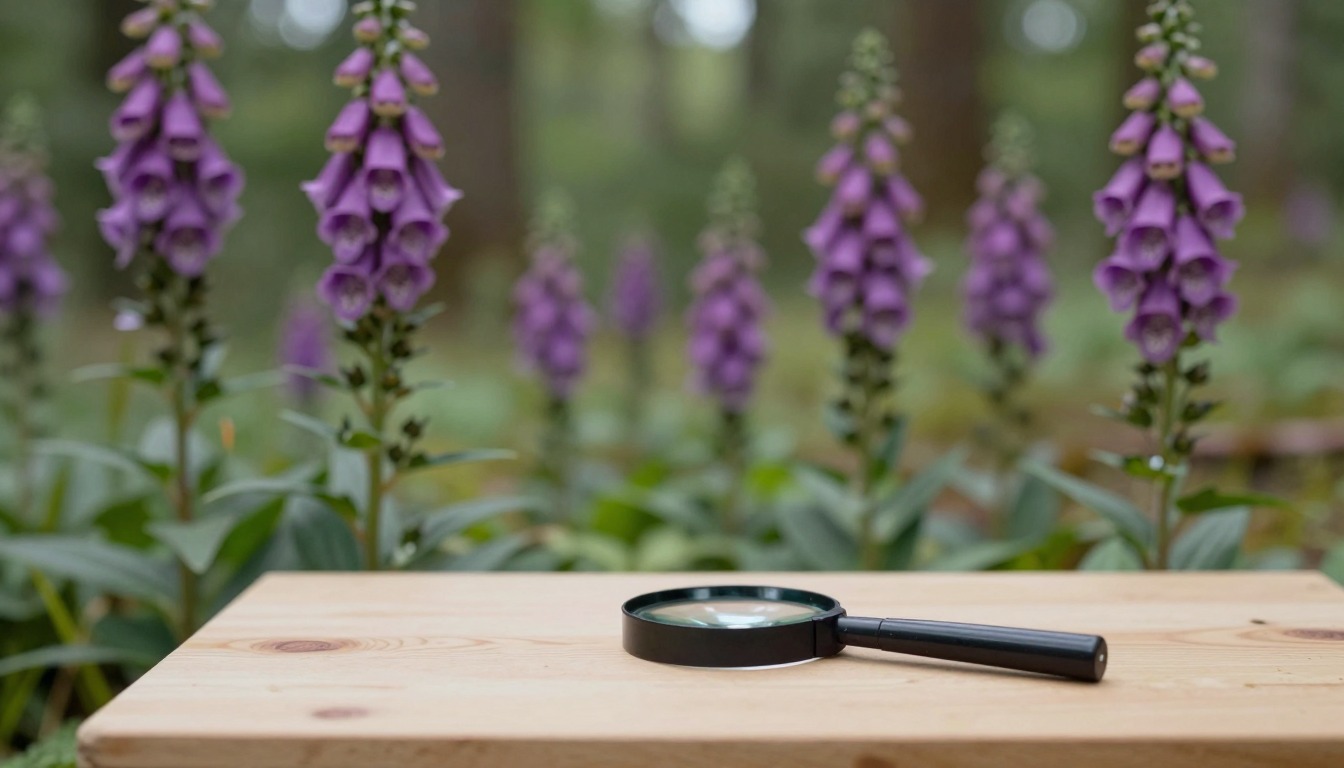
| Foxglove (Roter Fingerhut) | Digitalis purpurea L. | Plantaginaceae | toxic to very toxicGIZ | Example in the article on poisonous plants; not a look-alike of any entry in table 1. | Article |
| Savin juniper (Sadebaum) | Juniperus sabina L. | Cupressaceae | toxicGIZ | Mentioned as a poisonous plant in the juniper article; a look-alike is not documented in the sources checked. | Article |
| Red elder (Trauben-Holunder) | Sambucus racemosa L. | Viburnaceae | slightly toxicGIZ | Black elder: named by the BZfE as a poisonous look-alike; distinguished by cluster-shaped instead of plate-shaped flowers. | Article |
| Water hemlock (Wasserschierling) | Cicuta virosa L. | Apiaceae | very toxicGIZ | Mentioned as a very toxic umbellifer in the coriander article. A look-alike specifically with coriander is not described in the sources we opened. | Article |
| Dwarf elder (Zwerg-Holunder) | Sambucus ebulus L. | Viburnaceae | slightly toxicGIZ | Black elder: named by the BZfE as a poisonous look-alike; distinguished by red to pink anthers. | Article |
Where do the names come from?
We use the GBIF Backbone Taxonomy as our source of names. It is a composite classification meant to cover all names GBIF works with; its starting point is the Catalogue of Life.2 On 24 October 2026 we queried every row by script through the GBIF API and took over only entries with match type EXACT, status ACCEPTED and rank species. We checked synonyms against the species’ synonym list. Plants of the World Online was not reachable, so there is no comparison with it.
Cassia cinnamon is not included: Cinnamomum cassia does not return a clear accepted match. Other databases sometimes list names and families differently; we have not compared them.
The register and Ritual Herbs
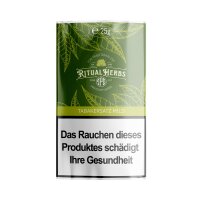
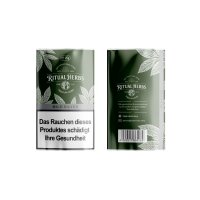
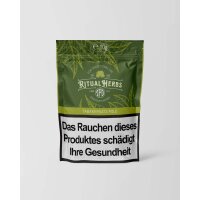
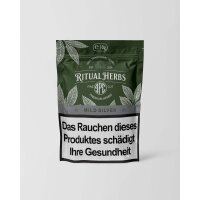
Mild and Mild Silver consist of seven plant components: mullein leaves, blackberry leaves, lotus petals, hollyhock leaves, turmeric leaves, licorice root and licorice leaves. The register has an entry for each of them. For the lotus the species is binding: the lotus petals come from the sacred lotus (Indian lotus, Nelumbo nucifera).15 For the other components the product page names no species, so we do not commit to one. All other plants in the table are not in our blends. You can find the range under Tobacco substitute.
Mild and Mild Silver: the blends in the shop
Frequently asked questions
The abbreviation stands for the author who published the name. “L.” is the official botanical author abbreviation of Carl von Linné, who used consistently two-part names for plant species in Species Plantarum in 1753. For Laurus nobilis L. this means the name goes back to Linné, which is how GBIF lists it too.4
The name Rosmarinus officinalis comes from Linné (1753). In 1835 Spenner moved the species to the genus Salvia, that is, to sage, as Salvia rosmarinus. That is a new combination of the same taxon, not a new plant. GBIF lists Salvia rosmarinus Spenn. as the accepted name and Rosmarinus officinalis L. as a synonym.7, 1
The name suggests it, but the Giftzentrale Bonn lists cherry laurel (Prunus laurocerasus) as a member of the rose family and classes it as toxic; all parts of the plant, especially leaves and seeds, are toxic. Bay laurel (Laurus nobilis) belongs to the Lauraceae according to GBIF. Because of the poisonous namesake, you should not use any plant you do not know for certain. We deliberately give no identification guide here.8, 1
No. The register only shows which plants appear in our articles. Many are culinary, tea or ornamental plants. We found no study on the smoke of most of them, and some plants are poisonous. The register is therefore not a smoking recommendation, not even for plants without a warning.
Plants of the World Online was not reachable on 24 October 2026. The GBIF API is freely accessible and can be queried by script, so every row of the table can be checked. GBIF and POWO may decide differently in individual cases; we did not compare them.1
Only seven plant components: mullein leaves, blackberry leaves, lotus petals, hollyhock leaves, turmeric leaves, licorice root and licorice leaves. The lotus is the sacred lotus (Nelumbo nucifera). All other plants in the register are not included. Both blends are tobacco-free and nicotine-free. There are separate articles on the components; the links are in the table.
An honest assessment
Smoke is smoke: tobacco-free does not mean risk-free. Smoke from plant material contains combustion products such as carbon monoxide. A review in ACS Omega (2022) lists, among the harmful substances released when plants are burned, carbon monoxide, polyaromatic compounds and N-nitrosamines.11 Carbon monoxide binds to the red blood pigment more strongly than oxygen.13
A Korean study (2015) found more carbon monoxide and benzo[a]pyrene in the smoke of a nicotine-free herbal cigarette than in the smoke of a tobacco cigarette with the same tar content; the smoke condensate was more mutagenic in the test. This concerns a single product, but it shows that “nicotine-free” is no free pass.12
What we do not know: we found no study on the smoke of most plants in this register. With Mild and Mild Silver, tobacco and nicotine are left out. We claim nothing more. They are not a health product and not a means of quitting smoking. If you want to quit, you can find free counselling at rauchfrei-info.de, the portal of the Federal Institute for Public Health (BIÖG), and by phone on 0800 8 31 31 31 (Germany).14 Ritual Herbs is aimed at adults.
Read more
Sources
- GBIF Secretariat: GBIF Backbone Taxonomy. Name query api.gbif.org/v1/species/match and synonym list api.gbif.org/v1/species/<key>/synonyms. Retrieved 24 October 2026. All names, authors, families and synonyms in the tables.
- GBIF: Dataset description GBIF Backbone Taxonomy. Retrieved 24 October 2026.
- Wikipedia (de): Internationaler Code der Nomenklatur für Algen, Pilze und Pflanzen. Retrieved October 2026. Species names, genus name, epithet.
- Wikipedia (de): Carl von Linné. Retrieved October 2026. Author abbreviation “L.”, Species Plantarum 1753.
- Wikipedia (de): Synonym (Taxonomie). Retrieved October 2026. Definition, priority rule.
- Wikipedia (de): Hybride. Retrieved October 2026. Marking with the multiplication sign.
- Wikipedia (de): Rosmarin. Retrieved October 2026. First publication 1753, new combination 1835.
- Informationszentrale gegen Vergiftungen am Universitätsklinikum Bonn (Giftzentrale Bonn): Pflanzen, individual pages linked in table 2. Retrieved 24 October 2026. Toxicity classification.
- AGES (Austrian Agency for Health and Food Safety): Gefleckter Schierling. Retrieved 24 October 2026. Toxicity, look-alikes (cow parsley, caraway, anise plants, yarrow).
- Bundeszentrum für Ernährung (BZfE): Holunderblüten genießen. Retrieved 24 October 2026. Poisonous look-alikes of black elder.
- Abdel Rahman RT, Kamal N, Mediani A, Farag MA: How Do Herbal Cigarettes Compare To Tobacco? ACS Omega 7(50), 2022. PMC9773184. Abstract opened via Europe PMC on 24 October 2026.
- Bak JH, Lee SM, Lim HB: Safety assessment of mainstream smoke of herbal cigarette. Toxicological Research 31(1), 2015. doi:10.5487/tr.2015.31.1.041. Abstract opened via Europe PMC on 24 October 2026.
- Wikipedia (de): Kohlenstoffmonoxid. Retrieved 24 October 2026.
- Bundesinstitut für Öffentliche Gesundheit (Federal Institute for Public Health): rauchfrei-info.de. Retrieved 24 October 2026.
- Product information from the shop operator Ritual Herbs dated 5 October 2026 (species of the lotus petals in Mild and Mild Silver).
x
Please sign in to write a comment.