Key points
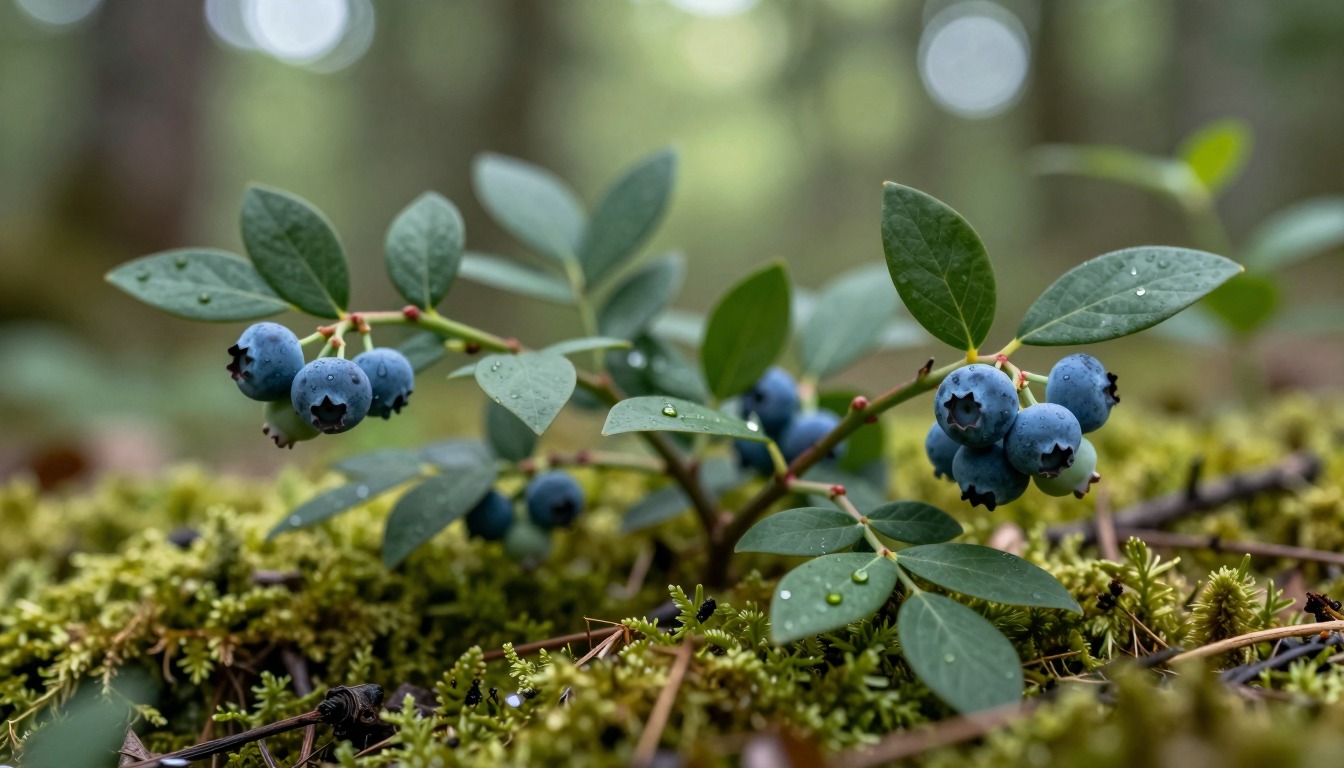
- This article is about the wild-growing bilberry (Vaccinium myrtillus), a dwarf shrub of the heath family with deciduous leaves. The cultivated blueberries from the supermarket go back to North American species, above all Vaccinium corymbosum.
- Bilberry leaves are not an ingredient of Mild or Mild Silver. We do not invite you to smoke them.
- In 1987 Commission E published a negative monograph on bilberry leaves. The EU committee HMPC discontinued its assessment in 2014 for lack of sufficient data.
- We found no study on the smoke of bilberry leaves. What is documented: the smoke of herbal cigarettes contains carbon monoxide, tar and other combustion products.
Table of contents
- Loading...
Smoking bilberry leaves? We do not recommend it. The leaf of the bilberry is known from the forest and, more rarely, as a tea. For how well its smoke is tolerated we found no evidence. Here is what can be documented: botany, distribution, how expert bodies assess the leaves and why the plant is not one of the seven ingredients of Ritual Herbs.
Which blueberry do we mean?
Quick answer: What is the difference between the bilberry and the cultivated blueberry?
The bilberry (Vaccinium myrtillus, in German also Blaubeere or Bickbeere) grows wild in Europe and Asia, stays 10 to 60 cm tall and has berries with blue flesh. Cultivated blueberries are of North American origin, bred mainly from Vaccinium corymbosum. The highbush varieties grow 2 to 5 m tall, and their flesh is whitish because the pigment sits in the skin.1, 2
| Bilberry | Cultivated blueberry | |
|---|---|---|
| Botanical name | Vaccinium myrtillus | mainly Vaccinium corymbosum and crosses |
| Other names | Blaubeere, Bickbeere, Waldbeere, Schwarzbeere (German names) | highbush blueberry (highbush varieties) |
| Origin | Europe, Asia | North America |
| Height | 10 to 60 cm | highbush varieties 2 to 5 m, lowbush varieties 0.2 to 0.7 m |
| Flesh | blue, stains mouth and teeth | whitish, pigment in the skin |
| Berry size | at most 1 cm | on average 5 to 12 mm, some up to 30 mm |
| Source | [1] | [2] |
This article is about the leaves of the wild-growing species. Dried, they carry the pharmaceutical name Myrtilli folium.4
Bilberry: botany
- Botanical name: Vaccinium myrtillus L.1
- Family: heath family (Ericaceae)1
- Growth form: dwarf shrub, 10 to 60 cm tall1
- Leaf: egg-shaped to elliptical, 2 to 3 cm long, finely toothed, deciduous (shed in the winter half-year); the foliage turns red in autumn1, 3
- Flower: small, nodding, greenish to reddish; April to May1, 3
- Fruit: blue-black berry, at most 1 cm, ripe from July to September1
- Lifespan: up to 30 years; via runners a single plant can cover up to several thousand square metres1
- In our blends: not included
The German name Heidelbeere goes back to Middle High German heidelber and is connected with “Heide” (heath), that is, with uncultivated land.1 Unlike the related lingonberry, the bilberry is not evergreen but sheds its leaves in the winter half-year.1
Where does the bilberry grow?
The English-language Wikipedia describes Vaccinium myrtillus as native to almost every country in Europe, to northern and central Asia, Japan, Greenland, the west of Canada and the west of the USA. It grows on acid soil, in heaths, bogs, poor meadows and open woodland, up to an altitude of 2,350 metres.3 The German Wikipedia names acid, nutrient-poor forests as its habitat, especially pine and mountain spruce forests, and gives 2,840 metres in Graubünden as the highest site.1
Bilberry leaves as tea: what the sources say
The dried leaves were traditionally drunk as tea and used externally for rinses and washes. This is tradition, not evidence of effect.4 The leaves contain, among other things, tannins (catechin, epicatechin), proanthocyanidins, flavonols, iridoids and chlorogenic acid.4
Quick answer: How do expert bodies assess bilberry leaves?
Negatively, or not at all. Commission E at the BfArM, the German licensing authority for medicines, published a negative monograph on Myrtilli folium (Federal Gazette No. 76 of 23 April 1987).5 The Committee on Herbal Medicinal Products of the EU Medicines Agency (HMPC) discontinued its assessment of the leaves on 24 November 2014 because of insufficient data.6 EU monographs exist only for the fruits, not for the leaves.7
The warnings fit this. The German Wikipedia writes that signs of poisoning can occur with prolonged use and that effectiveness is not proven; preparations made from bilberry leaves are therefore advised against.1 The US National Center for Complementary and Integrative Health considers bilberry leaves possibly unsafe in high doses or with prolonged consumption.8 Bilberry fruits are something different from the leaves, and what applies to one does not apply to the other.
Bilberry leaves and Ritual Herbs
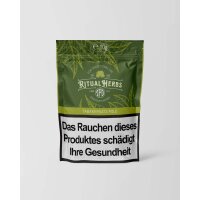
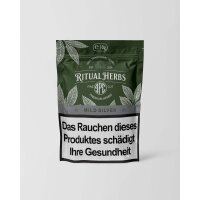
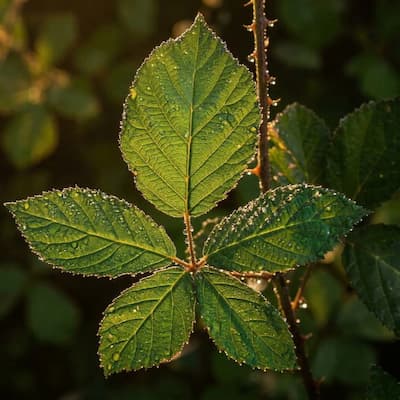
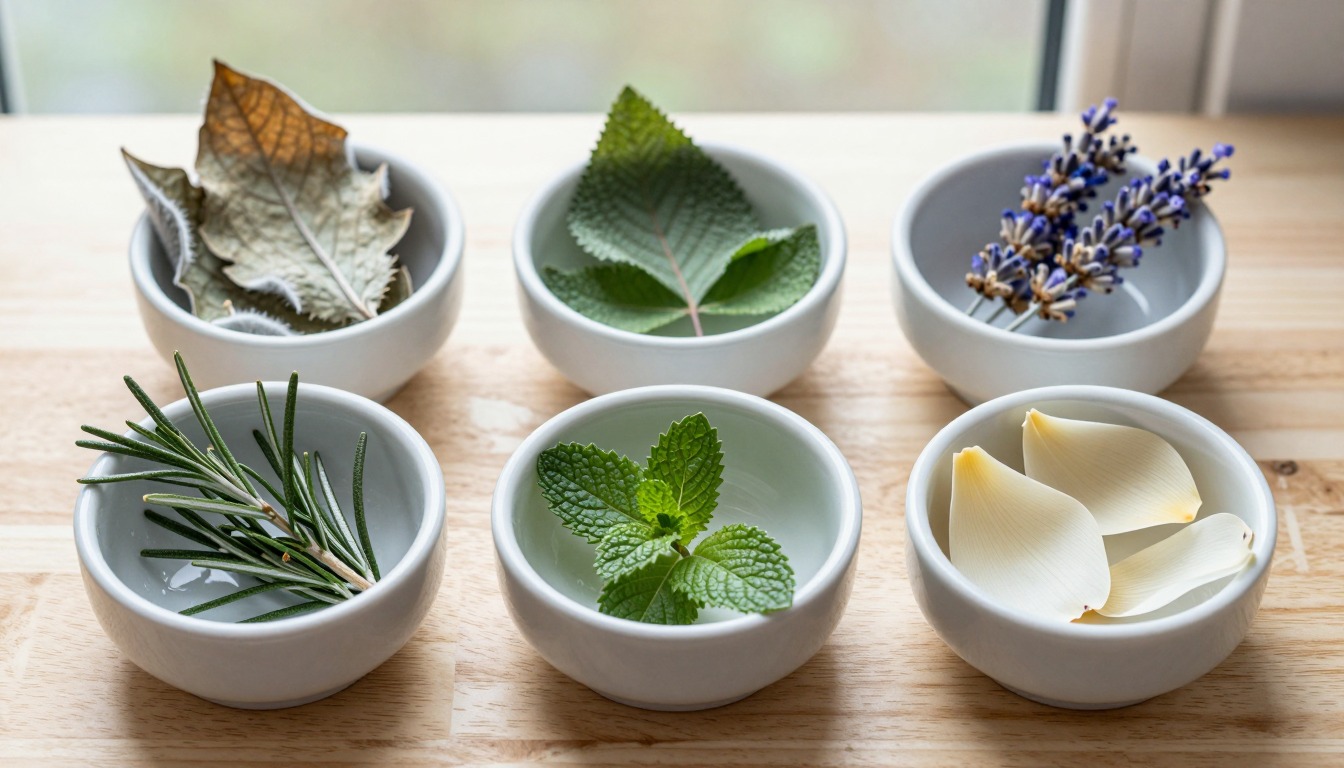
Mild and Mild Silver contain the same seven plant ingredients: mullein leaves, blackberry leaves, lotus flower petals, hollyhock leaves, turmeric leaves, licorice root and licorice leaves. Bilberry leaves are not among them, neither from the wild bilberry nor from the cultivated blueberry. The ingredients are fully declared on the pack. Which leaves are in them is explained, for example, in Smoking blackberry leaves.
How the blends are put together is explained in Tobacco substitute: what is an herbal smoking blend? and under tobacco substitute herbal blends.
Bilberry leaves and smoke
We found no study on the smoke of bilberry leaves. A review in ACS Omega (2022) names, as harmful substances in the smoke of herbal cigarettes, carbon monoxide, polyaromatic compounds and N-nitrosamines, among others.9 That a leaf is handed down as a tea says nothing about how its smoke is to be judged. And because expert bodies already warn against prolonged use of the tea, it would be wrong to derive a clearance from that.
On top of this comes the risk of confusion: leaves you have collected yourself, dried and crushed can hardly be identified reliably any more. Why we generally advise against smoking wild plants is explained in Which herbs can you smoke?
For the facts, see Is smoking herbs harmful?.
Mild and Mild Silver: the blends in the shop
Frequently asked questions
No. Both varieties consist of the same seven plant ingredients, without bilberry leaves. They are tobacco-free and nicotine-free.
An honest assessment
Tobacco-free does not mean risk-free. Even nicotine-free herbal smoke is smoke: burning plant material produces combustion products such as carbon monoxide and tar. Carbon monoxide forms during incomplete combustion of carbon-containing substances and binds to the red blood pigment more strongly than oxygen does.10, 11
A Korean study (2015) found 12.30 mg of carbon monoxide per cigarette in the smoke of a nicotine-free herbal cigarette, against 6.07 mg for the tobacco comparison cigarette; the smoke condensate was more mutagenic in the test. This concerns a single product, but it shows that “nicotine-free” is not a free pass.10
With Mild and Mild Silver, tobacco and nicotine are left out. We claim nothing more. They are not a health product and not a means of quitting smoking. If you want to stop, you can find free counselling at rauchfrei-info.de (in German), the portal of the German Federal Institute for Public Health, and by phone on 0800 8 31 31 31 (German-language service).12 Ritual Herbs is aimed at adults.
Read more
Sources
- Wikipedia (in German): Heidelbeere (bilberry). Retrieved in October 2026. Botany, leaf, fruit, lifespan, name, habitat, difference from the cultivated blueberry, note on bilberry leaves.
- Wikipedia (in German): Kulturheidelbeeren (cultivated blueberries). Retrieved in October 2026. North American origin, height, flesh, berry size.
- Wikipedia (en): Vaccinium myrtillus. Retrieved in October 2026. Distribution, habitat, flower, autumn colour.
- Altmeyers Enzyklopädie: Myrtilli folium (in German). Retrieved in October 2026. Synonyms, constituents, traditional use. Secondary source.
- BfArM: Liste der Monographien der E-Kommission (Phyto-Therapie), die im Bundesanzeiger veröffentlicht sind (list of the Commission E monographs published in the Federal Gazette; PDF, in German), status 31 July 1994. Entry “Myrtilli folium / Heidelbeerblaetter”, marked as a negative monograph, BAnz. No. 76 of 23 April 1987.
- European Medicines Agency: HMPC meeting report, 61st meeting, 24 November 2014 (PDF), EMA/HMPC/744424/2014, section “Cancellation of assessment work”.
- European Medicines Agency: Myrtilli fructus recens. Retrieved in October 2026. EU monograph on the fresh fruit, adopted on 9 December 2015.
- National Center for Complementary and Integrative Health (NIH): Bilberry. Status November 2024, retrieved in October 2026.
- Abdel Rahman RT, Kamal N, Mediani A, Farag MA: How Do Herbal Cigarettes Compare To Tobacco? ACS Omega 7(50), 2022. PMC9773184.
- Bak JH, Lee SM, Lim HB: Safety assessment of mainstream smoke of herbal cigarette. Toxicological Research 31(1), 2015. PMC4395654.
- Wikipedia (in German): Kohlenstoffmonoxid (carbon monoxide). Retrieved in October 2026.
- German Federal Institute for Public Health (Bundesinstitut für Öffentliche Gesundheit): rauchfrei-info.de (in German). Retrieved in October 2026.
x
Please sign in to write a comment.