
Key points
- Yes. Even nicotine-free herbal smoke contains combustion products, including carbon monoxide and tar.
- In a 2015 Korean measurement, a mugwort-based herbal cigarette produced more carbon monoxide, tar and benzo(a)pyrene than a tobacco cigarette with the same tar value stated on the pack. The smoke condensates showed a similar mutagenic potential.
- The German Federal Institute for Public Health (BIÖG) advises against herbal cigarettes as an alternative to cigarettes and sees no reliable evidence for using them to stop smoking.
- Nicotine-free means: no nicotine. It does not mean: no smoke, no risk.
- If you want to quit, you can get help on 0800 8 31 31 31 (free of charge, German-language service) and at rauchfrei-info.de (in German).
Table of contents
- Loading...
Yes, smoking herbs is harmful too. When plant material burns, combustion products are produced, whether tobacco or an herb is burning. This article shows what has been measured and what institutes and authorities say. We sell nicotine-free herbal blends for smoking ourselves, and the same applies to them.
The short answer
Even nicotine-free herbal smoke can harm your health. It contains carbon monoxide and tar. No nicotine in the smoke does not mean the smoke is unproblematic.
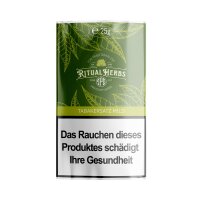
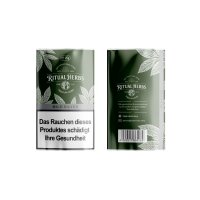
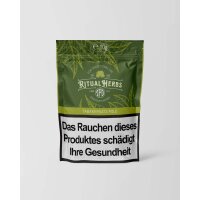
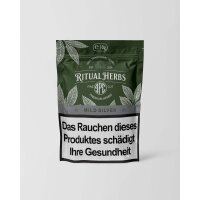
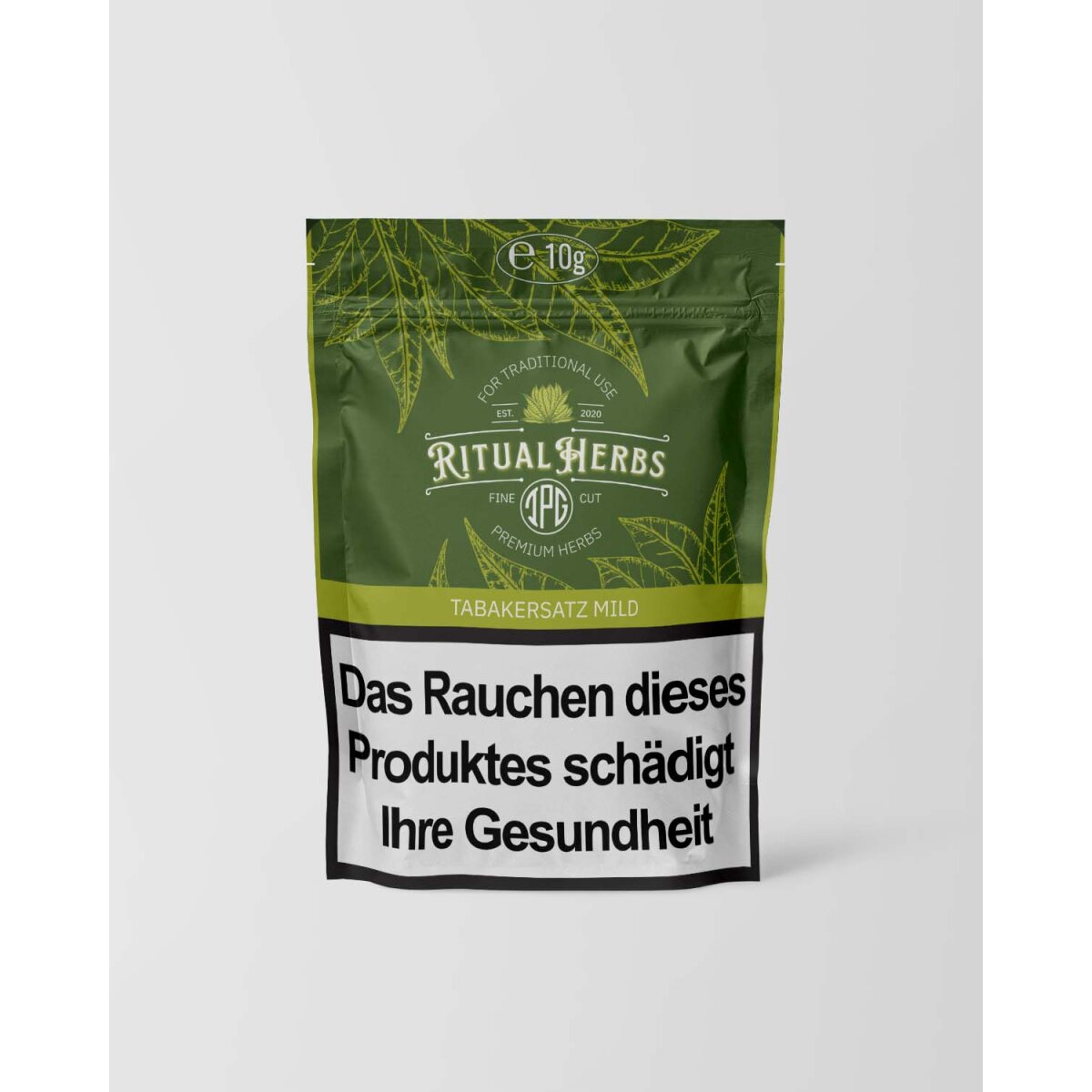
This also applies to Ritual Herbs Mild and Mild Silver. Both are made without tobacco and without nicotine, consist of mullein leaves, blackberry leaves, lotus flower petals, hollyhock leaves, turmeric leaves, licorice root and licorice leaves, and they produce smoke when burned.
What is produced when plant material burns
Carbon monoxide is produced by the incomplete combustion of carbon-containing substances when the oxygen supply is insufficient. It binds more strongly to haemoglobin than oxygen does and so impedes the transport of oxygen in the blood. According to the BIÖG, smoking herbal cigarettes produces a high concentration of carbon monoxide.
In 2000, the US Federal Trade Commission (FTC) took action against the manufacturer Alternative Cigarettes, Inc., which sold herbal cigarettes among other products. In its complaint, the FTC stated that the smoke of these herbal cigarettes, like tobacco smoke, contains numerous carcinogenic and toxic substances, including tar and carbon monoxide. The case ended on 14 June 2000 with a consent order. It obliged the manufacturer to warn on packs and in advertisements for herbal cigarettes: “Herbal cigarettes are dangerous to your health. They produce tar and carbon monoxide.”
What was measured
A study by Bak, Lee and Lim (Toxicological Research, 2015) analysed the mainstream smoke of a nicotine-free mugwort herbal cigarette that, according to the authors, was the most popular on the Korean market. It was compared with a tobacco cigarette whose pack stated the same tar value (5.5 mg). The smoke of the herbal cigarette contained neither nicotine nor tobacco-specific nitrosamines. Tar, carbon monoxide and benzo(a)pyrene, however, were higher than in the tobacco cigarette, and the smoke condensates showed a mutagenic potential similar to that of the tobacco cigarette.
| Measurement (per cigarette) | Herbal cigarette (mugwort) | Tobacco cigarette for comparison |
|---|---|---|
| Nicotine | not detectable | 0.57 mg |
| Tar | 7.45 mg | 6.02 mg |
| Carbon monoxide | 12.30 mg | 6.07 mg |
| Benzo(a)pyrene | 2.77 ng | 2.29 ng |
The figures apply to this one product. They do not tell you how other herbs, other cuts or other papers behave. The authors conclude that the chemical and biological safety of herbal cigarettes should be tested regularly.
What authorities and institutes say
The German Federal Institute for Public Health (BIÖG) runs the portal rauchfrei-info.de. About herbal cigarettes it says there: they are tobacco-free and nicotine-free, but smoking them produces a high concentration of carbon monoxide, the smoke can contain heavy metals, and individual studies have been able to demonstrate harmful effects. As an alternative to cigarettes, it says, they cannot be recommended.
On the subject of quitting, it says there is no reliable scientific evidence for the use of herbal cigarettes, and that the official medical guidelines on tobacco cessation do not recommend them as a tried and safe means.
What “nicotine-free” means and what it does not
Nicotine-free means that the plant blend contains no nicotine. Tobacco-free means that there is no tobacco in it. Both statements describe what is missing. They do not describe what is produced when it burns.
This very conclusion was at the heart of the FTC case. The agency accused the manufacturer of creating the impression that its herbal cigarettes did not carry the health risks of tobacco smoke. The FTC called that statement false.
What changes when you switch, and what stays, is described in Switching from tobacco to herbs: what changes and what stays.
What we do not know
- We have found no source that names an amount or frequency of herbal smoke below which it would be unproblematic. That is why we do not claim it.
- The measurement above concerns one specific finished product. It cannot be transferred to every herbal blend, including ours, and it cannot be read as an all-clear for other blends either.
- This article gives no measured values for Mild and Mild Silver.
What an herbal smoking blend actually is can be found in Tobacco substitute: what is an herbal smoking blend?. You reach the blends Mild and Mild Silver via tobacco substitute herbal blends.
If you want to quit
You can reach the free telephone advice line of the BIÖG on 0800 8 31 31 31 (German-language service). There is also information about quitting on rauchfrei-info.de (in German). For questions about your health, doctors’ practices and advice centres are the right address, not a blog article.
If you smoke outdoors, you will find notes in Smoking outdoors: consideration, wind and forest fire danger.
The blends Mild and Mild Silver
Frequently asked questions
Yes. Even nicotine-free herbal smoke contains combustion products such as carbon monoxide and tar. On rauchfrei-info.de (in German), the BIÖG names a high concentration of carbon monoxide and advises against herbal cigarettes as an alternative to cigarettes.
Yes. In the Korean study of 2015, 7.45 mg of tar per cigarette was measured for a herbal cigarette. In 2000, the FTC obliged a manufacturer to carry the warning that herbal cigarettes produce tar and carbon monoxide.
No. Nicotine-free only means that there is no nicotine in the product. Combustion produces carbon monoxide and other substances that you breathe in, even without nicotine.
According to the BIÖG, there is no reliable scientific evidence for this. You can get advice on 0800 8 31 31 31 (German-language service) and at rauchfrei-info.de (in German).
Yes. Mild and Mild Silver also produce smoke when burned. They are made without tobacco and without nicotine, and we claim nothing more. Which plants are in them is listed above and on the page Tobacco substitute.
No. This article relies on one published measurement of a single finished product (Korea 2015). For most herbs and blends we have found no published measured values.
Our honest take
Tobacco-free does not mean risk-free. Burning plant material produces smoke, and that smoke contains combustion products such as carbon monoxide and tar.
What falls away in our blends is the tobacco and the nicotine. We claim nothing more. Ritual Herbs is aimed at adults. If you do not smoke, you do not need to start. Which plants are common in herbal blends for smoking and what you should watch out for is covered in Which herbs can you smoke.
Read more

Sources
- Bak JH, Lee SM, Lim HB: Safety Assessment of Mainstream Smoke of Herbal Cigarette, Toxicological Research 31(1), 2015, pp. 41–48, doi:10.5487/TR.2015.31.1.041: tar, carbon monoxide, nicotine (Table 1), benzo(a)pyrene (Table 3), nitrosamines, mutagenicity, the authors’ conclusion.
- Analysis of Proposed Consent Order to Aid Public Comment, Alternative Cigarettes, Inc., Federal Trade Commission, 2000: the FTC’s allegation, smoke of herbal cigarettes, warning.
- FTC Decisions Vol. 129 (Jan.–June 2000): In the Matter of Alternative Cigarettes, Inc., et al., Docket C-3956: complaint and decision of 14 June 2000, warning for herbal cigarettes.
- Kräuterzigaretten (herbal cigarettes), rauchfrei-info.de, German Federal Institute for Public Health (BIÖG), as of 11 February 2025 (in German): carbon monoxide, heavy metals, assessment, quitting, guidelines.
- Telefonberatung (telephone advice), rauchfrei-info.de, BIÖG (in German): 0800 8 31 31 31 (free service number, German-language service).
- Kohlenstoffmonoxid, Wikipedia (in German): formation during incomplete combustion, binding to haemoglobin.
x
Please sign in to write a comment.