Free shipping from €50 · Discreet packaging
Lab-tested quality · Purity guaranteed
Fast shipping · Delivery in 1–3 business days
Free shipping from €50 · Discreet packaging
Skip to main content Skip to search Skip to navigation
Free shipping from €39 · Made in Germany · 100% Nicotine-free · Natural ingredients

Tobacco substitute without nicotine – finely cut, processed in Germany

Two herbal blends made from seven plants, with no tobacco, no nicotine and no artificial additives. Made for adults who want to keep their familiar ritual and leave the tobacco out of it. Both blends come in a 10 g pouch and a 25 g pouch.

Tobacco-free Nicotine-free No artificial additives Finely cut Resealable
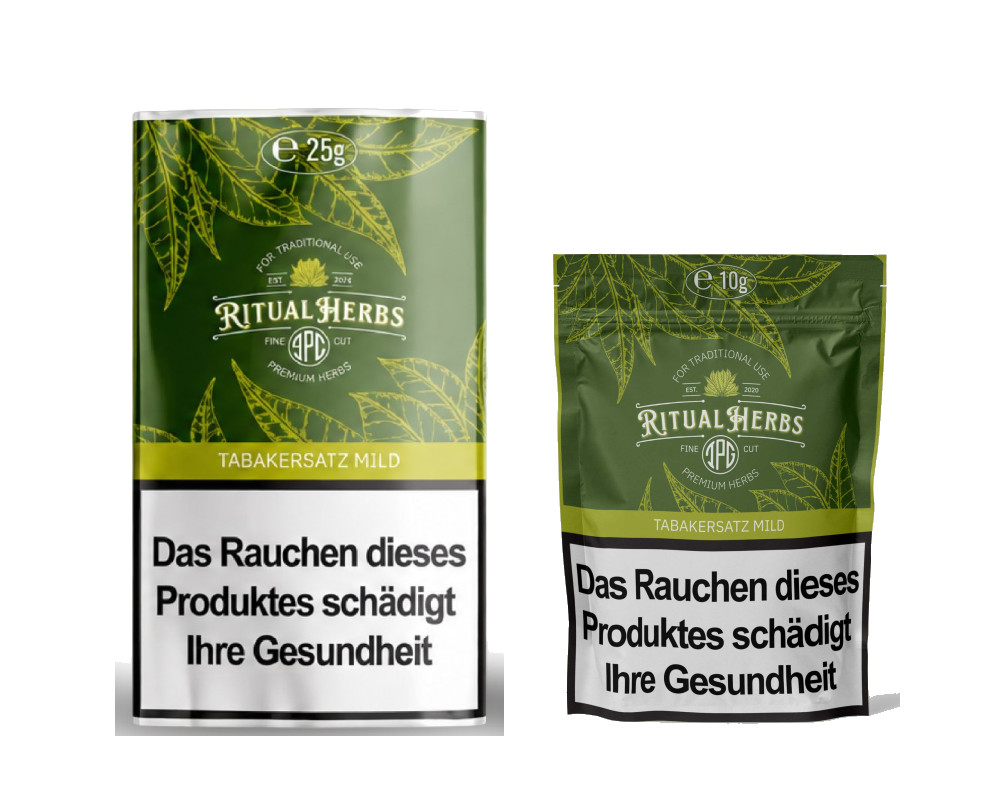
Ritual Herbs Mild fine cut in the 25 g pouch and the 10 g pouch

Mild

Balanced. Gentle. Clear.

The quieter of the two blends. A soft, harmonious profile with little flavour of its own and easy to portion. For anyone looking for a discreet alternative to classic tobacco.

10 g 7,90 € Doypack, resealable
25 g 10,90 € Pouch, resealable
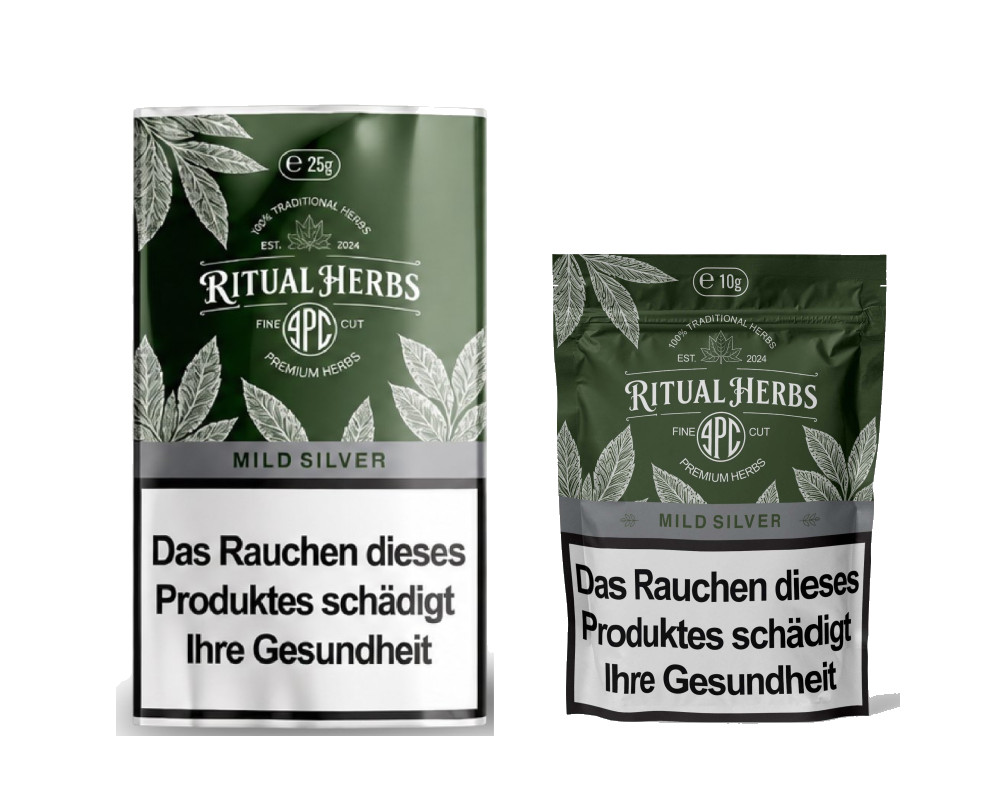
Ritual Herbs Mild Silver fine cut in the 25 g pouch and the 10 g pouch

Mild Silver

Characterful. Calm. Balanced.

The same seven herbs in a different ratio and a different cut. A touch more character, yet still calm. For anyone who finds Mild a little too quiet.

10 g 7,90 € Doypack, resealable
25 g 10,90 € Pouch, resealable
No tobacco No nicotine No artificial additives Seven herbs, openly declared Processed in Germany

What is a tobacco substitute?

A tobacco substitute is a mixture of dried plant material smoked in place of tobacco. No tobacco leaf, no nicotine. What goes in instead varies enormously from one producer to the next. Everything from a single plant to recipes with a dozen herbs is on the market.

The purpose is always the same: the routine should stay familiar. You roll, stuff or mix as usual, only without industrially processed tobacco and without nicotine. Which is why the benchmark is not a herbal blend from the tea shelf but fine-cut tobacco. A substitute that cannot be rolled properly has missed its point, however good the ingredients are.

Herbal tobacco, tobacco alternative, smoking herbs – what is the difference?

Practically none. The terms mean the same product, they just came about differently. Anyone searching for herbal tobacco almost always means a tobacco-free blend. The word is misleading all the same, because there is no tobacco in it. The same goes for nicotine-free tobacco and tobacco without nicotine: common search terms, factually wrong. Tobacco alternative and smoking herbs are older and date from a time when people put their own blends together. Tobacco-free fine cut describes it most precisely, because it names the cut as well.

The Ritual Herbs packaging says tobacco substitute and premium fine cut. That is what we call it here too.

Who looks for it

Three groups, with fairly different expectations. People who want to get away from tobacco but not from the ritual. The movement of the hands stays, the break, the moment on the balcony. Cannabis users who no longer want to cut their joint with tobacco and are looking for something that mixes well without drowning out the flavour. And occasional smokers, for whom it was never about nicotine but about the situation.

How old the idea is

None of this is new. Herbs were smoked long before tobacco, and in times when tobacco was scarce or expensive people naturally fell back on whatever grew in the garden or by the roadside. Coltsfoot, nettle, lemon balm, raspberry leaf. Recipes of that kind were passed down through generations.

What has changed is the standard. A blend you smoke out of necessity is a different thing from one you choose over the alternative. The difference sits exactly where people used to improvise: in selection, cut and consistency. Modern tobacco substitutes differ less in their plants than in their processing.

What a tobacco substitute is not

Not a medicine and not a cessation aid. There is no solid research confirming herbal cigarettes or herbal blends as a means of quitting smoking, and the official guidelines do not recommend them. Anyone who wants to stop is better served by an established programme.

It is not a healthy product either. Burning plant material produces carbon monoxide, polycyclic aromatic hydrocarbons and nitrosamines, whether or not there is tobacco in the mix. What does fall away is the nicotine, and with it the physical dependency. We claim no more than that, and nobody else should either. More on this further down under An honest assessment.

Why the cut decides everything

Read through user reports on tobacco substitutes and the same sentences keep coming up. The ember falls out. It crumbles. It burns away like tinder. It scratches. One review complains about coarse pieces and small twigs that tear the paper, another about a blend so sharp that the testers had to cough.

Strikingly rarely is the ingredient list the issue. It is almost always the processing. That is exactly what we worked on for over three years. Not on the recipe alone, but on the procedures behind it.

Too coarse, too fine – both go wrong

Coarsely cut herbs are hard to distribute. Cavities are left for air to shoot through, and next to them spots where the material sits too densely. The result burns unevenly, the ember wanders off course, and hard stems poke through the paper.

Too fine is just as much of a problem. Dusty material slips through, blocks the draw and burns too quickly, because too much surface area gets oxygen at once. In between lies a narrow band in which a blend stays loose enough to let air through and firm enough to hold together. Hitting that band and holding it across every batch is the actual work.

Moisture is the other half

A blend that is too dry smokes harshly. It lights instantly, burns through fast and turns scratchy in the throat. A blend that is too moist does the opposite: it barely lights, keeps going out and behaves unevenly. Between those two states lie a few percentage points of residual moisture.

That is why both pack sizes are resealable. An open bag in a drawer loses enough moisture within a few days to turn a good blend into a scratchy one. That is not a fault in the material, it is simply physics. And the reason many people remember a product as worse than it was on opening.

A good tobacco substitute is not made by the choice of herbs alone. What matters is how they are cut, blended and balanced against each other.

The blend ratio

Mild and Mild Silver contain the same seven plants. The difference comes from the proportions and the cut. A few per cent more of one component shifts not only the taste but also the burn, because every plant has a different density and holds moisture differently. A leaf with plenty of structure brings volume, a root brings density. Only both together make a blend that behaves consistently.

Problem Usual cause What helps
Ember falls out cut too coarse, packed too loosely finer cut, fill more evenly
Burns too fast too dry, too much dust close the pack, store cool
Keeps going out too moist or rolled too tight fill more loosely, air it briefly
Scratches the throat dryness, sharp aromatic components keep the residual moisture, choose a mild blend
Paper tears stems and hard pieces use properly sieved material

The seven herbs

Both blends consist of the same seven plant components. We write them out in full on the pack and here on the page. No flavourings, no fillers, no humectants.

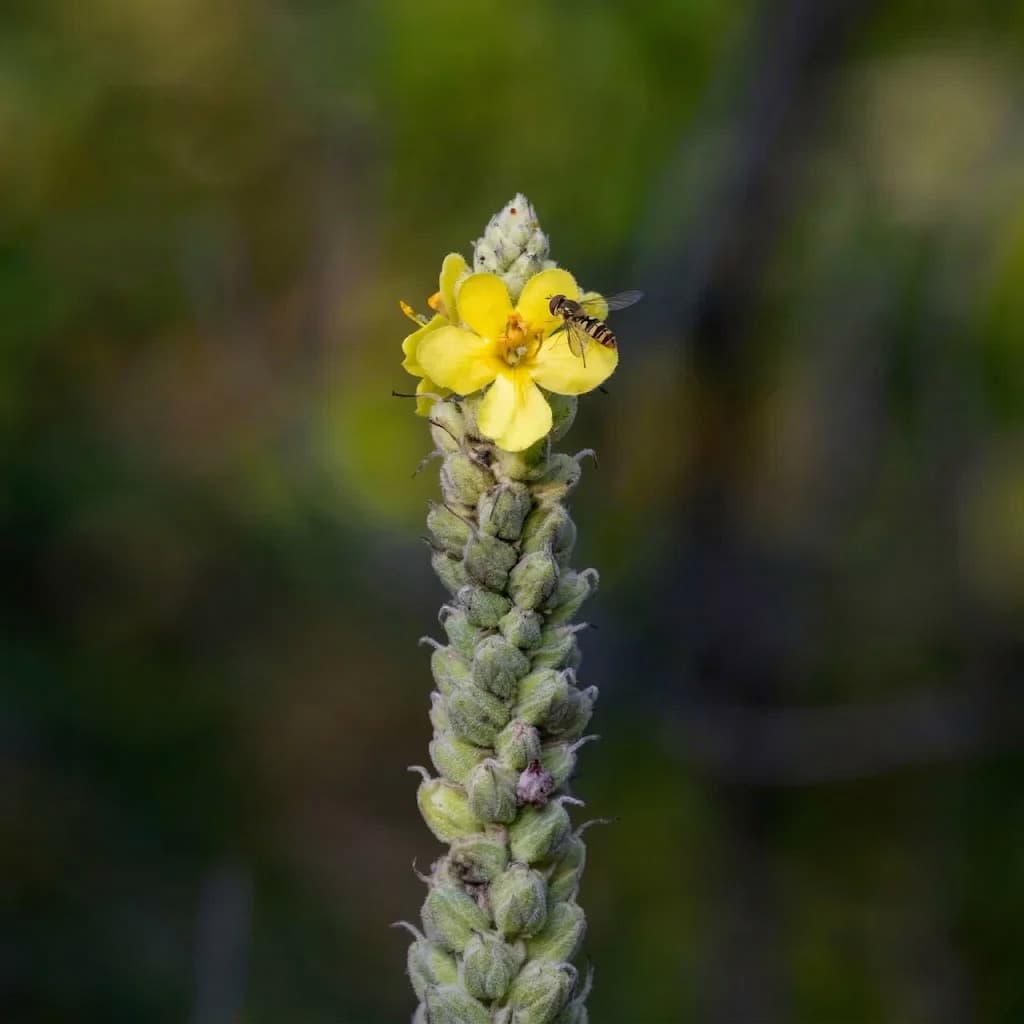
Mullein leaves

Mullein leaves

The classic among smoking herbs. The large, felty leaves of the mullein have been used in herbal blends for centuries, because they bring almost no flavour of their own and still deliver plenty of volume. In the blend they take the role of the carrier: they give structure, hold the moisture and keep the smoke soft. Anyone who knows tobacco substitutes knows mullein. Hardly any serious recipe manages without it.
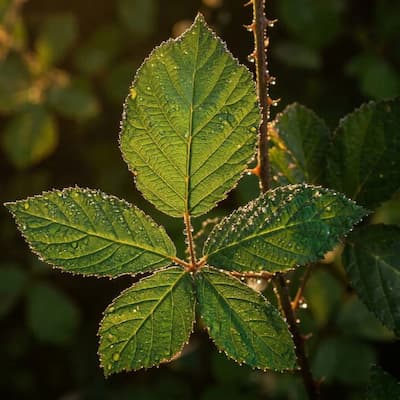

Blackberry leaves

Blackberry leaves

Mildly tart with a slightly astringent note. In the European herbal tradition blackberry leaves are known above all as a tea ingredient and have been in common use for a long time. As part of a smoking blend they bring a calm, green base note and additional volume. They are the second load-bearing component alongside mullein and give the blend the hold that keeps it together when rolling.

Lotus flower petals

Lotus flower petals

Mild, green and slightly earthy. Various Asian traditions have long used lotus as a food and in plant preparations, with different parts of the plant depending on the use. The petals give the blend depth without pushing themselves forward. They are one of those components you cannot pick out on their own. You only notice them when they are missing.

Hollyhock leaves

Hollyhock leaves

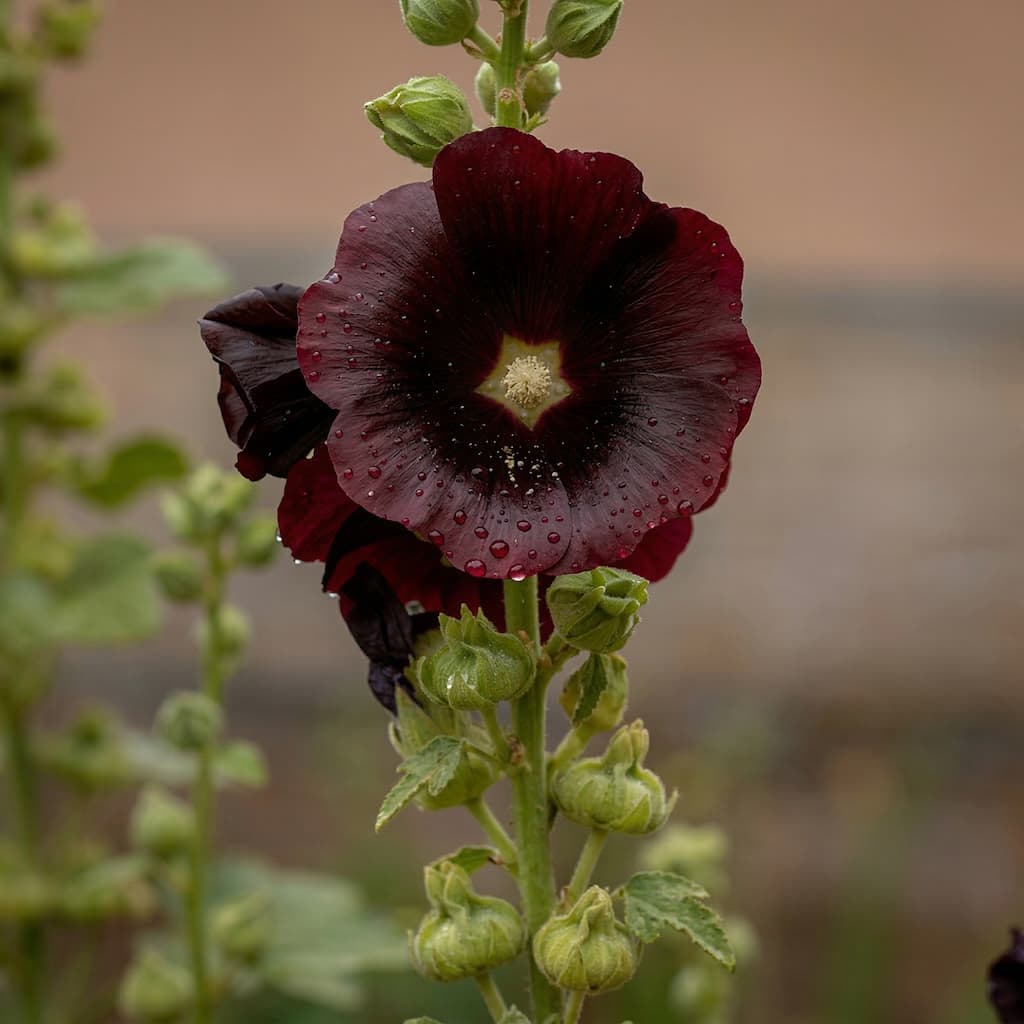
Soft and floral. Hollyhock is traditionally used in herbal infusions and is known above all for its delicate, blossom-like character. In the blend it works on the mouthfeel: it rounds off the green and spicy components and takes the edges off. A component that draws little attention and makes a lot of difference.

Turmeric leaves

Turmeric leaves

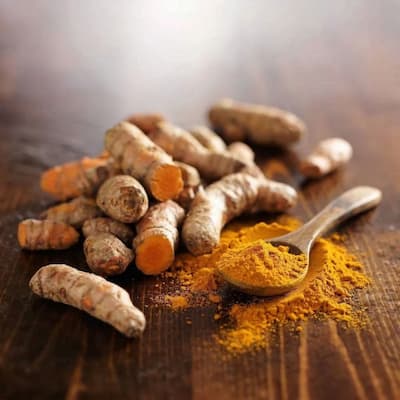
The leaves, not the root. That distinction often gets lost. While the root is known as a powerful spice, the leaves are far more restrained, green and discreetly spicy. In South Asia they are traditionally used to add aroma. In the blend they set a quiet spiced accent that keeps the mild leaves from becoming dull.

Liquorice root and liquorice leaves

Liquorice root and liquorice leaves

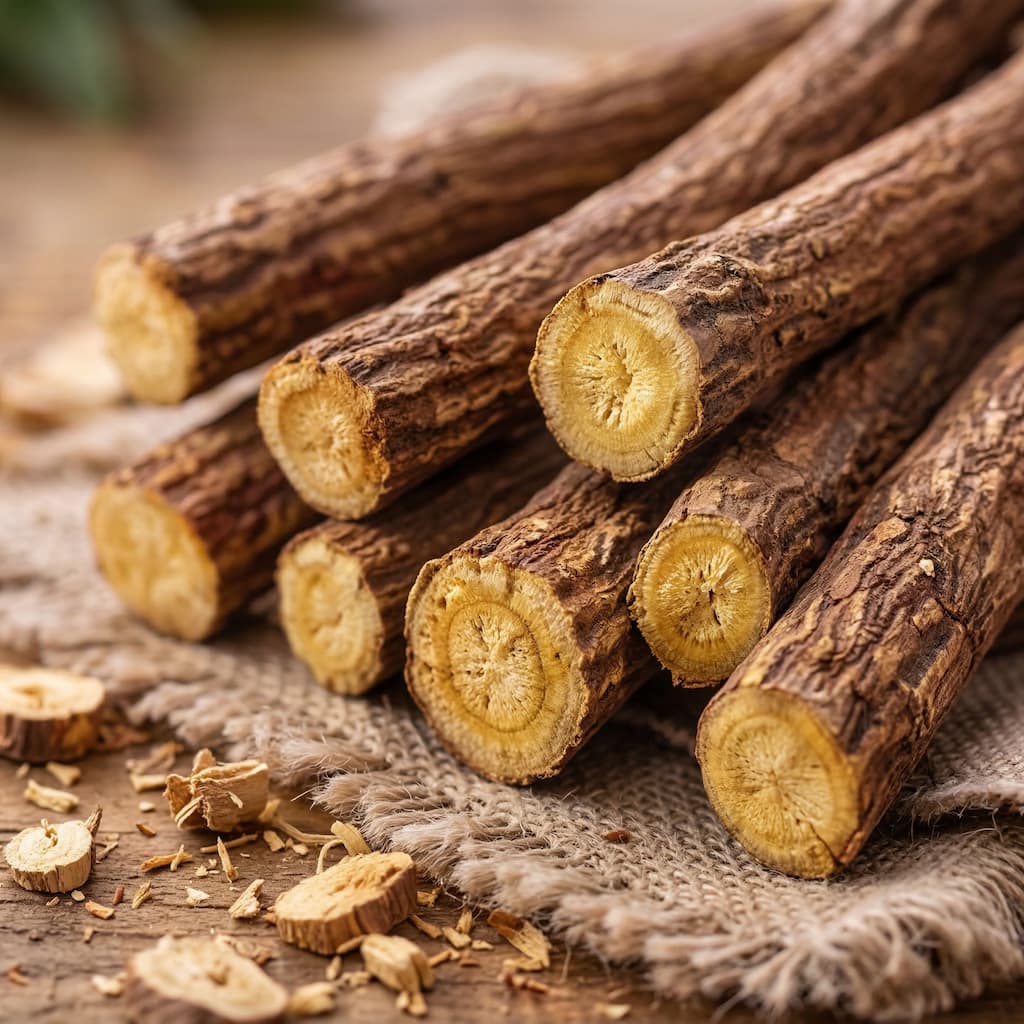
Both parts of the plant are in the blend and they do different jobs. The root brings the familiar natural sweetness and a warm, round aroma that catches tart or dry notes. The leaves are lighter and contribute to the structure. Liquorice is the reason both blends do not taste flat despite their largely green components.

This composition is in both blends: in Mild just as in Mild Silver. Only the proportions and the cut differ, not the plants.

Why these seven and not others

A smoking blend needs three kinds of component, and most plants can only do one of them. Carrier herbs supply volume and structure – for us mullein and blackberry leaf. They make up the largest share, hold the blend together and are what makes it possible to roll anything at all. Without them the whole thing falls apart.

Then come the components that set the mouthfeel. Lotus flower and hollyhock work here: they take the edges off the green notes and make the smoke rounder without stepping forward themselves. This role is regularly underrated when putting a blend together, because you can barely taste them individually.

And finally the accents. Turmeric leaf and liquorice give the blend a direction, the one spicy, the other soft and slightly sweet. This is also where the difference between our two blends is decided. A few percentage points more or less are enough.

Deliberately absent are plants that dominate quickly. Mint, cinnamon and eucalyptus taste pleasant in small amounts and drown out everything else at slightly too much. Several well-known blends on the market work with components like these, and in tests that is exactly what regularly draws criticism for a scratchy taste. We decided against it.

Full portraits of every plant we process and test, including the herbs that did not make it into these two recipes, are on the Ingredients page.

Mild or Mild Silver?

The ingredient list is identical for both. What differs is the blend ratio and the cut. That changes the taste and the way it behaves when smoked.

Mild Mild Silver
Character soft, harmonious, restrained somewhat more pronounced, stays calm
Suits people switching over and anyone wanting little flavour of its own anyone who finds Mild too quiet
Smoking neat well suited well suited
For mixing stays in the background brings a note of its own
Sizes 10 g and 25 g 10 g and 25 g

If you are unsure, start with the 10 g pouches. Two small pouches together cost more than one large one, but you will have tried both blends and after a few days you will know which direction suits you. After that the 25 g pouch is clearly worth it: per gram it is around 45 per cent cheaper than the small pack.

The four variants at a glance

Our tobacco substitute comes as two blends in two sizes each. The same seven plants, mixed and cut differently:

Both blends are tobacco-free and nicotine-free, and both sizes come in a resealable pouch. If you are torn between Mild and Mild Silver, take the small pouch of each – the decision comes down to taste, not to a spec sheet.

How long does a pouch last?

That depends on how full you roll. For a hand-rolled cigarette the usual estimate is half a gram to just under one gram. That works out at roughly 12 to 20 cigarettes from the 10 g pouch and 30 to 50 from the 25 g pouch.

When mixed with hemp the material lasts correspondingly longer, because less of it is needed per unit. And anyone who habitually rolls thin will get considerably further than the calculation suggests. As a rough guide: if you have been getting through a 30 g pack of rolling tobacco a week, the 25 g pouch is in a similar range.

So the large pouches are meant for weekly use – Mild 25 g or Mild Silver 25 g. The 10 g pouches (Mild, Mild Silver) suit getting started, a second blend for on the move, or occasional rolling.

Use: rolling, mixing, neat

Fine cut is called fine cut because the material is fine enough to handle like rolling tobacco. Everything that works with tobacco works with this: rolling by hand, stuffing with a machine, filling a pipe.

Rolling

The most important thing is even distribution. Herbs forgive uneven filling less well than tobacco, because they are lighter and sit more loosely. Roll too tight and you get a cigarette that barely draws and keeps going out. Roll too loose and you lose the ember. A filter helps, not for its filtering effect but because it stabilises the end and stops fine material being drawn into the mouth.

A rolling machine makes it easier than doing it by hand, especially at the start. It distributes more evenly than most fingers can.

If you mix a lot, a pouch will last you correspondingly longer – which makes the large pouch the better value.

Mixing

The most common reason adults reach for a tobacco substitute: they want to use hemp without smoking tobacco. Until recently that was the standard solution, even though it often brings a nicotine dependency along with it in the first place.

Herbal blends take on the role tobacco used to have: they bulk out the mix, keep the burn even and make the whole thing rollable at all. Usual ratios lie between half and half and about seventy to thirty in favour of the herbs. That depends on the result you want and comes down to taste.

For this purpose Mild is usually the better choice, because it holds back in flavour. Mild Silver brings a note of its own, which you either want or you do not.

Neat

Both blends can be smoked neat, which is what they are made for. The difference from tobacco is immediately noticeable: the nicotine hit is missing and the smoke feels lighter. Some find that pleasant, others miss the resistance. Honestly, adjusting takes a few days. Anyone taking the first draw expecting it to taste exactly like their usual brand will be disappointed.

Pipe and water pipe

Fine cut works well in a pipe as long as it is not packed too tightly. The ember needs air, otherwise it just smoulders. In a bong, herbal material behaves differently from tobacco: it burns down faster, so a smaller amount is enough.

The product is not intended for shisha. Shisha tobacco is built differently: moist, with molasses, and it is heated rather than burned. Fine cut simply chars.

Storage and shelf life

Both sizes of our tobacco substitute come in a resealable pouch – the 10 g pouch as a doypack, the 25 g pouch as a stand-up pouch. With a product that lives off its residual moisture, that is not a detail.

The packaging is resealable, and that is not an accessory but the reason the blend is still the same on the tenth use as on the first. After taking some out, press the opening shut cleanly, with as little air left in the pack as possible.

Store cool and dry, out of the sun. A shelf is entirely enough. The fridge is a bad idea: taking it out leaves condensation on the material, and herbs that have got damp never dry out evenly again.

If the blend has become too dry, patience helps. Put the pouch next to a glass of water in a closed container and wait a few hours. That is usually enough. Never put water directly on the herbs. The other way round: if something has become too moist, half an hour open to the air will do it.

Dried herbs do not spoil in the proper sense, they lose aroma over time. Sealed cleanly and stored cool, a blend stays fresh considerably longer than it will ever sit in most people's cupboards.

An honest assessment

This section steps out of the role of a product page. We think it is necessary all the same, because there is a lot of nonsense about this topic in circulation, in both directions.

Is a tobacco substitute healthy?

No. Burning plant material produces carbon monoxide, polycyclic aromatic hydrocarbons and nitrosamines. That applies to herbs just as it does to tobacco. A health advantage over tobacco cigarettes has not been demonstrated, and long-term studies are largely missing. Research even shows that smokers regularly consider substitute products more harmless than they are. Smoke stays smoke.

So what does fall away?

The nicotine. With it goes the substance that creates the physical dependency, which is the reason most people carry on smoking at all. Switching to tobacco-free blends does not make smoking healthy, but it does mean you are no longer smoking because an addictive substance drives you to. The industrially processed tobacco falls away too, along with everything added during its processing.

Is a tobacco substitute addictive?

Without nicotine there is no nicotine dependency. The habit does remain, however. The movement of the hands, the break, the ritual after a meal: all learned, and none of it disappears just because the contents change. Some people want to keep exactly that. Anyone who wants to be rid of the habit itself needs a different route than a substitute.

Does it help with quitting?

There are individual accounts from people it has helped. Solid scientific evidence does not exist, and herbal cigarettes do not appear in the official recommendations on smoking cessation. We do not sell a cessation aid and we do not claim to.

Who is the product for?

For adults. Not for people who have never smoked and start via a supposedly harmless product. That would be a poor reason. Anyone who is pregnant, breastfeeding or has a pre-existing respiratory condition should not smoke at all.

What to look for when buying

The market is hard to survey, the price range is wide and quality varies considerably. Five points by which a decent product can be recognised, regardless of who it comes from.

A complete ingredient list

Does the pack say what is in it? All of it, not just the three herbs that sound good? Wording like „herbal blend“ or „natural flavours“ with nothing further is a bad sign. Anyone with nothing to hide writes it down.

Additives

Many blends work with added flavourings to create a taste the plants do not bring themselves. That is not forbidden, but it shifts what you are getting into. The same goes for humectants meant to keep a blend supple for longer.

Cut and cleanliness

A look into the opened pack says more than any product description. Evenly cut material without stems, without woody pieces, without dust at the bottom. Coarse twigs are the most common criticism in tests. They tear the paper and burn unevenly.

Packaging

Resealable or not? A plain foil bag without a closure means the blend will be different a few days after purchase. With a product that lives off its residual moisture, that is not a detail.

Origin and place of processing

Where do the raw materials come from, and where is the processing done? A large share of the well-known brands in German retail is imported. That is not a verdict on quality, but it makes asking questions harder. We source our herbs mainly from Europe, and the processing takes place in Germany.

Where our herbs come from

The bulk of the raw material comes from Europe. In addition we work with partners in India and assess selected, wild-collected herbs there. What matters to us is raw material grown without artificial fertiliser and processed without chemical treatment.

The connection to India did not come about by chance. Our managing director lived in Asia for seven years and is still there regularly. That means knowing suppliers, seeing growing areas, taking samples back. Particularly in remote regions, conversations about origin and processing happen that cannot be had through catalogues and middlemen.

What comes from there is not taken on unchecked. Every plant has to fit the recipe, the cut, the way it should behave as it burns. Some did not make it into the blend after testing. Approaches that were discarded are part of this brand's history too.

That applies equally to all four items: Mild 10 g, Mild 25 g, Mild Silver 10 g and Mild Silver 25 g come from the same production.

Processing in Germany

Blending, cutting, balancing and checking all happen in Germany. That is where individual raw materials become a product with a consistent structure. The aim is that the twentieth pouch feels like the first. That depends less on the recipe than on the procedures.

Making your own tobacco substitute

There are plenty of instructions out there, and in essence they all agree: gather herbs, dry them, cut them, store them sealed. Nettle, lemon balm, coltsfoot, raspberry leaf, a little mint. Recipes like that are older than any finished product on the shelf, and anyone who wants to try them should – you get a feel for how differently plants behave when they burn.

Getting from the first attempt to a blend that can be handled reliably takes more steps than most instructions admit, though. Freshly dried leaves are brittle, crumble to dust when cut and scratch; traditionally that is solved by fermentation, meaning rolling them up damp and storing them warm for a week or two. An even fine cut is hard to achieve with scissors or a mortar, and the residual moisture – that narrow band between drying out and going mouldy – fluctuates constantly in a screw-top jar. Then there is the selection: not every plant that is harmless as a tea is suitable for burning, and some drown out everything else even in small amounts.

Mild and Mild Silver took us over three years, with attempts that ended up in the bin. That is not an argument against making your own. It only explains why a finished blend is more than cut leaves in a bag.

Fine cut or ready-made herbal cigarette?

Tobacco-free products come in two forms: as loose material for rolling your own and as a ready-filled herbal cigarette. Both have their place, but they serve different needs.

Fine cut Ready-made herbal cigarette
Amount per draw up to you fixed
Can be mixed yes no
Effort rolling or stuffing opening the pack
Price per unit lower higher
On the move needs paper and filters ready to use

Anyone who has been rolling up to now generally stays with fine cut. The movement of the hands is part of the habit, and the dosing stays in your own hands. Anyone used to packets gets on more easily with ready-made herbal cigarettes, because nothing about the routine changes.

For mixing with hemp, only loose material comes into question anyway. Which makes fine cut the only practical form for that use.

The first few days after switching

The move from tobacco to a herbal blend rarely goes smoothly, and it is rarely the product's fault. The taste is unfamiliar at first: tobacco tastes strong and slightly sweet, a herbal blend green and considerably quieter – which often makes the first draws seem like nothing at all. After a few days the perception shifts.

The missing nicotine is more noticeable. Anyone who has been a heavy smoker experiences real withdrawal, whether or not they are smoking at the time: restlessness, irritability and a craving that herbs cannot satisfy. After one to two weeks that eases off. The quantity changes too – some smoke more at first, because the familiar satiety signal fails to arrive, others less, because without the pressure of addiction the automatic cigarettes fall away.

For this phase the 10 g pouch of Mild is the obvious choice: restrained in taste and small enough to find out whether switching works for you without laying in a supply.

Terms that keep coming up

Fine cut Finely cut material for rolling or stuffing. Describes the cut, not the contents. There is fine cut with and without tobacco.
Blend A recipe made from several plants, as opposed to a single kind of herb.
Doypack Stand-up pouch with a zipper. Holds residual moisture better than a plain foil bag and can be resealed again and again.
Residual moisture The share of water left in the material after drying. It largely determines how a blend rolls and how it burns.
Fermentation A controlled ripening process under moisture and warmth. Makes plant material more supple and milder in the smoke.
Carrier herb The component that supplies volume and structure and holds the blend together. For us, mullein and blackberry leaf.
Accent herb A component used in small amounts that sets the taste. Too much of it drowns out everything else.
Burn behaviour How evenly and how quickly a blend burns. Depends on the cut, residual moisture, fill quantity, paper and draught.

Why adults switch to a tobacco substitute

The reasons resemble each other, but they are not the same. Working out which one is yours leads to a better decision – including a decision against a product like ours, if it does not fit.

Away from nicotine, but not from the ritual

The most common case. It is not about smoking as such but about the dependency. The break outside the door, the moment after a meal, rolling with your hands: routines worn in over years that you do not miss as long as they stay. Tobacco-free fine cut leaves the routine unchanged and takes the addictive substance out of it.

Cannabis without tobacco

For decades tobacco was the standard means of bulking out, even though it often brings the nicotine dependency along in the first place. Many users no longer want that but still need something that keeps the burn even and rolls sensibly. That is what a mild herbal blend is made for.

Less of an industrial product

Classic tobacco is a highly processed product. Anyone who wants to know what they are burning will find a much shorter answer in a blend of seven declared plants. That does not make the product harmless, but it makes it comprehensible.

Occasion rather than habit

Some people never smoked daily. For them it was about situations – an evening with friends, a glass of wine, a celebration. Anyone who only smokes occasionally has little reason to take in nicotine for it.

One reason is deliberately missing from this list: health. Anyone thinking of switching for health reasons should know that smoke stays smoke. The honest advice in that case is to stop altogether.

Paper, filters, rolling machine

When switching to herbs the accessories matter more than they do with tobacco, because the material is lighter and burns down faster.

Paper

Thin paper burns along more slowly and intrudes less on the taste. With a mild herbal blend, a thick, fast-burning paper is far more noticeable than it is with tobacco. It simply drowns things out. If you have been using standard paper, try a thinner one once – the difference is bigger than expected.

Filters

A filter, or at least a rolled strip of card, is practically mandatory with herbal fine cut. It holds back fine material that would otherwise be drawn through, and it stabilises the end so it does not collapse.

Rolling machine or stuffing device

Both distribute more evenly than a hand and make sure the filling sits at the same density throughout. With herbs that is the critical point. Anyone regularly complaining about an uneven burn often solves the problem with a device costing a few euros.

Storage

The original pouch is entirely enough as long as it is sealed cleanly. An additional tin does no harm but solves no problem. All that matters is that as little air as possible stays in contact with the blend.

Tobacco substitutes compared with other tobacco-free routes

Tobacco-free does not automatically mean a herbal blend. There are several routes, and they solve different problems.

Route Nicotine Combustion What it is good for
Tobacco-free fine cut no yes keeping the ritual, dropping the nicotine, mixing with hemp
Ready-made herbal cigarette no yes the same routine as a packet
E-cigarette usually yes no nicotine without combustion
Nicotine pouches yes no nicotine without smoke, without the ritual
Vaporiser no no hemp without combustion
Stopping altogether no no the soundest route for your health

The table shows an uncomfortable truth: every route that involves burning something is still smoking. A tobacco substitute solves the nicotine problem and the problem of industrially processed tobacco. It does not solve the problem of combustion.

If nicotine is your main concern, one of the nicotine-containing routes without combustion serves you better. If it is about the ritual, the taste and the rolling, fine cut is the fitting answer.

Frequently asked questions about tobacco substitutes

No. Ritual Herbs Mild and Mild Silver are tobacco-free and nicotine-free. They contain nothing but the seven declared plant components.

No. Neither artificial flavourings nor artificial fillers. The taste comes from the herbs themselves, which is why it is more restrained than with flavoured blends.

The ingredients are identical. What differs is the blend ratio and the cut. Mild is gentler and more balanced, Mild Silver somewhat more pronounced in character.

Mullein leaves, blackberry leaves, lotus flower petals, hollyhock leaves, turmeric leaves, liquorice root and liquorice leaves.

No, that has not been demonstrated. Burning tobacco-free blends also produces carbon monoxide, polycyclic aromatic hydrocarbons and nitrosamines. What falls away is the nicotine, and with it the physical dependency.

Without nicotine there is no nicotine dependency. The habit itself remains, though, because it hangs on the routine and not on the contents.

Yes, both blends are developed for that. The smoke is lighter than with tobacco and the nicotine hit is missing. Experience suggests the adjustment takes a few days.

Yes, that is one of the most common uses. Usual ratios lie between half and half and about seventy to thirty in favour of the herbs. Mild holds back in flavour more than Mild Silver.

Herbs are lighter, less dense and hold moisture differently. That is why they burn down faster and react more sensitively to uneven filling. A fine, even cut largely compensates for this.

Put the pouch in a closed container together with a glass of water and wait a few hours. Never put water directly on the herbs.

Cool, dry, protected from sunlight and resealed cleanly after every use. Not in the fridge, where condensation forms when you take it out.

Mainly from Europe. In addition, selected wild-collected herbs from India, grown without artificial fertiliser, are assessed and used. The processing takes place in Germany.

Both blends come as a 10 g pouch and a 25 g pouch. The larger pouch is considerably cheaper per gram.

No. Shisha tobacco is built differently and is heated rather than burned. Fine cut chars in the process.

Because the seven plants work together and we saw no reason to build a completely different base for a second blend. The character can be steered through the proportions and the cut without swapping the recipe.

Yes, both sizes. With a product that lives off its residual moisture that is not a detail: an open pack changes noticeably within a few days.

It smells different from tobacco smoke, more herbal and in part slightly sweet, and it clings less stubbornly to fabrics. That does not mean the smell is absent. Indoors the same consideration applies as with any other cigarette.

Yes, and usually better than by hand. Both devices distribute the material more evenly, which matters more with light herbs than with tobacco.

Depending on how you roll, reckon on half a gram to just under one gram per cigarette. That works out at roughly 12 to 20 from the 10 g pouch and 30 to 50 from the 25 g pouch.

Two blends, two sizes

Mild for everyone who likes it restrained. Mild Silver for a little more character. If you cannot decide, take both in the small pouch.