Free shipping from €50 · Discreet packaging
Lab-tested quality · Purity guaranteed
Fast shipping · Delivery in 1–3 business days
Free shipping from €50 · Discreet packaging
Skip to main content Skip to search Skip to navigation
Free shipping from €39 · Made in Germany · 100% Nicotine-free · Natural ingredients

What is actually in our blends

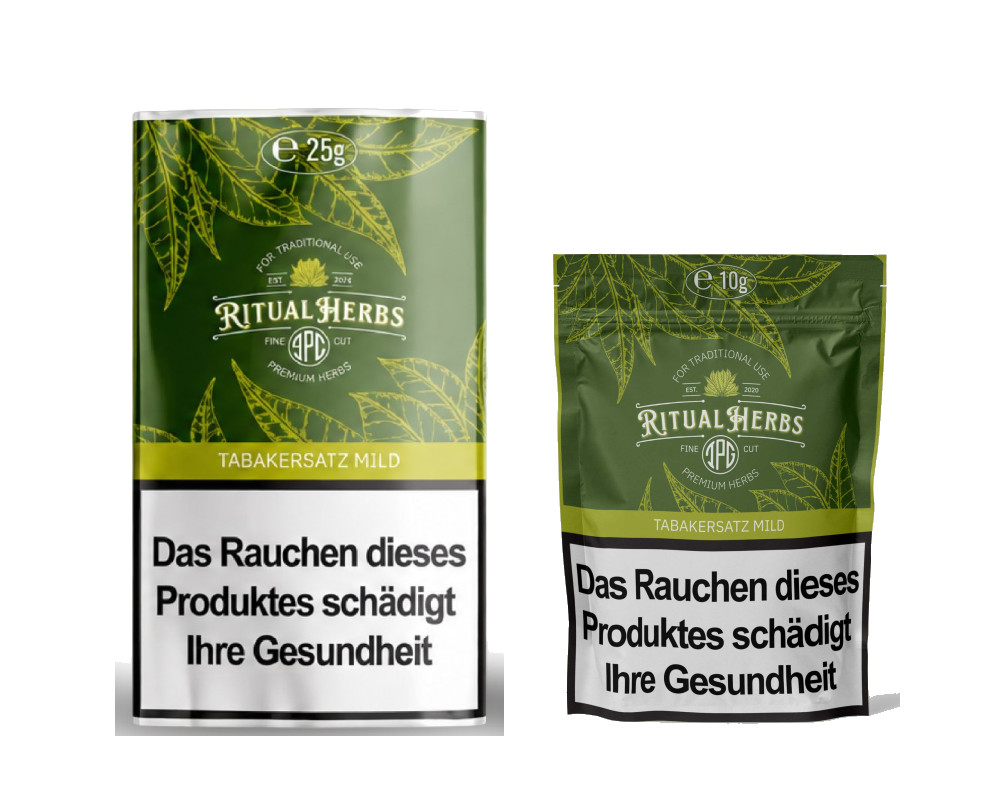
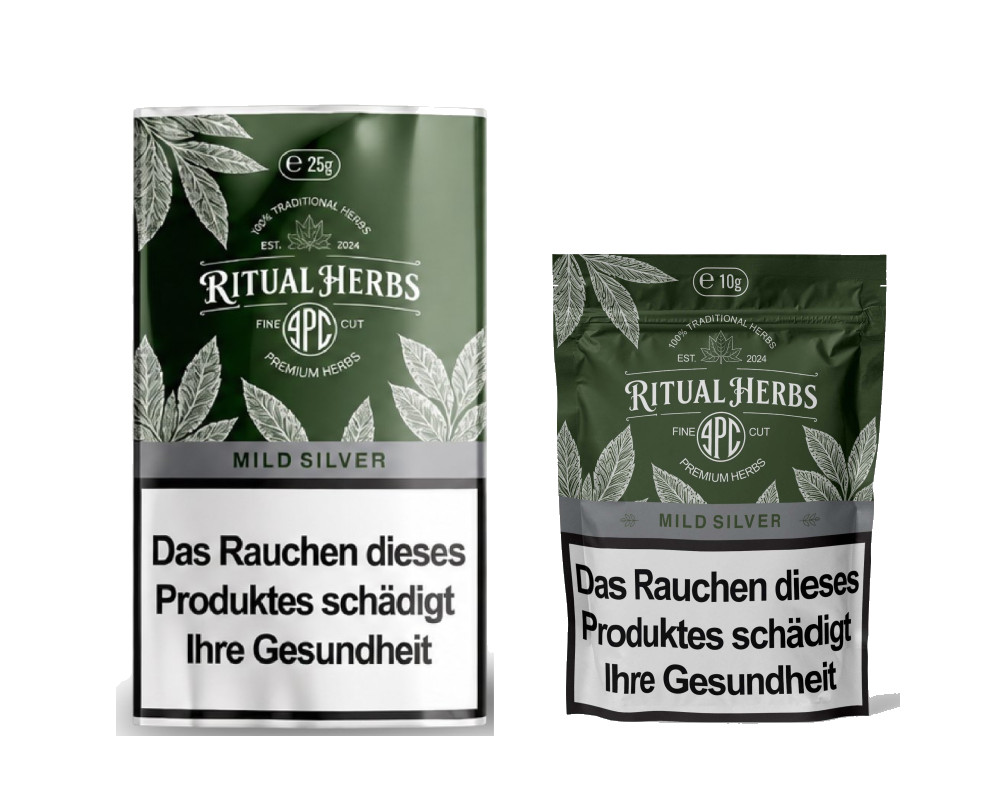
Ritual Herbs Mild and Mild Silver are made from seven plant components, fully declared on the pack. No tobacco, no nicotine, no secret ingredient. Further down we also show our herb encyclopaedia – plants we assess and in part process, but which are not necessarily in these two blends. The two are kept clearly apart on this page.

The seven components of Mild and Mild Silver

Both blends contain exactly the same seven plant parts. What differs is only the blend ratio and the cut, not the ingredient list.

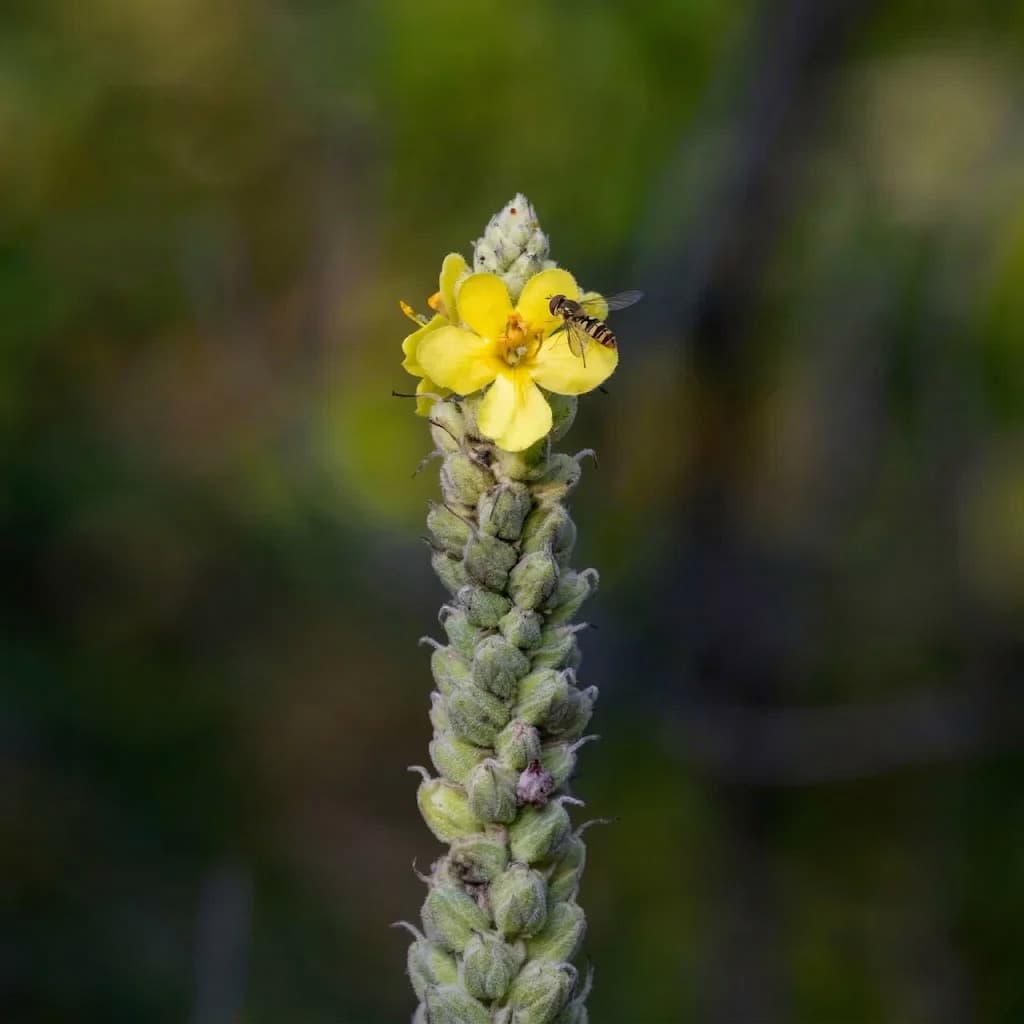
Mullein leaves

Mullein leaves

The classic among smoking herbs. The large, felty leaves of the mullein have been used in herbal blends for centuries, because they bring almost no flavour of their own and still deliver plenty of volume. In the blend they take the role of the carrier: they give structure, hold the moisture and keep the smoke soft.

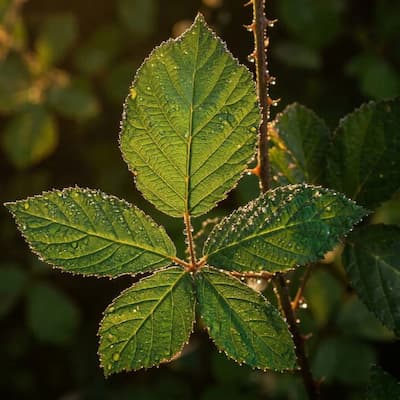
Blackberry leaves

Blackberry leaves

Mildly tart with a slightly astringent note. In the European herbal tradition blackberry leaves are known above all as a tea ingredient and have been in common use for a long time. As part of a smoking blend they bring a calm, green base note and additional volume. They are the second load-bearing component alongside mullein.

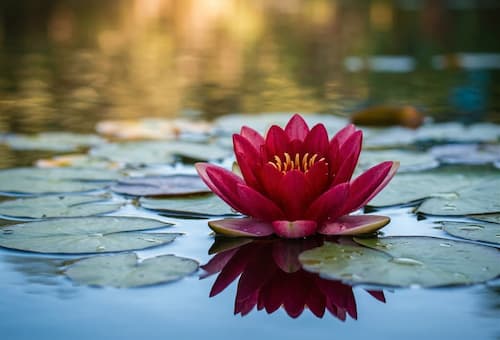
Lotus flower petals

Lotus flower petals

Mild, green and slightly earthy. Various Asian traditions have long used lotus as a food and in plant preparations, with different parts of the plant depending on the use. The petals give the blend depth without pushing themselves forward.

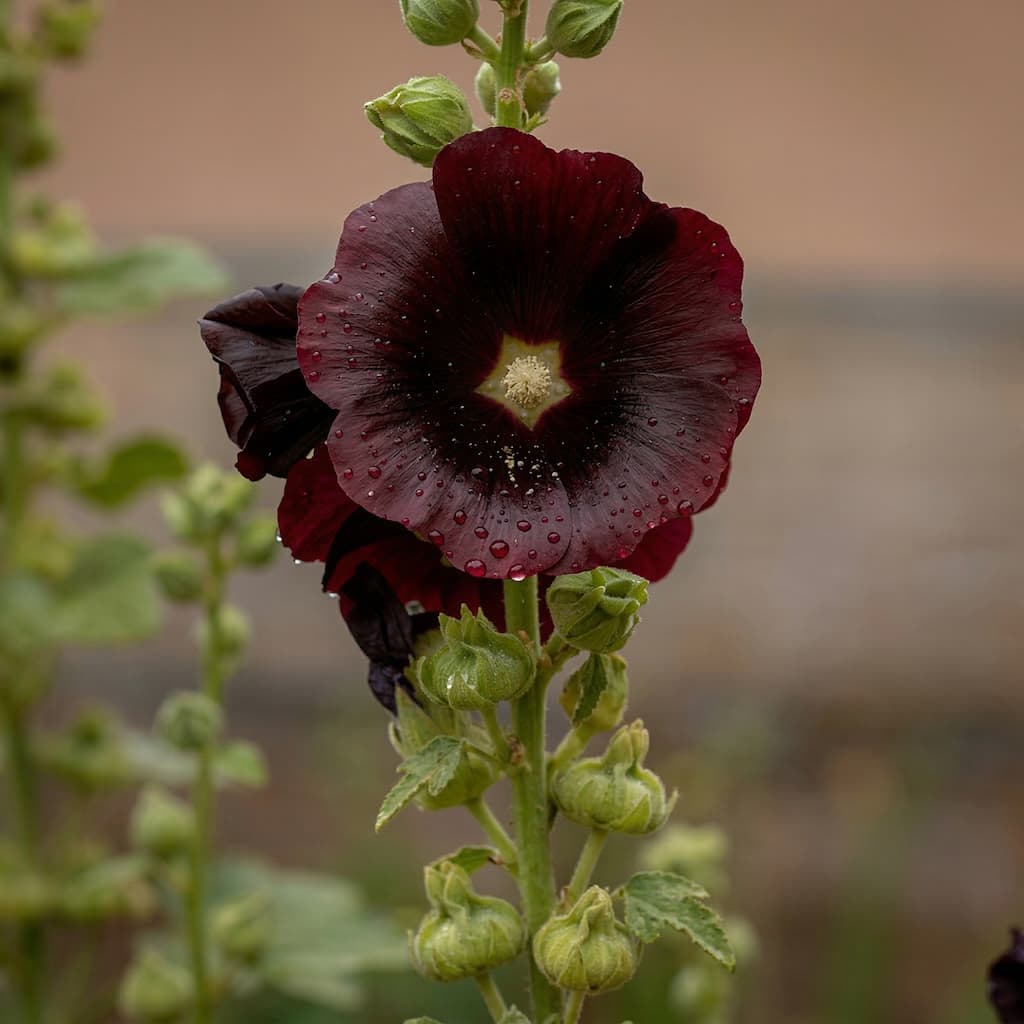
Hollyhock leaves

Hollyhock leaves

Soft and floral. Hollyhock is traditionally used in herbal infusions and is known above all for its delicate, blossom-like character. In the blend it works on the mouthfeel: it rounds off the green and spicy components and takes the edges off.

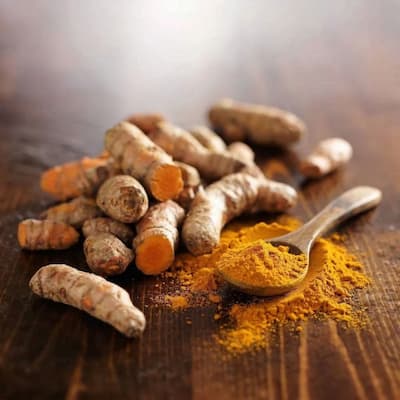
Turmeric leaves

Turmeric leaves

The leaves, not the root. While the root is known as a powerful spice, the leaves are far more restrained, green and discreetly spicy. In the blend they set a quiet spiced accent that keeps the mild leaves from becoming dull.

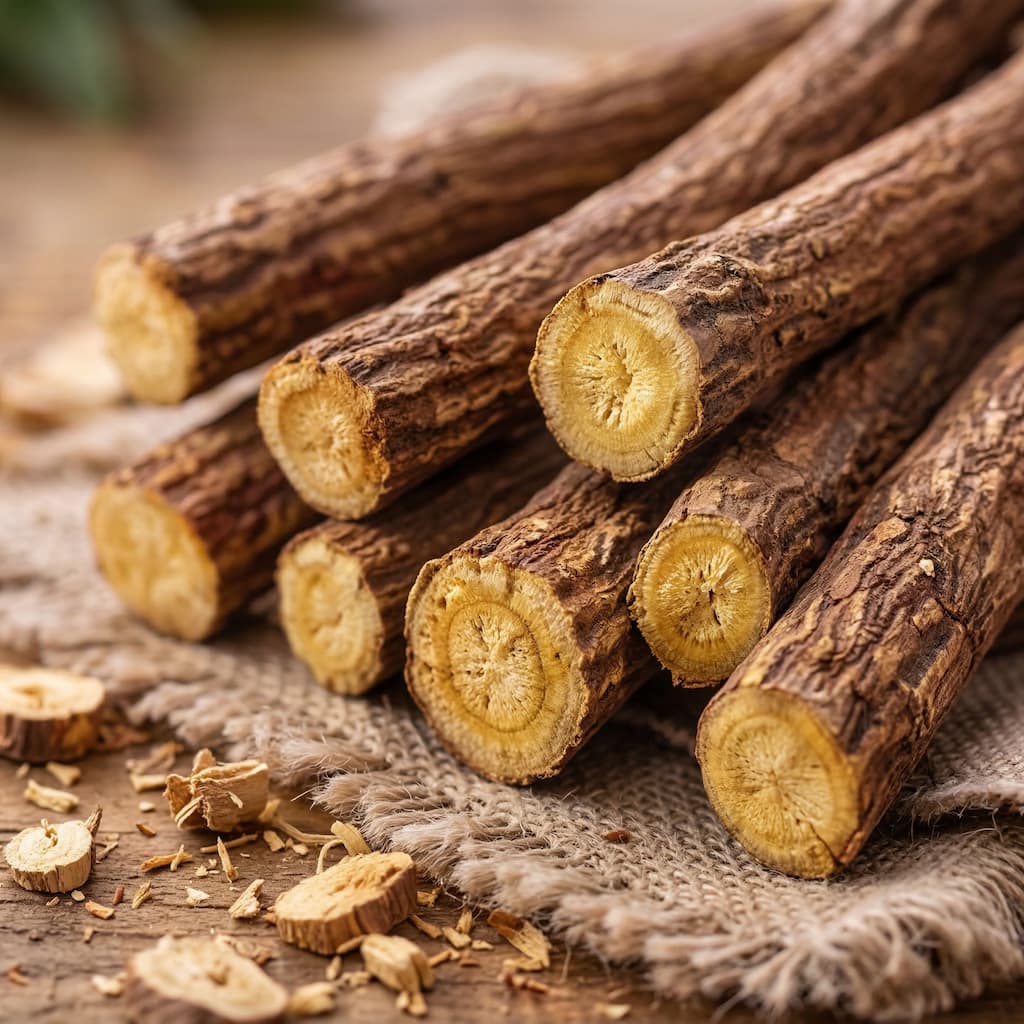
Liquorice root and liquorice leaves

Liquorice root and liquorice leaves

Both parts of the plant are in the blend and they do different jobs. The root brings the familiar natural sweetness and a warm, round aroma that catches tart or dry notes. The leaves are lighter and contribute mainly to the structure. Liquorice is traditionally used as a tea and in herbal preparations, and it is the reason our blends do not taste flat despite their largely green components.

Mild and Mild Silver differ only in blend ratio and cut. The ingredient list is identical for both: the same seven components, weighted differently.

What each herb does

A good ingredient list is only the beginning. What turns seven herbs into a blend that rolls sensibly and tastes round is decided by the role each plant takes on.

Carrier herb

Mullein leaves and blackberry leaves supply volume and structure. They make up the largest share of the blend and hold it together when rolling. Without a carrier herb, any recipe falls apart.

Mouthfeel

Lotus flower petals and hollyhock leaves take the edges off the green notes and make the smoke rounder. This role barely registers while it is there, and is immediately missed when it is not.

Accent

Turmeric leaves and liquorice give the blend a direction, the one spicy, the other soft and slightly sweet. This is also where the difference between Mild and Mild Silver lies: a few percentage points more or less.

Why a blend needs more than a good ingredient list, and how cut and residual moisture affect the burn, is set out at length on the Tobacco substitute page.

How a herb becomes an ingredient

Ritual Herbs was developed with our own process techniques. Production is German craft work, from the cut through to the finished blend. Before a herb enters that process at all, it has to be assessed.

Every herb we test has to fit the recipe: the cut, the residual moisture, the burn and the taste in combination with the other six components. That is why the list of herbs assessed is considerably longer than the list of those actually used. Whatever appears in the herb encyclopaedia either still has that assessment ahead of it, did not pass, or is intended for a different project.

We source our herbs primarily from Europe. In addition we work with partners in India, and we make a point of sourcing wild-picked herbs that have not been fertilised and have grown without chemical treatment. Our managing director travels to India regularly to maintain existing partnerships and to assess new herbs for the further development of our products. A partner production for a planned herbal cigarette is already in place there.
The herb encyclopaedia

Alongside the seven components above we keep an encyclopaedia of plants we assess regularly and in part process, for other projects or in development. They are not in Ritual Herbs Mild or Mild Silver. If you want to look up what distinguishes these herbs, you will find short portraits here.

No herb found. Try a different search term.

What is not in it

Just as important as the ingredient list is what is missing. We write it down here as openly as the seven components above.

  • No artificial flavourings. The taste comes from the seven herbs themselves and from how they work together, not from added fragrances or flavour compounds.
  • No fillers. What is in the bag is on the ingredient list and nothing else. No humectants either, the kind meant to keep a blend artificially supple for longer.
  • No tobacco. Neither as an ingredient nor as an admixture, in neither blend and in no size.
  • No nicotine. Neither added nor as a by-product of processing.

That applies to Mild and Mild Silver equally, without exception. What is on the packaging matches what is on this page. Where we are not certain, or where something is still being assessed – as with the herbs in the encyclopaedia – we say so as well, rather than leaving it out.

Frequently asked questions about the ingredients

Because alongside the seven components of Mild and Mild Silver we also show a herb encyclopaedia. It contains plants we assess and in part process, but which are not in these two blends. The two are deliberately kept apart on this page.

No. We mean the leaves of the plant, not the root known as a spice. The leaves are considerably more restrained in taste than the root.

Because they are two different parts of the plant with different jobs. The root brings the sweetness, the leaves contribute to the structure. Both are in Mild and Mild Silver.

By the same criteria as the seven main components: mainly from Europe, complemented by assessed, wild-collected herbs from India, grown without artificial fertiliser and without chemical treatment.

Possible, but not guaranteed. Some herbs in the encyclopaedia are being assessed for other projects, such as a herbal cigarette being prepared in India. For now Mild and Mild Silver are fixed to the seven components named above.

All the details on the blends

Prices, sizes and the cart are all gathered on the category page.

To Tobacco substitute →