
In short
- An herbal smoking blend contains neither tobacco nor nicotine, only dried plant parts. Legally it is a herbal smoking product and therefore falls under the German Tobacco Products Act.1,6
- How a blend behaves is determined by cut, moisture and mixing ratio, not by the ingredient list alone.
- You can recognise quality by a complete declaration, an even cut, little dust and a structure that is neither brittle nor damp.
- Tobacco-free does not mean risk-free: burning plant material produces pollutants such as tar and carbon monoxide.3,4
Table of contents
- Loading...
Tobacco substitute in the form of an herbal blend is made of several plants that are matched to one another.
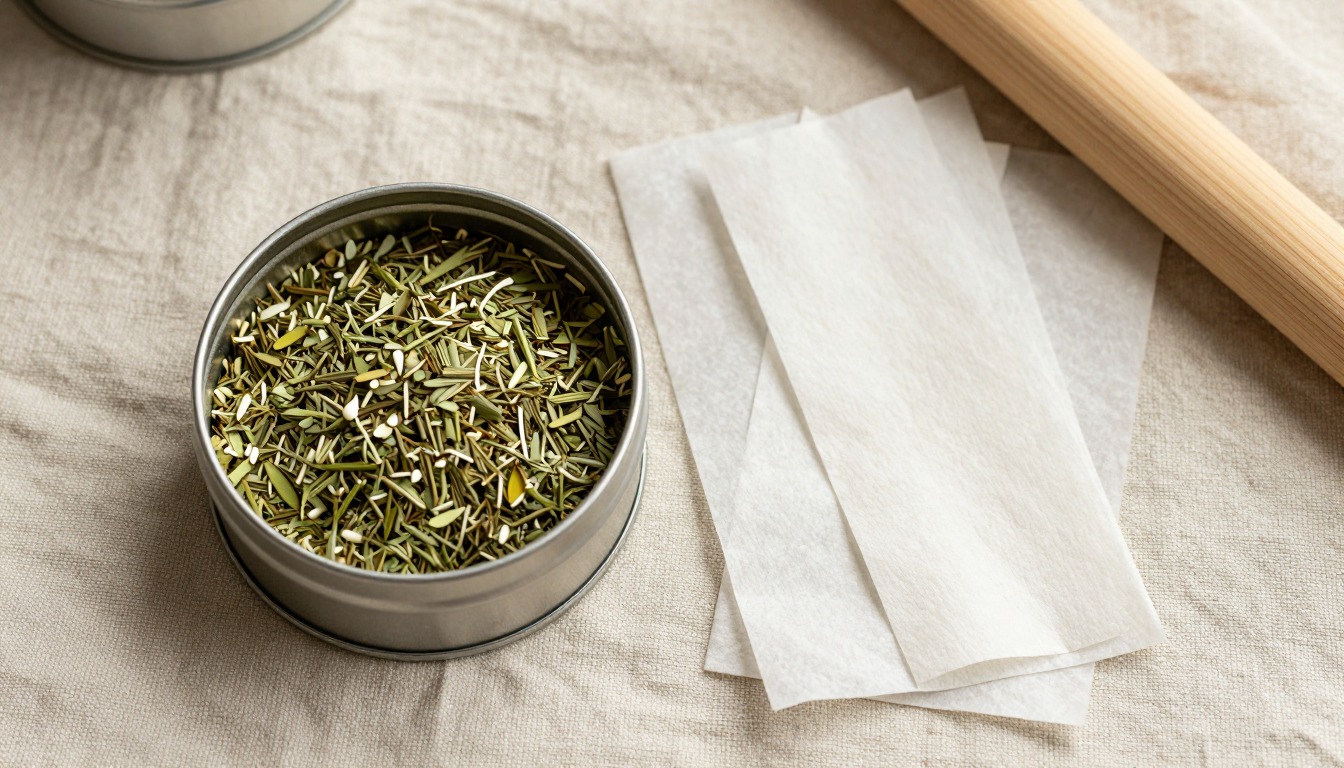
An herbal smoking blend consists of dried, cut plant parts with no tobacco and no nicotine. You use it much like fine-cut tobacco. What reaches your mouth depends less on individual names on the ingredient list than on how the plants are cut, dried and combined.
This article explains how a blend is put together, how to recognise quality, and where to learn more about each of the seven ingredients in Ritual Herbs blends.
What is a tobacco substitute?
Tobacco substitute refers to products that are used as an alternative to conventional tobacco but contain no tobacco. At Ritual Herbs they consist of selected herbs and plant components. They contain no nicotine either.
Legally, this is a category of its own. The EU Tobacco Products Directive, whose definitions the German Tobacco Products Act refers to, defines a herbal smoking product as a product based on plants, herbs or fruits that contains no tobacco and can be consumed via a combustion process.6 Under Section 2 No. 2 of the German Tobacco Products Act, herbal smoking products are among the “related products”.1 Their packs may only be placed on the market with health warnings (Section 17 (1)).2 That is why we talk about smoking here and not about burning incense: we mean a product that is burned and inhaled, not incense.
A tobacco substitute is not good simply because it is tobacco-free. It has to be easy to work with, stay consistent and suit what you plan to do with it.
If you are switching from tobacco, the guide Switching from tobacco to herbs explains what changes and what stays. Whether herbal smoke is harmful is covered factually in Is smoking herbs harmful?.
How is an herbal blend put together?
A blend has to do three things: give the material structure, carry a flavour and burn evenly. Each of these jobs calls for different plants or different processing steps.
| Job | What fulfils it | Example |
|---|---|---|
| Structure and volume | Leaves as the base of the blend | Blackberry leaves: suitable as a base ingredient, they add volume, structure and a gentle, plant-based foundation note |
| Flavour and rounding | Plants with their own aroma that balance out bitter notes | Licorice: can provide a softer, rounder flavour base |
| Burn | Cut, moisture and mixing ratio | Mild and Mild Silver: finely cut and tuned for a calm, as even as possible burn |
This is a rough classification. The role that mullein, lotus, hollyhock and turmeric play in the blend is covered in the individual articles further down. The descriptions always concern the flavour, structure and behaviour of the plant, never an effect on you.
Cut, moisture and burn
Cut, structure, moisture and mixing ratio determine how a tobacco substitute behaves in everyday use. Herbs that are cut too coarse are hard to work with, while material that is too fine can create dust or burn unevenly. Blends that are too dry can feel scratchy and burn too fast, while those that are too damp are hard to light.
| Condition of the blend | Possible result |
|---|---|
| Cut too coarse | Hard to work with |
| Cut too fine | Can create dust, burns unevenly |
| Too dry | Can feel scratchy, burns too fast |
| Too damp | Hard to light, reacts unevenly |
Over several years, Ritual Herbs has worked on its own processing techniques to strike exactly this balance: loose but not brittle, finely cut but not dusty. The aim is an even structure, clean handling and good burning behaviour.
Some unpredictability remains, and that is part of it. With herbal blends, paper, moisture, filling amount and airflow also influence how the blend burns. It will not burn identically in every situation.
How to roll the blend and read the burn is shown step by step in How to roll and smoke tobacco substitute.
How do you recognise quality?
You can see and feel quality before you light anything. Four points help you judge it:
- Complete ingredient list. Every plant is listed with its name and plant part: “blackberry leaves” instead of “herbs”.
- Even cut. No bulky pieces, no dust at the bottom of the pouch.
- Loose structure. The blend feels neither crumbly and brittle nor damp.
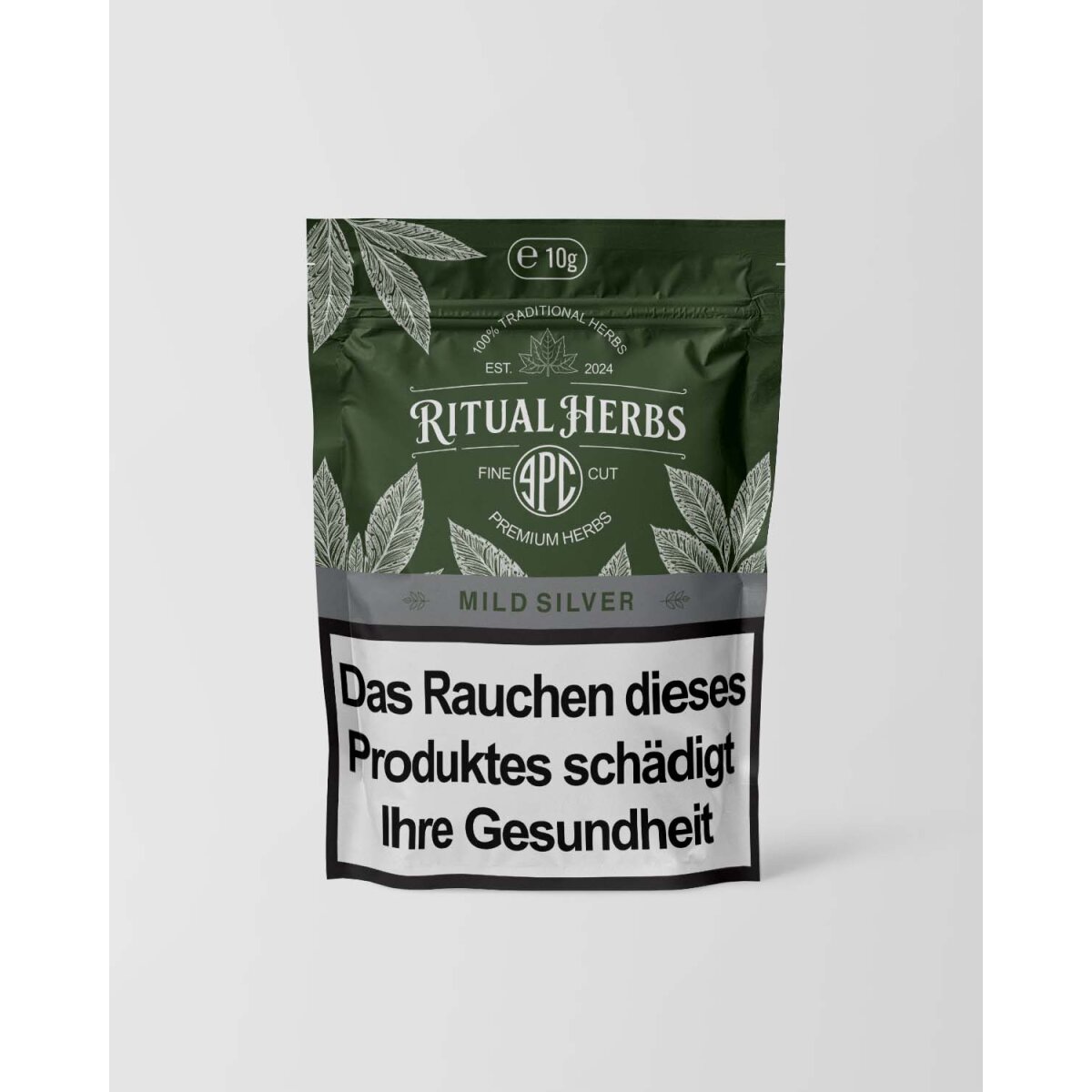
- Resealable packaging. A blend that depends on its moisture belongs in a pack that can be closed cleanly again after opening. How to store it afterwards is covered in the article How to store herbal blends.
Where do the herbs come from?
Ritual Herbs sources its herbs primarily from Europe. In addition, the brand works with partners in India and tests selected wild-picked herbs there that have grown without fertiliser and without chemical treatment. The managing director travels to India regularly to maintain the partnerships and look for new herbs.
Raw materials are not taken on untested: every plant has to fit the recipe, the cut and the processing. Final processing, blending and quality control take place in Germany.
The ingredients in detail
Both varieties contain the same seven plant components. Each plant has its own article:
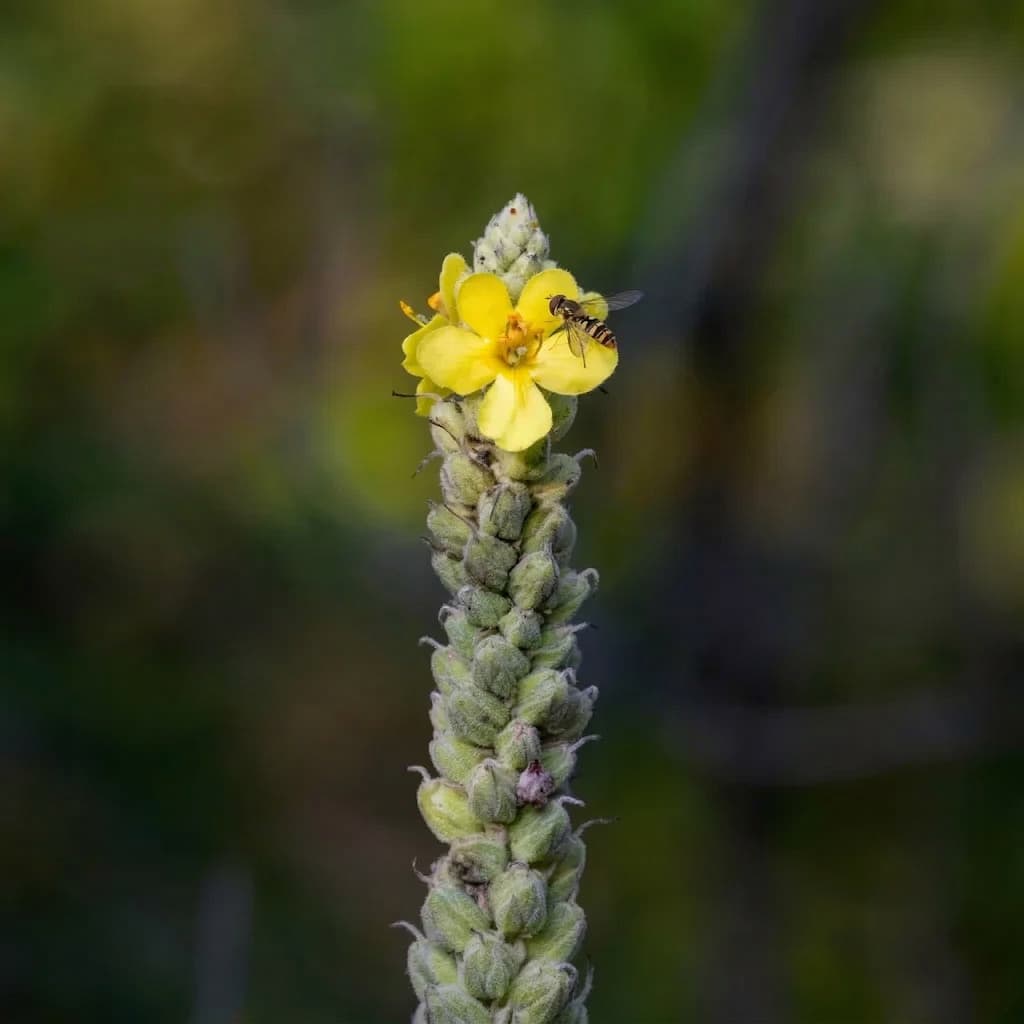
- Mullein leaves
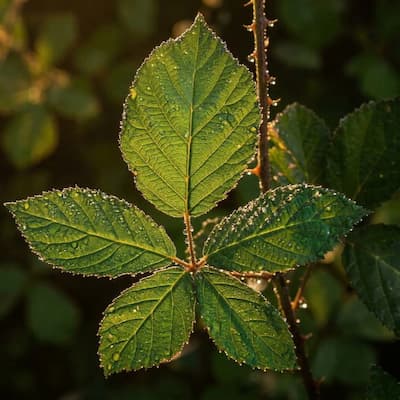
- Blackberry leaves
- Hollyhock leaves
- Lotus flower petals
- Licorice root and licorice leaves
- Turmeric leaves
Which other plants have been smoked is described in Which herbs can you smoke?; what terpenes are is explained in Terpenes in herbal blends explained.
The seven plant components
Mullein leaves
Blackberry leaves
Lotus flower petals
Hollyhock leaves
Turmeric leaves
Licorice root
Licorice leaves
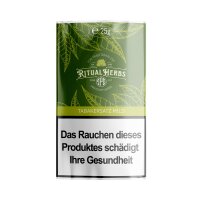
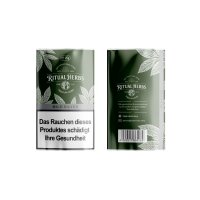
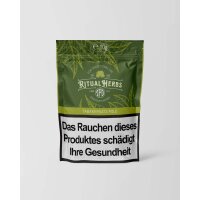
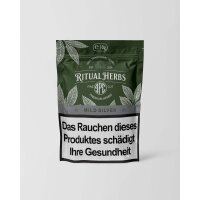
Mild and Mild Silver
Ritual Herbs offers two varieties, both in 10 g and 25 g packs. The ingredients are identical. The difference lies in mixing ratio and cut.
| Mild | Mild Silver | |
|---|---|---|
| Character | soft, harmonious, restrained in flavour | calm, somewhat stronger, less restrained than Mild |
| Ingredients | identical: seven plant components, tobacco-free, nicotine-free | identical: seven plant components, tobacco-free, nicotine-free |
| Pack sizes | 10 g and 25 g | 10 g and 25 g |
You can find both varieties under Tobacco substitute.
Frequently asked questions
No. Ritual Herbs Mild and Mild Silver are tobacco-free and nicotine-free.
Mullein leaves, blackberry leaves, lotus flower petals, hollyhock leaves, turmeric leaves, licorice root and licorice leaves. No other herbs are included.
The cut, moisture and mixing ratio of the blend, plus paper, filling amount and airflow. The varieties are tuned for a calm, as even as possible burn. Whether it turns out exactly that way in an individual case also depends on you.
We make no such claim. Tobacco substitute is not a health product. Even with tobacco-free and nicotine-free products, smoke is produced when they burn.
Primarily from Europe. We also work with partners in India and source selected wild-picked herbs from there that have grown without fertiliser and without chemical treatment. Final processing takes place in Germany.
Dry, cool and tightly closed, away from direct sunlight. After opening, close the pack cleanly again so that structure and moisture stay stable. More in the article How to store herbal blends.
An honest assessment
Even nicotine-free herbal smoke is smoke. Burning plant material produces pollutants such as tar;3 herbal cigarettes can release as much carbon monoxide as conventional cigarettes.4,5 Smoking herbal cigarettes is therefore not “healthy” smoking.3
What falls away is the nicotine. We claim nothing more than that. We do not advertise our blends as a smoking cessation aid and make no health claims. The products are intended for adults.
The varieties in the shop
Sources
- German Tobacco Products Act (TabakerzG), Section 2 Further definitions, No. 2 (in German): gesetze-im-internet.de/tabakerzg/__2.html
- German Tobacco Products Act (TabakerzG), Section 17 (1) (warnings for herbal smoking products) (in German): gesetze-im-internet.de/tabakerzg/__17.html
- Wikipedia (in German): Kräuterzigarette (“Bei der Verbrennung entstehen Schadstoffe wie Teer”, i.e. burning produces pollutants such as tar): de.wikipedia.org/wiki/Kräuterzigarette
- Wikipedia: Herbal cigarette (section on carbon monoxide and tar): en.wikipedia.org/wiki/Herbal_cigarette
- Utopia (in German): Kräuterzigarette, wieso du auf den Tabakersatz verzichten solltest (“Herbal cigarettes: why you should do without the tobacco substitute”): utopia.de/ratgeber/kraeuterzigarette-wieso-du-auf-den-tabakersatz-verzichten-solltest
- Directive 2014/40/EU (Tobacco Products Directive), Art. 2 No. 15 “herbal product for smoking”, to which Section 1 (1) TabakerzG refers: gesetze.legal/eu/rl_2014_40_eu/2 and gesetze-im-internet.de/tabakerzg/__1.html (in German)
x
Please sign in to write a comment.