In short
- Store your herbal blend dry, cool and tightly closed, away from direct sunlight. That is what Ritual Herbs specifies for Mild and Mild Silver. According to the manufacturer, an ordinary shelf is perfectly enough.
- After every use, press the pack shut cleanly, do not just fold it loosely.
- Not in the fridge: according to the manufacturer, condensation forms on the material when you take it out.
- Too dry, and the blend lights instantly and burns through hard; too damp, and it keeps going out. Mould or a musty smell means: throw the blend away.
Table of contents
- Loading...
The last portion should feel like the first.
Store an herbal blend dry, cool and tightly closed, protected from direct sunlight. In everyday use, that is all it takes. Why it still matters: dried plant material reacts to moisture and air, and with a smoking blend you notice that in the burn.
The basic rule
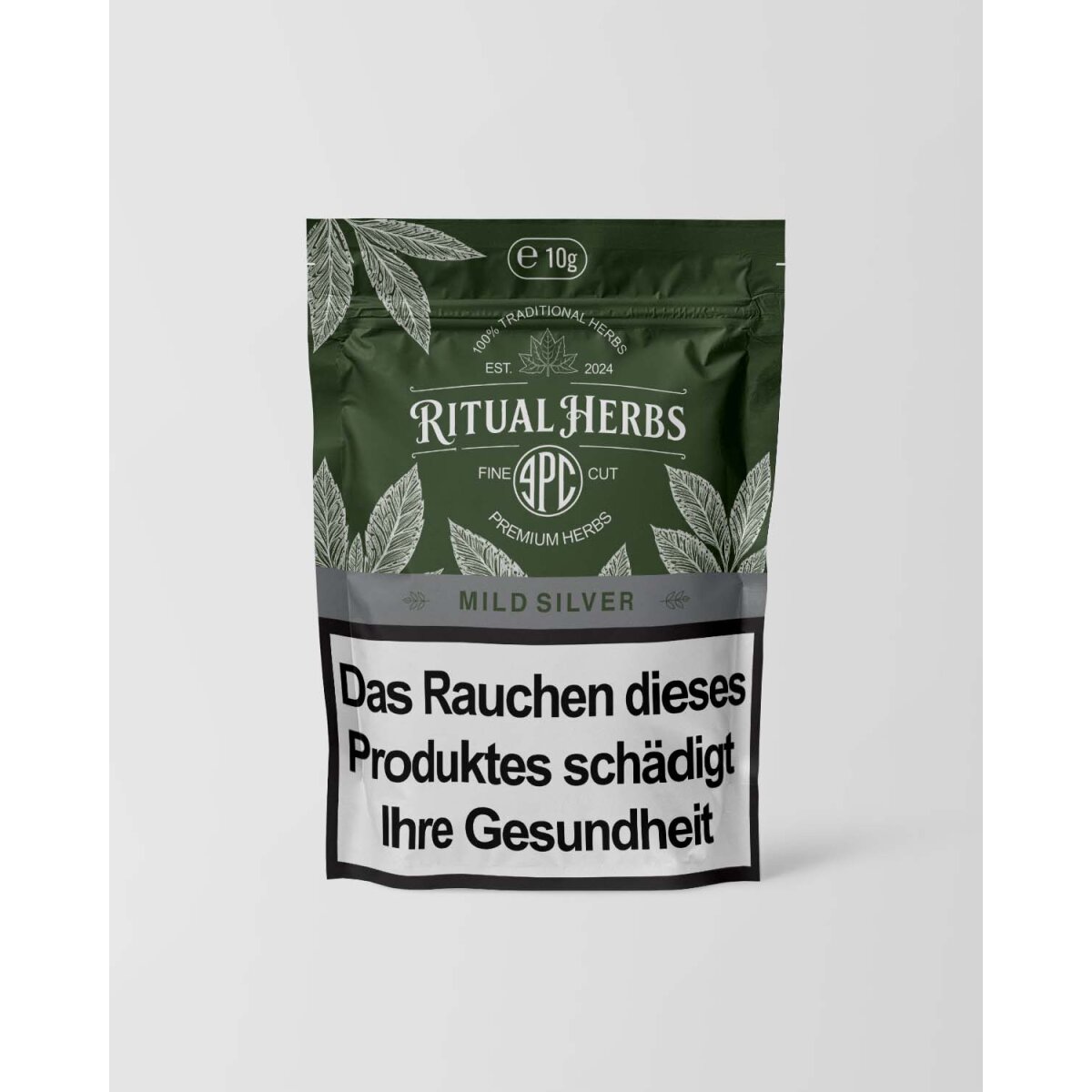
For Ritual Herbs Mild and Mild Silver, the rule is: store dry, cool and tightly closed, protected from direct sunlight. According to the manufacturer, an ordinary shelf is perfectly enough for this. After opening, close the packaging cleanly again so that structure and moisture stay as stable as possible. This applies equally to the 10 g and the 25 g pack.
These points match what is generally recommended for spices and dried herbs: dark, dry, airtight, not too warm.1,2
How to roll and smoke the blend afterwards is explained in How to roll and smoke tobacco substitute; what changes when you switch from tobacco is covered in Switching from tobacco to herbs.
Why storage affects the burn
The residual moisture of a blend helps determine how it lights and how it burns. According to the manufacturer, a blend that is too dry lights instantly and burns through hard, while one that is too damp keeps going out.
| Condition | Result according to the manufacturer |
|---|---|
| Too dry | Lights instantly, burns through hard |
| Too damp | Keeps going out |
You can influence this mainly after opening: a pack left open, warmth or a damp storage spot change the blend. Especially with the 25 g pack, which is used over several weeks, the blend loses moisture every time it lies open in the drawer. According to the manufacturer, small amounts even dry out faster, because more surface is exposed relative to the amount of material. That is exactly where storage comes in.
How do you store an herbal blend properly?
Schritt 1
Close it after every use.
Both pack sizes are resealable. Our recommendation: press it shut cleanly, do not just fold it loosely. If you open and close the pack often, let as little air as possible stay in the packaging.
Schritt 2
Choose a cool spot.
According to the manufacturer, an ordinary shelf is enough. With a bulk pack like the 25 g pouch, a fixed spot away from window sills and radiators is worthwhile, since the temperature fluctuates most there. Even with the small pack, a fixed place in a cupboard makes more sense than a changing spot in the kitchen. With spices, the essential oils begin to evaporate from about 25 °C [1, 2]; stove and heating are therefore poor places.
Schritt 3
Keep light away.
You should avoid direct sunlight, which is part of our storage instructions. With spices, UV radiation can make aroma and colour fade [2].
Schritt 4
Keep it dry.
Damp rooms like the bathroom are unsuitable. Moisture makes dried spices clump or, in the worst case, go mouldy [1, 2].
Schritt 5
Not in the fridge.
According to the manufacturer, it is not a good idea, because condensation forms on the material when you take it out. For spices, Utopia and Öko-Test describe it the same way: dark and cool, but too damp [1, 2].
Decanting: glass, tin, plastic?
Decanting is not a must. What matters is that the pack is closed properly again after every use. If it no longer closes tightly or you would rather decant, there is a clear recommendation for spices: airtight tins made of metal or porcelain, or brown glass jars.1 They protect against light and air.
We give no recommendation for plastic containers. We have no reliable source on this, and our storage instructions name no container material, only closing the packaging cleanly.
Common mistakes
| Mistake | Why it is a problem |
|---|---|
| Leaving the pack open or only folding it loosely | The blend loses moisture, especially noticeable with large packs over several weeks (manufacturer). With spices, essential oils evaporate on contact with air and they lose flavour over time2 |
| On the window sill or in the sun | Our storage instructions say: protect from direct sunlight. In addition, the temperature fluctuates most on window sills (manufacturer). With spices, UV radiation can make aroma and colour fade2 |
| Next to the stove or heating | The temperature also fluctuates strongly at radiators (manufacturer). With spices, essential oils evaporate from about 25 °C1,2 |
| In the fridge | When you take it out, condensation forms on the material (manufacturer) |
| In damp rooms like the bathroom | Moisture makes dried spices clump or, in the worst case, go mouldy1 |
| Putting water directly on the herbs | According to the manufacturer, water must never touch the herbs directly, see the next section |
If the blend has become too dry
According to the manufacturer, a glass of water next to the closed pouch in a container helps. A few hours of waiting is usually enough. Water must never touch the herbs directly. Too much moisture can encourage mould;2 afterwards, check the blend for smell and appearance (see the next section).
For taking the blend outdoors, see Smoking outdoors: consideration, wind and forest fire danger.
When to stop using the blend
Moisture makes spices clump or, in the worst case, go mouldy.1,2 If your blend has clumped, shows mould or smells musty, you are better off throwing it away. You should no longer smoke it.
A fading aroma is less clear-cut. With spices, essential oils evaporate on contact with air and from about 25 °C,1,2 so the flavour weakens over time. What helps most against this is keeping the pack closed and cool.
Frequently asked questions
Dry, cool and tightly closed, away from direct sunlight. According to the manufacturer, an ordinary shelf is enough. After opening, close the pack cleanly again. That keeps structure and moisture as stable as possible.
In a fixed spot in a cupboard or on a shelf, away from window sills and radiators. According to the manufacturer, the temperature fluctuates most there.
According to the manufacturer, a glass of water next to the closed pouch in a container helps; a few hours of waiting is usually enough. Water must never touch the herbs directly. Afterwards, check smell and appearance: too much moisture can encourage mould.2 You can prevent this by closing the pack consistently after every use.
We give no fixed number of months for our blends, because we have no documented figure. As a guide: for dried kitchen herbs, a shelf life of at most one year is cited.1 What matters is that the pack is closed again after every use.
You can. For spices, airtight tins made of metal or porcelain, or brown glass jars, are recommended.1 We give no recommendation for plastic. More important than the container is that it closes tightly.
For spices this is documented: light and air make them lose flavour.1 With herbal smoking blends, the burn comes on top of that, which according to the manufacturer depends on residual moisture.
An honest assessment
Proper storage helps preserve flavour and burn. It does not make smoke any less harmful. Even nicotine-free herbal smoke is smoke; burning plant material produces pollutants such as tar.3 In the smoke of herbal cigarettes, carbon monoxide was measured in addition to tar.3 More on this and on how a blend is put together in the article Tobacco substitute: what is an herbal smoking blend?
The statements from the spice sources apply to spices and dried kitchen herbs. We transfer them to herbal blends because here, too, we are dealing with dried plant material. In case of doubt, the manufacturer’s information on Ritual Herbs takes precedence.

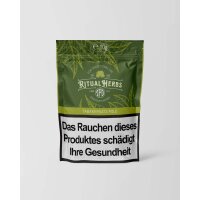
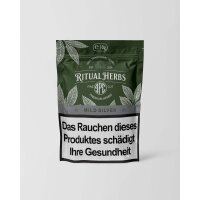
Mild and Mild Silver
Sources
- Utopia (in German): Gewürze richtig aufbewahren (storing spices correctly), Luise Rau, 6 August 2025: utopia.de/ratgeber/gewuerze-richtig-aufbewahren-so-gehts
- Öko-Test (in German): Gewürze aufbewahren: Mit diesen Tipps behalten Koriander, Kurkuma & Co. ihr Aroma (storing spices: how coriander, turmeric & co. keep their aroma), Lino Wirag, 14 July 2025: oekotest.de/essen-trinken/Gewuerze-aufbewahren…
- Wikipedia (in German): Kräuterzigarette (“Bei der Verbrennung entstehen Schadstoffe wie Teer”, i.e. burning produces pollutants such as tar): de.wikipedia.org/wiki/Kräuterzigarette

x
Please sign in to write a comment.