Key points
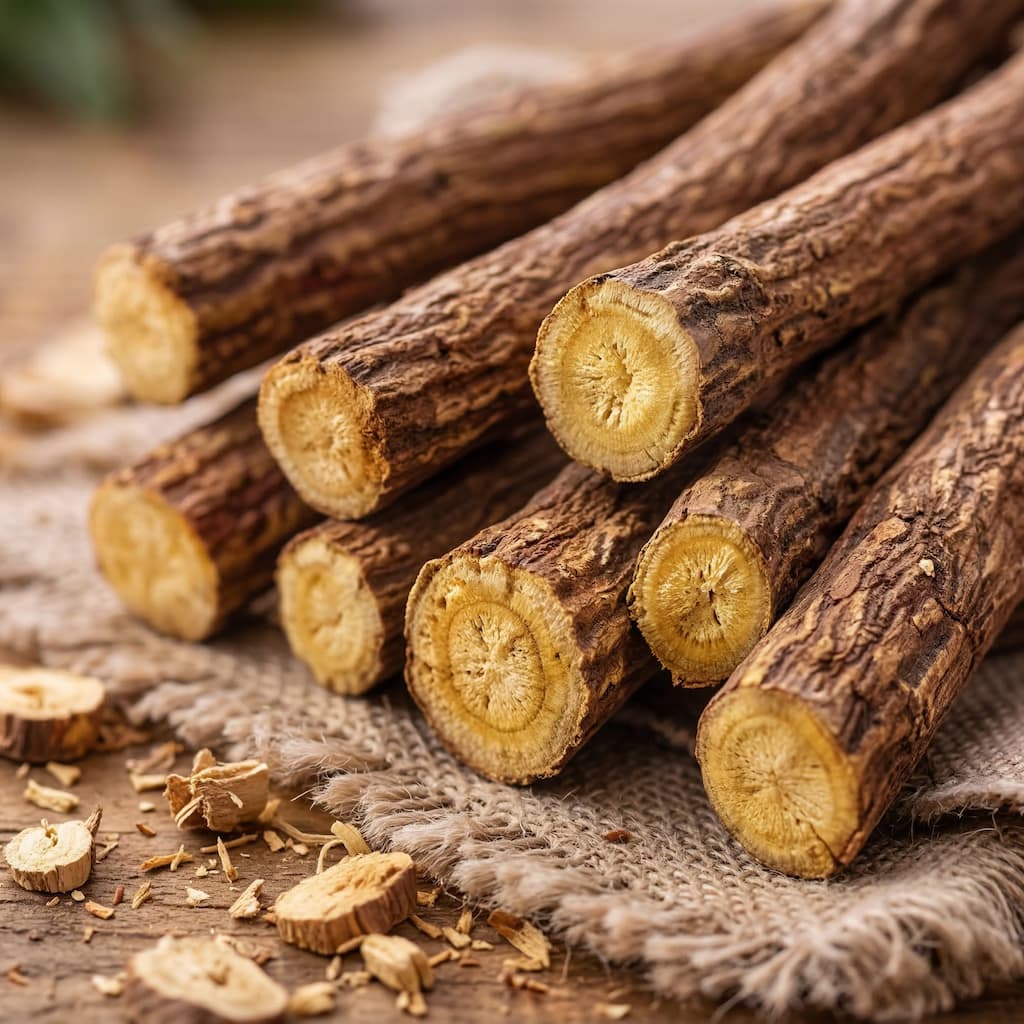
- Licorice is the root of Glycyrrhiza glabra, a perennial herb of the legume family.
- Its sweet compound, glycyrrhizin, is about fifty times as sweet as cane sugar. Licorice confectionery is made from the thickened root juice.
- Mild and Mild Silver contain licorice root and licorice leaves, two of seven ingredients. Their job is flavor: licorice can give the blend a softer, rounder base.
- This article says nothing about any effect of smoking. Even nicotine-free herbal smoke is still smoke.
Table of contents
- Loading...
A root with built-in sweetness.
Licorice is the root of true licorice, Glycyrrhiza glabra. Its sweet compound, glycyrrhizin, is about fifty times as sweet as cane sugar[1]. In a blend for smoking, licorice is therefore above all a flavor component: it can give the blend a warm, round base and soften sharp or dry notes.
This article is about the plant, the path from root to licorice confectionery, and the role of licorice root and licorice leaves in our blends. You will not find an effect of smoking here. We have no evidence for one, and what we cannot back up, we do not claim.
The plant: Glycyrrhiza glabra
True licorice is a perennial, herbaceous plant that grows 50 to 150 centimeters tall. It belongs to the legume family. In summer it bears bluish-violet and white pea-like flowers. The part that is used, however, lies underground.
- Botanical name: Glycyrrhiza glabra L., true licorice[1]
- Family: Fabaceae (legumes)
- Growth habit: perennial, herbaceous, 50 to 150 cm tall
- Leaves: odd-pinnate, with 9 to 17 leaflets
- Flowers: June to July, bluish-violet and white
- Original range: from Italy to the Arabian Peninsula and Xinjiang
- Parts used: mainly the root, harvested in autumn, plus the runners; Ritual Herbs also uses the leaves
- Name: from Greek glykys (sweet) and rhiza (root)
Harvesting takes patience. Licorice is grown by laying runners or root pieces in rows. The highest yields come from plants aged 12 to 15 years[1].
Glycyrrhizin: where the sweetness comes from
Glycyrrhizin is the sweet compound of licorice root, a saponin and triterpenoid with about fifty times the sweetness of cane sugar[1][2]. Depending on cultivation, it makes up around 7 to 10 percent of the root[3]. Roots from the autumn harvest are said to contain more of it than roots from the summer harvest[1].
Glycyrrhizin is also the substance that gives licorice confectionery its typical taste[1]. Whether and how clearly this sweetness comes through in the smoke of a blend, we know of no reliable source. A blanket statement would be speculation.
From root to licorice confectionery
Licorice is an old cultivated plant. A licorice drink called “Mai sus” is recorded from ancient Egypt. According to tradition, the Greek scholar Theophrastus, who lived around 350 BC, valued licorice as a thirst quencher and as a remedy for coughs[1]. That is plant history, not a promise for today.
Licorice confectionery itself is made from the root extract, the thickened juice of the root[1]. For the classic licorice shapes, sugar syrup, flour and gelatin are added[4]. In Pontefract, England, the apothecary George Dunhill added sugar in 1760 to licorice extract, which until then had been used as a medicine. Licorice only became a sweet on a large scale there in the 19th century[5].
Incidentally, the German word for licorice confectionery, Lakritz, goes back to the same Greek word as the botanical name: glykyrrhiza, the “sweet root”[4].
More plants at a glance: Which herbs can you smoke?. Another ingredient with its own article is Smoking mullein.
Licorice in Mild and Mild Silver
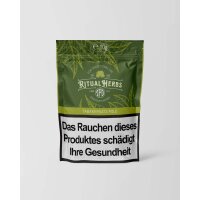
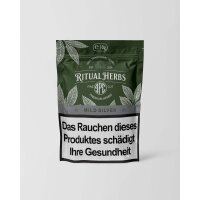
Both Ritual Herbs varieties contain the same seven plant ingredients: mullein leaves, blackberry leaves, lotus flower petals, hollyhock leaves, turmeric leaves, licorice root and licorice leaves. The difference between Mild and Mild Silver lies in the mixing ratio and the cut, not in the ingredients. Mild is softer and more balanced, Mild Silver somewhat more distinctive.
The seven plant ingredients
mullein leaves
blackberry leaves
lotus flower petals
hollyhock leaves
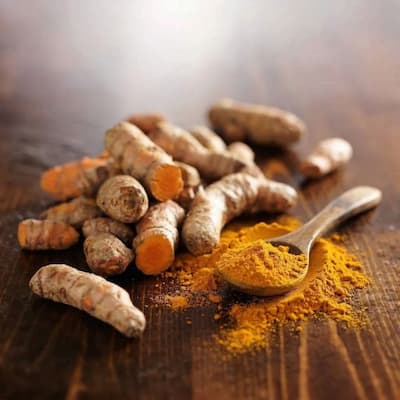
turmeric leaves
licorice root
licorice leaves
Licorice has a clear job here: flavor. In our herb description it stands for a sweetness and a warm, round aroma, and in a blend it can provide a softer, rounder flavor base. The root is the well-known part, with its characteristic taste. The sources on the leaves are thinner, so we say no more about them than that they are in both varieties.
Both varieties are fine-cut. An even cut supports airflow, dosing and burning behavior. Cut, moisture and mixing ratio therefore also decide how a blend behaves, not just the choice of herbs.
On aroma compounds, see Terpenes in herbal blends explained; the blend as a whole is described in Tobacco substitute: what is an herbal smoking blend?.
Frequently asked questions
Licorice is the root of Glycyrrhiza glabra, a perennial herb of the legume family. Its sweet compound, glycyrrhizin, is about fifty times as sweet as cane sugar.
No. Licorice is the plant, or rather its root. Licorice confectionery is made from the thickened root extract, usually with sugar syrup, flour and gelatin.
Licorice root and licorice leaves. Both varieties contain the same seven plant ingredients; they differ in mixing ratio and cut.
No. Both varieties are tobacco-free and nicotine-free.
Sweet, with the taste you know from licorice confectionery: glycyrrhizin gives licorice its typical taste. We describe licorice as having a sweetness and a warm, round aroma. How much of that comes through in a finished blend also depends on the other ingredients.
The well-known warnings refer to eating licorice confectionery. The German Federal Institute for Risk Assessment (BfR) recommends taking in less than 100 milligrams of glycyrrhizin per day; according to the BfR, anyone who regularly eats licorice high in glycyrrhizin risks sodium retention, potassium loss and raised blood pressure[6]. Whether and how much glycyrrhizin passes into the smoke when burned, we know of no reliable source. We therefore cannot say that the warnings apply to smoking, nor that they do not.
An honest assessment
Even nicotine-free herbal smoke is smoke. Burning plant material produces harmful substances such as tar[7], and smoking herbal cigarettes produces a high concentration of carbon monoxide; the smoke can also contain heavy metals[8]. This is true regardless of which herb is burning, licorice included.
What is left out is the nicotine. We claim nothing more. Ritual Herbs is not a health product and not a smoking cessation aid; according to rauchfrei-info.de, there is no reliable scientific evidence for herbal cigarettes as an aid to quitting smoking[8]. The products are intended for adults.
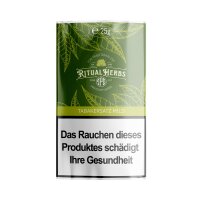
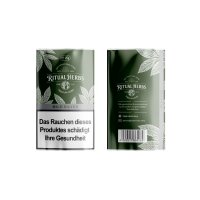
Mild and Mild Silver contain the same seven herbs, mixed and cut differently. Both are available in 10 g and 25 g packs.
Mild and Mild Silver
Read more
Sources
- Wikipedia (in German): Echtes Süßholz
- Wikipedia (in German): Glycyrrhizin
- Wikipedia: Liquorice
- Wikipedia (in German): Lakritze
- Wikipedia: Pontefract cake
- German Federal Institute for Risk Assessment (BfR): Health assessment of liquorice
- Wikipedia (in German): Kräuterzigarette
- rauchfrei-info.de (in German): Kräuterzigaretten

x
Please sign in to write a comment.