Key points
- Hollyhock (Alcea rosea) and marshmallow (Althaea officinalis) are two different species of the same family, the mallow family. The hollyhock used to be called Althaea rosea, hence the mix-up.
- The plant contains tannins and mucilage. The petals of the dark-red varieties contain a lot of the pigment malvidin, which is why the hollyhock was once grown as a dye plant.
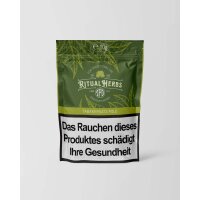
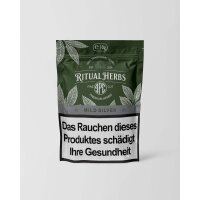
- At Ritual Herbs, hollyhock leaves are one of seven ingredients in Mild and Mild Silver. Marshmallow is not included.
- Even nicotine-free herbal smoke is smoke. Burning herbs produces combustion products such as tar and carbon monoxide.
Table of contents
- Loading...
Smoking hollyhock: a plant that is often confused with marshmallow.
Hollyhock leaves are one of seven ingredients in the tobacco-free, nicotine-free blends Ritual Herbs Mild and Mild Silver. Marshmallow is not in them, even though the two plants are often lumped together. This article sorts out what the hollyhock is botanically, what can be substantiated about it and where we deliberately claim nothing.
The plant: Alcea rosea
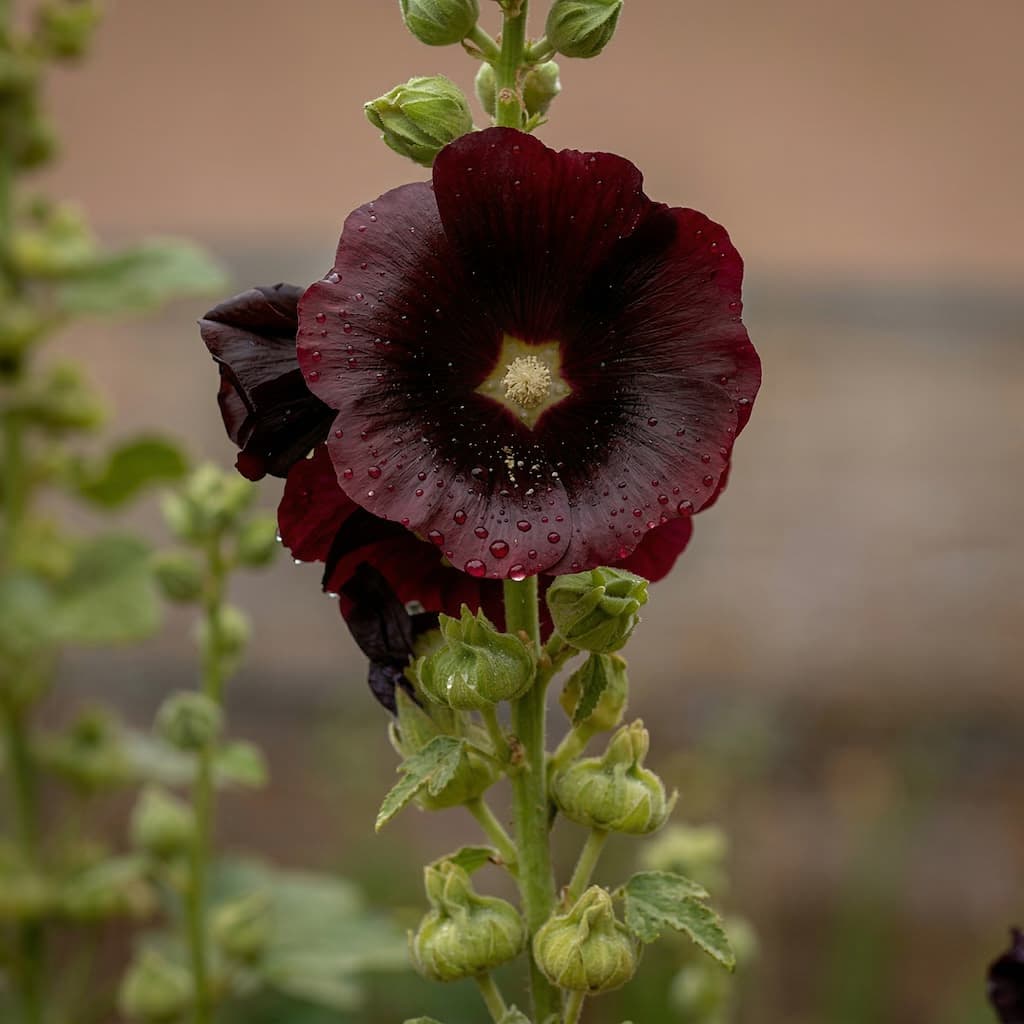
The common hollyhock is a biennial to short-lived perennial plant and grows 1 to 2 metres tall, rarely up to 3 metres. Its leaf blade is almost circular, felty-haired, weakly three- to seven-lobed and measures 6 to 16 centimetres. The corolla reaches 6 to 10 centimetres in diameter. The petals are pink to purple or blackish red, rarely also white or yellow.
The hollyhock reached southern Europe from south-western China in the 15th century, possibly earlier. It is probably a cultivated hybrid, that is, a form that only arose in cultivation.
- Botanical name: Alcea rosea L., formerly Althaea rosea
- Family: mallow family (Malvaceae)
- Growth habit: biennial to short-lived perennial, 1 to 2 m, rarely up to 3 m
- Flower: pink to purple or blackish red, rarely white or yellow
- Route to Europe: introduced from south-western China to southern Europe in the 15th century (possibly earlier)
- German name: Stockrose
The same family includes such different plants as the cacao tree, okra, cotton and linden. In Europe the hollyhock is known mainly as an ornamental plant from perennial borders and cottage gardens.
What is in the hollyhock
Hollyhock contains tannins and mucilage. Mucilage consists mainly of polysaccharides that absorb water and form gels in the process. Because of these constituents, the hollyhock turns up in some tea blends. That is tea tradition and says nothing about smoke.
Whether and how mucilage makes itself felt in smoke, we cannot substantiate. We therefore claim nothing about it.
In earlier times the hollyhock was grown as a dye plant. Only the blackish-red varieties were used for this, because their petals contain the anthocyanin malvidin in large amounts. It was used to colour wine, liqueur and textiles, for example, in shades between violet-blue and grey. That is botany and dyeing history. It has nothing to do with our blends: they contain hollyhock leaves, not petals.
Hollyhock or marshmallow?
Hollyhock (Alcea rosea) and true marshmallow (Althaea officinalis) are two different species from the mallow family. For the hollyhock, Althaea rosea is an important synonym, so it was also placed in the marshmallow genus. That explains why the names still get mixed up today. Ritual Herbs Mild and Mild Silver contain hollyhock but no marshmallow.
| Hollyhock | True marshmallow | |
|---|---|---|
| Botanical name | Alcea rosea | Althaea officinalis |
| Family | mallow family | mallow family |
| Synonym | Althaea rosea | – |
| Traditionally used | petals of blackish-red varieties for dyeing | foliage leaves and root in herbal lore |
| Mucilage | present | present, up to 25 % in the root |
| In Mild and Mild Silver | yes, as hollyhock leaves | no |
So everything you read about marshmallow does not automatically apply to hollyhock, and vice versa. That applies especially to statements from traditional herbal lore: marshmallow has a history of its own there. It has nothing to do with our blends.
Hollyhock leaves in Mild and Mild Silver
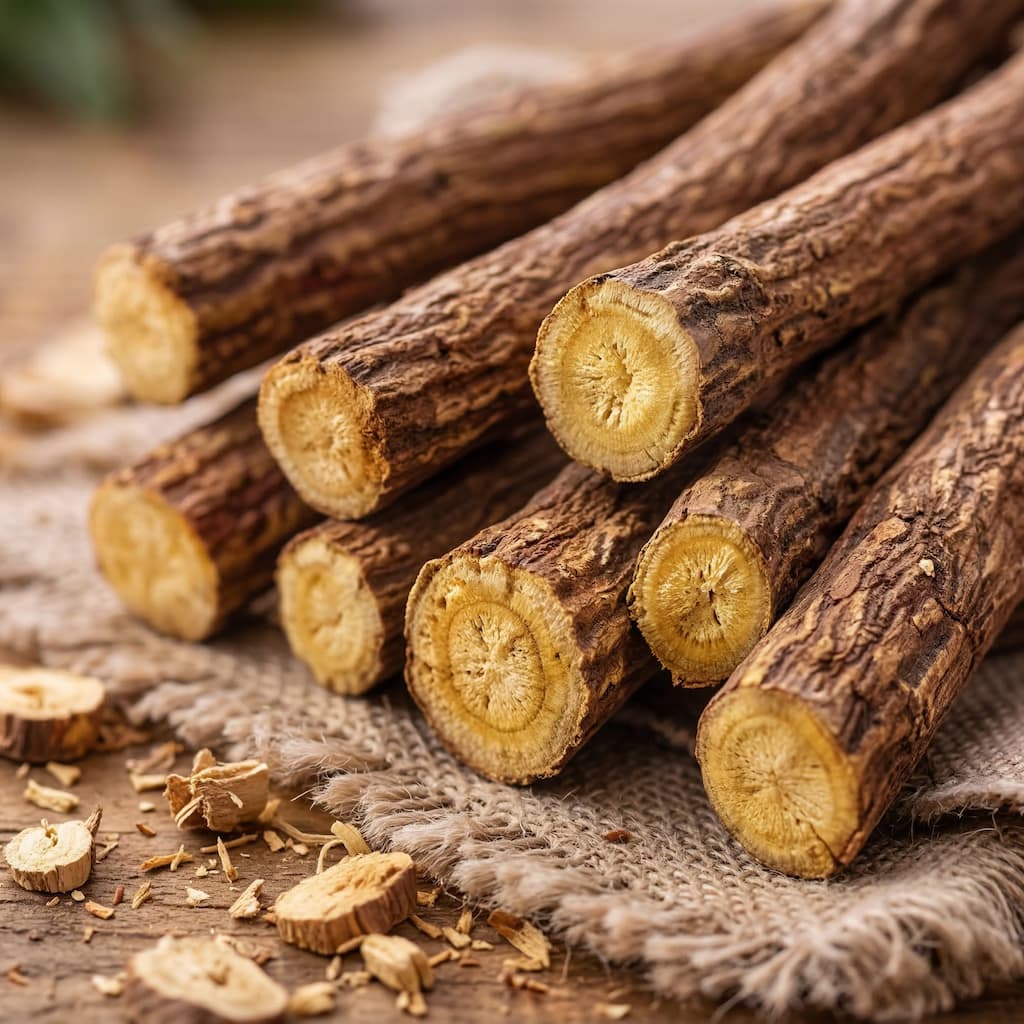
Both varieties contain the same seven ingredients: mullein leaves, blackberry leaves, lotus flower petals, hollyhock leaves, turmeric leaves, licorice root and licorice leaves. The hollyhock is therefore only one part of the whole. Mild and Mild Silver differ not in their ingredients but in composition, blending ratio and cut. Mild is gentler and more balanced, Mild Silver somewhat more distinctive in character.
The seven plant ingredients
In Mild and Mild Silver
mullein leaves
blackberry leaves
lotus flower petals
hollyhock leaves
turmeric leaves
licorice root
licorice leaves
We do not state the blending ratio. It is the result of several years of development work on our own process techniques, and it remains our recipe.
What we can explain, on the other hand, is the cut. Cut, moisture and blending ratio determine how a tobacco substitute can be processed. Herbs cut too coarsely are hard to work with. Material that is too fine can create dust or burn unevenly. Both varieties are therefore finely cut and processed in Germany. You can find more about both blends under Tobacco substitute.
How the blends are put together overall is covered in Tobacco substitute: what is an herbal smoking blend?; more plants are listed in Which herbs can you smoke?.
Storing it properly
- Cool and dry: protected from direct sunlight.
- Closed: after opening, close the pack cleanly again. Both pack sizes are resealable.
- Why it matters: a mixture that is too dry can burn faster; one that is too moist is harder to light.
Frequently asked questions
No. Hollyhock (Alcea rosea) and true marshmallow (Althaea officinalis) are two species of the same family. The hollyhock was also listed as Althaea rosea, which is why the names are often mixed up.
No. The seven ingredients are mullein leaves, blackberry leaves, lotus flower petals, hollyhock leaves, turmeric leaves, licorice root and licorice leaves.
The leaves. On the ingredient list they appear as “hollyhock leaves”. The flowers are not listed.
Here we describe the plant as an ingredient of our blends and say nothing about how it smokes on its own. That plant material can be burned does not mean its smoke is harmless. More on this in the assessment below.
No. Both varieties are tobacco-free and nicotine-free.
We make no such claim. A tobacco substitute is not a health product. Burning produces smoke, even with tobacco-free and nicotine-free products.
In our research we found no study that analyses hollyhock smoke on its own. There are measurements and warnings on herbal cigarettes in general, which we quote in the next section.
An honest assessment
Tobacco-free and nicotine-free does not mean smoke-free. Burning herbs produces combustion products such as tar and carbon monoxide, even without tobacco. The Federal Institute for Public Health (BIÖG) writes on rauchfrei-info.de (a German-language service) that smoking herbal cigarettes produces a high concentration of carbon monoxide and that the smoke can contain heavy metals, among other things. A Korean laboratory study in 2015 found more carbon monoxide in the mainstream smoke of a herbal cigarette than in a tobacco cigarette with the same tar content. As early as 2000, the US Federal Trade Commission (FTC) required two companies to carry the warning: “Herbal cigarettes are dangerous to your health. They produce tar and carbon monoxide.”
What falls away is the nicotine. We claim nothing more. Ritual Herbs is meant for adults who consciously do without classic tobacco. Anyone who wants to quit entirely is better off with a counselling service, a doctor's practice or the quit programme on rauchfrei-info.de (German-language service) than with a tobacco substitute.
Hollyhock in the finished blend
Mild and Mild Silver contain the same seven ingredients, blended and cut differently. Both come in 10 g and 25 g packs, both resealable.
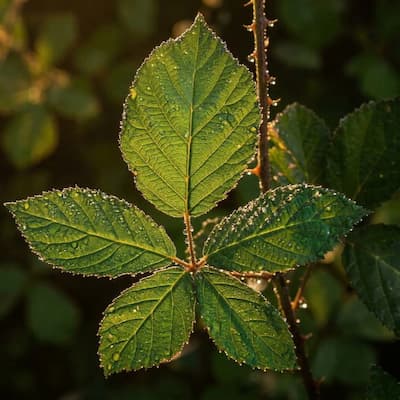
Two more ingredients with their own articles are mullein and blackberry leaves.
Mild and Mild Silver
Read more
Sources
- Wikipedia (in German): Gewöhnliche Stockrose (systematics, growth, leaves, flower, introduction to Europe, constituents, dye plant)
- Wikipedia (en): Alcea rosea (English name, introduction to Europe)
- Wikipedia (in German): Echter Eibisch (family, plant parts used, mucilage content of the root)
- Wikipedia (in German): Malvengewächse (plants of the family)
- Wikipedia (in German): Schleimstoffe (definition)
- Federal Institute for Public Health (BIÖG), rauchfrei-info.de (in German): Kräuterzigaretten (carbon monoxide, heavy metals, quitting smoking)
- Bak JH, Lee SM, Lim HB: Safety assessment of mainstream smoke of herbal cigarette. Toxicological Research 31(1), 2015, pp. 41–48 (tar, carbon monoxide, combustion products)
- US Federal Trade Commission, 27 April 2000: FTC Accepts Settlements of Charges that “Alternative” Cigarette Ads Are Deceptive
- Wikipedia (in German): Kräuterzigarette (tar from combustion)
x
Please sign in to write a comment.