Key points
- There is no list of “suitable” smoking herbs here. For no plant have we found evidence that its smoke is well tolerated.
- All that can be documented is what was smoked historically, such as mullein leaves or bearberry. That is cultural history, not a recommendation.
- Coltsfoot shows that a long tradition says nothing about safety.
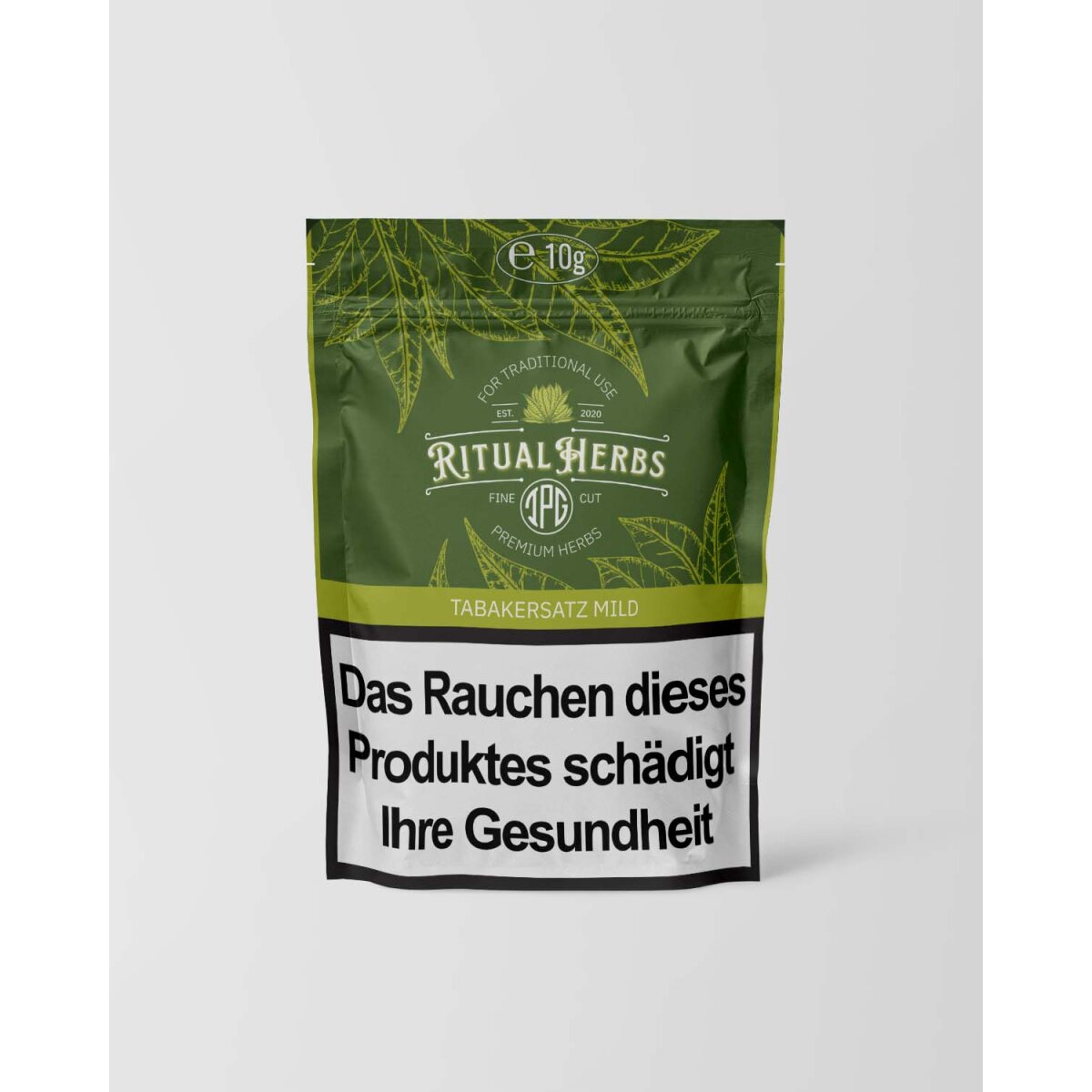
- Ritual Herbs Mild and Mild Silver contain exactly seven plant ingredients.
- Plants you gather yourself can be mistaken for others. We advise against smoking them.
Table of contents
- Loading...
Which herbs can you smoke? The honest answer: what can be documented is which plants were smoked in the past. What cannot be documented is that the smoke of any herb is well tolerated.
That is why you will not find a recommendation list here, but a short cultural history with sources. We also clarify what is and is not in Ritual Herbs Mild and Mild Silver.
Short answer: are there herbs you can smoke without concern?
There is no evidence for that. Burning plant material produces combustion products such as carbon monoxide and tar, regardless of whether tobacco or nicotine is present. That a plant was traditionally smoked says nothing about whether its smoke is well tolerated.
What was smoked historically
Smoking blends without tobacco existed long before today’s products. The overview below describes what sources report about earlier practices. It is not a statement about whether that was a good idea.
| Plant | What the source reports | Source |
|---|---|---|
| Common mullein (Verbascum thapsus) | The leaves were smoked in folk medicine, a practice that quickly passed to Indigenous peoples in America. Mullein is also named among the ingredients of kinnikinnick blends. | 1, 2 |
| Bearberry (Arctostaphylos) | Kinnikinnick is a smoking blend of North American peoples made from leaves or barks. European settlers and traders used the name mainly for bearberry. Depending on the region, other plants were added. | 2 |
| Coltsfoot (Tussilago farfara) | Dioscorides, Pliny and Galen already mention the smoke of ignited leaves. Today the plant’s pyrrolizidine alkaloids are described as mutagenic and potentially carcinogenic. It is currently not used medicinally. | 3 |
Coltsfoot is the textbook example: a plant with a long smoking tradition that is, for good reason, classified differently today. Age alone is not a mark of quality.
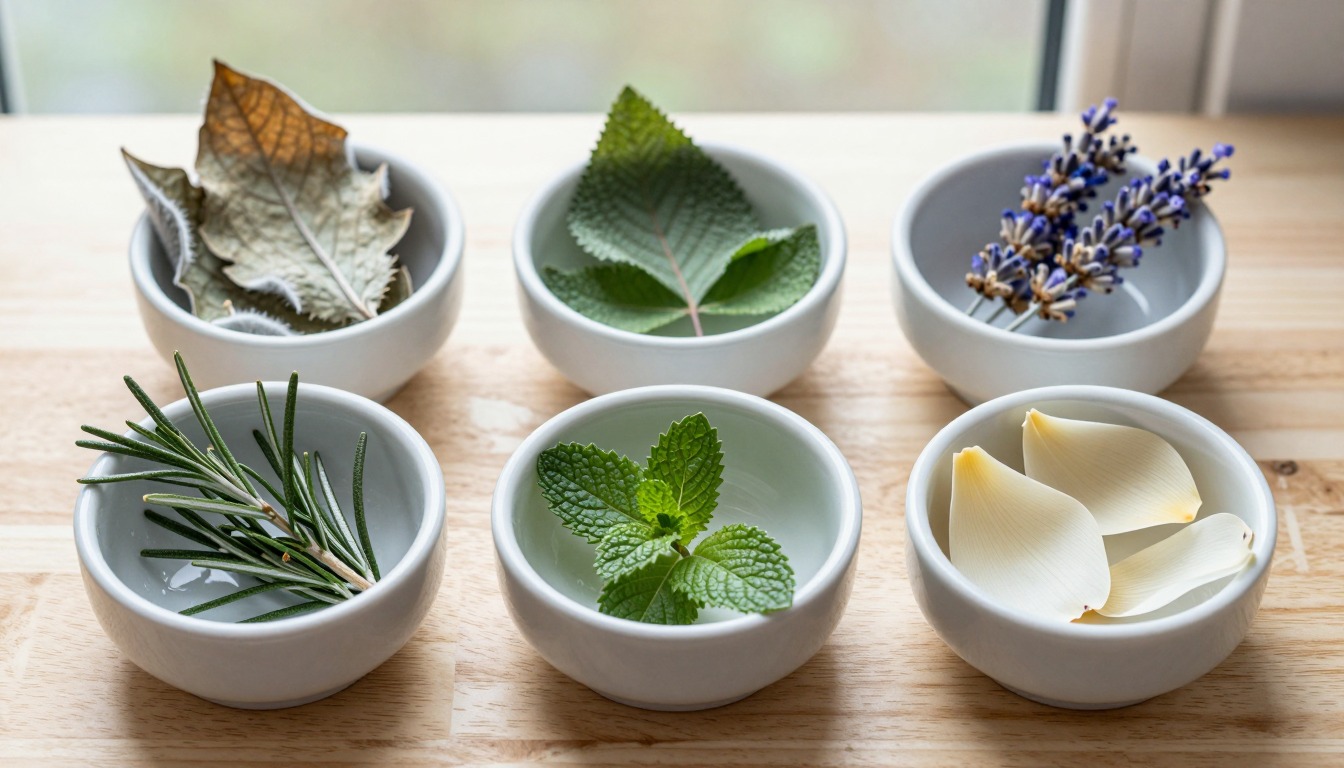
The plants in Mild and Mild Silver each have an article of their own: mullein, blackberry leaves, hollyhock, lotus flower, turmeric leaves and licorice. We also assess other plants that appear in the historical record one by one: sage, lavender, mint, rosemary, cloves, bay leaves and bilberry leaves.
How researchers collect and assess such accounts is explained in What is ethnobotany?. How smoke is understood in Indigenous cultures is described in Smoke in Indigenous traditions.
What is in Mild and Mild Silver, and what is not
Short answer: what do Ritual Herbs Mild and Mild Silver contain?
Both varieties contain the same seven plant ingredients: mullein leaves, blackberry leaves, lotus flower petals, hollyhock leaves, turmeric leaves, licorice root and licorice leaves. They differ in mixing ratio and cut, not in ingredients. Both are tobacco-free and nicotine-free.
The seven plant ingredients
mullein leaves
blackberry leaves
lotus flower petals
hollyhock leaves
turmeric leaves
licorice root
licorice leaves
Mild is soft and balanced, Mild Silver somewhat more distinctive in character. The table summarizes what can be documented about the plants. The botanical details refer to the species linked in each case.
| Ingredient | Botany and use | Source |
|---|---|---|
| Mullein leaves | Common mullein is biennial or perennial, flowers only once and grows 30 to 200 cm tall. It is widespread across almost all of Europe and in West and Central Asia, and contains, among other things, saponins, mucilage, flavonoids and essential oils. | 4 |
| Blackberry leaves | Found in many teas. Fermented blackberry leaves are used as a substitute for black tea. | 5 |
| Lotus flower petals | In Korea, tea is made from dried petals of the white lotus flower. The species is native from East Asia to northern and central India. | 6 |
| Hollyhock leaves | The common hollyhock is a member of the mallow family, biennial to short-lived perennial and 1 to 2 m tall. It contains tannins and mucilage. | 7 |
| Turmeric leaves | Turmeric is a member of the ginger family. Its original range is not known; the first finds as a cultivated plant probably come from southwestern India. The rhizome is used as a spice and dye. | 8 |
| Licorice root and licorice leaves | True licorice is a legume. Glycyrrhizin from the root tastes about 50 times sweeter than cane sugar. In the tobacco industry, licorice is used as a flavoring and humectant, for example in American blend cigarettes and pipe tobacco. | 9, 10 |
In the blend, blackberry leaves are a base ingredient: they provide volume, structure and a soft, plant-like base note. Licorice provides a softer, rounder flavor base. How well the blend handles also depends on cut, moisture and mixing ratio.
What is not in it: everything that is not on this list. That also applies to plants that often appear as smoking herbs in guides, such as lavender, damiana, mint, basil, sage or rosemary, and to resins and essential oils.
The herbs come primarily from Europe. In addition, we source selected wild-harvested herbs from India that grew without fertilizer and without chemical treatment. Final processing takes place in Germany.
How Mild and Mild Silver are put together is covered under tobacco substitute herbal blends; the basics article is Tobacco substitute: what is an herbal smoking blend?.
Plants you gather yourself
The German Federal Institute for Risk Assessment (BfR) writes in its press release of 4 April 2023 on wild garlic: “Such mix-ups lead to cases of poisoning every season, some of them fatal.”11 That concerns a plant you can recognize fresh by its leaf and smell. Once dried and chopped, identification does not get easier.
We advise against smoking wild or home-grown plants. Even a correctly identified plant can contain problematic substances, as coltsfoot shows.
Frequently asked questions
Tobacco substitute refers to products that can be used as an alternative to classic tobacco but contain no tobacco. At Ritual Herbs, they consist of selected herbs and plant ingredients. Tobacco-free products are also burned; the smoke is part of an honest assessment.
That cannot be said, and there is no list of herbs without concern. For some plants, such as coltsfoot, there are also specific reasons for caution.3
A review in ACS Omega (2022) names carbon monoxide, polyaromatic compounds and N-nitrosamines as toxic substances produced when plant material is burned.12 A study in Toxicological Research (2015) found more carbon monoxide and benzo[a]pyrene in the smoke of a nicotine-free herbal cigarette than in the smoke of a conventional cigarette with the same tar content.13 That concerns individual products, but it shows: “tobacco-free” is not a free pass.
We advise against it. Mix-ups with poisonous plants demonstrably occur, even with well-known species.11 With dried, chopped material, you can no longer check leaf shape and growth habit.
We give that clearance for no plant, not even for our own ingredients. Lavender, St. John's wort, resins such as frankincense and essential oils are not contained in Mild and Mild Silver.
Both varieties are available in 10 g and 25 g packs. Both pack sizes are resealable.
An honest assessment
Tobacco-free does not mean risk-free. Even nicotine-free herbal smoke is smoke: burning plant material produces combustion products such as carbon monoxide and tar.12, 14 Smoking herbal cigarettes is therefore not “healthy” smoking.
What is left out is the nicotine. We claim nothing more. Mild and Mild Silver are not a health product and not a smoking cessation aid. If you want to quit completely, you can find free advice at rauchfrei-info.de (German-language service), the portal of the German Federal Institute for Public Health.15
Our products are intended for adults.
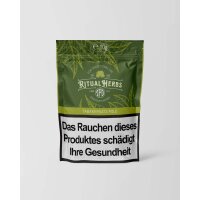
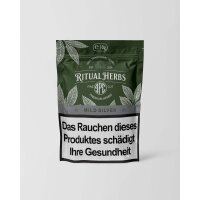
Mild and Mild Silver contain the same seven plant ingredients, mixed and cut differently.
Mild and Mild Silver
Read more

Sources
- Wikipedia: Verbascum thapsus, section Traditional medicine. Retrieved October 2026.
- Wikipedia: Kinnikinnick. Retrieved October 2026.
- Wikipedia (in German): Huflattich. Retrieved October 2026.
- Wikipedia (in German): Kleinblütige Königskerze. Retrieved October 2026.
- Wikipedia (in German): Brombeeren. Retrieved October 2026.
- Wikipedia: Nelumbo nucifera. Retrieved October 2026.
- Wikipedia (in German): Gewöhnliche Stockrose. Retrieved October 2026.
- Wikipedia (in German): Kurkuma. Retrieved October 2026.
- Wikipedia (in German): Echtes Süßholz and Glycyrrhizinsäure. Retrieved October 2026.
- Wikipedia: Liquorice, section Tobacco. Retrieved October 2026.
- German Federal Institute for Risk Assessment (BfR), in German: Bärlauch: Verwechslungen führen häufig zu Vergiftungen (Wild garlic: mix-ups often lead to poisoning), press release 07/2023 of 4 April 2023.
- Abdel Rahman RT, Kamal N, Mediani A, Farag MA: How Do Herbal Cigarettes Compare To Tobacco? ACS Omega 2022. doi:10.1021/acsomega.2c04708.
- Bak JH, Lee SM, Lim HB: Safety assessment of mainstream smoke of herbal cigarette. Toxicological Research 2015. doi:10.5487/tr.2015.31.1.041.
- Wikipedia (in German): Kräuterzigarette. Retrieved October 2026.
- German Federal Institute for Public Health: rauchfrei-info.de (in German). Retrieved October 2026.
x
Please sign in to write a comment.