Key points
- The clove (Syzygium aromaticum) is the dried flower bud of a tree from the Maluku Islands. It is a spice, not a tobacco substitute.
- Clove is not an ingredient of Mild or Mild Silver. We do not invite you to smoke it.
- According to the US health agency CDC, clove cigarettes (kretek) contained about 60 to 70% tobacco in 1985. Anyone who smokes them is smoking tobacco.
- The aroma compound eugenol makes up 70 to 85% of clove oil. We found no study on the smoke of pure clove.
Table of contents
- Loading...
Smoking cloves? We do not recommend it. Cloves belong in the spice rack, and we found no study on the smoke of the pure bud. Here is what can be documented: botany, origin, trade history, the aroma compound eugenol and the reason why clove cigarettes have nothing to do with a tobacco substitute.
Clove: botany
Quick answer: What is a clove, botanically?
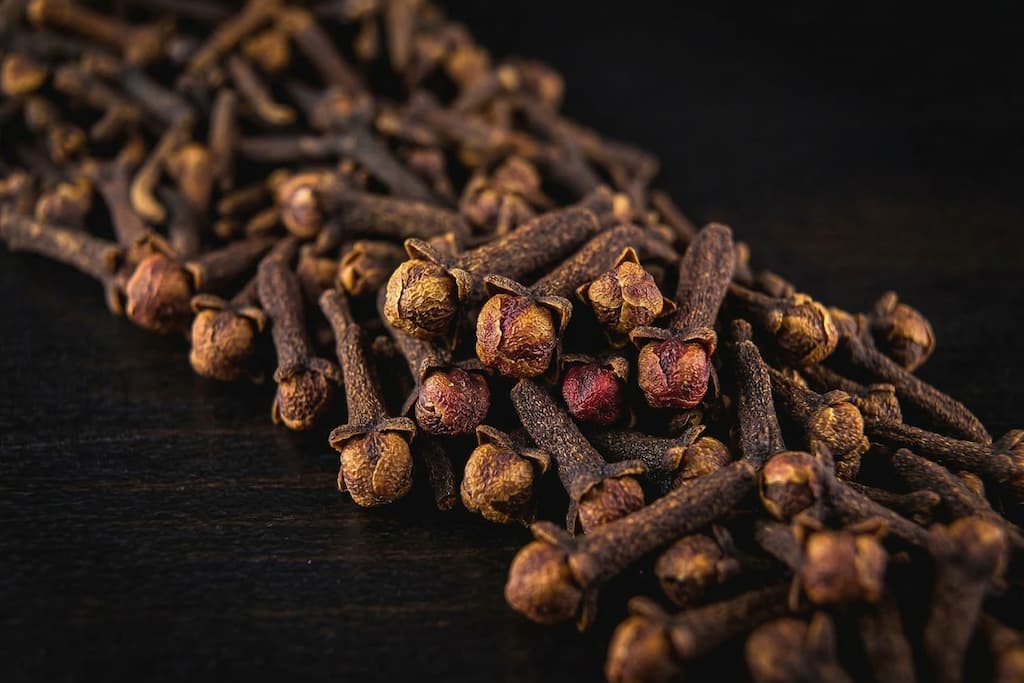
The clove is the dried, stalked flower bud of the clove tree (Syzygium aromaticum), a member of the myrtle family (Myrtaceae). The tree originally comes from the Maluku Islands, the so-called Spice Islands, and can grow over 10 metres tall; in cultivation it usually stays smaller.1
- Botanical name: Syzygium aromaticum1
- Family: myrtle family (Myrtaceae)
- Native to: Maluku Islands (Spice Islands), Indonesia
- Part used: flower bud with stalk, 1 to 2 cm long
- Name: goes back to the shape of the stalked buds, which resemble nails
- In our blends: not included
Be careful with the German word “Nelke”, which also names the garden carnation: despite the name, the clove is not related to the garden carnations (genus Dianthus, pink family).8 Anyone who reads “Nelke” should know which plant is meant.
From bud to spice
The harvest is done by hand, and timing is decisive: the buds must be picked before they open into flower.1
Schritt 1
Watch the buds
Harvest takes place when the buds change colour from green to pink. They are then 1 to 2 centimetres long.
Schritt 2
Pick by hand
The buds must be removed before they flower.
Schritt 3
Dry
During drying the buds turn brown and hard. Afterwards they have lost three quarters of their weight.
According to FAO data as reproduced by the German Wikipedia, 184,772 tonnes of cloves were harvested worldwide in 2022. The five largest producing countries accounted for 97.3% of this:1
| Country | Harvest 2022 (tonnes) |
|---|---|
| Indonesia | 133,955 |
| Madagascar | 24,308 |
| Tanzania | 8,562 |
| Comoros | 7,278 |
| Sri Lanka | 5,722 |
Spice trade and cooking
Cloves were traded over long distances early on. The archaeologist Giorgio Buccellati found cloves in Terqa (Syria), in a burnt house dated to 1720 BC.2
Cloves have been known in Europe since the early Middle Ages. The trade was long controlled by the Dutch, who shipped the goods mainly from Ambon.1 In 1770 the Frenchman Pierre Poivre had seedlings taken from a tree on Ternate that is now regarded as the oldest clove tree in the world. The plants went to Mauritius and the Seychelles.2
In the kitchen, cloves season marinades, sauces, sausage, meat and fish dishes and red cabbage. They are found in gingerbread and are part of curry powder. In stocks, soups and punch they are cooked whole and taken out again at the end.1
What is in clove oil?
The buds contain up to 15% essential oil. Its main component is eugenol.1
| Component of clove oil | Share |
|---|---|
| Eugenol | 70 to 85% |
| Eugenyl acetate | about 15% |
| β-Caryophyllene | 5 to 12% |
Quick answer: What is eugenol?
Eugenol is the main component of clove oil and also occurs in allspice, cinnamon and bay laurel. The Joint FAO/WHO Expert Committee on Food Additives (JECFA) set an acceptable daily intake (ADI) of 0 to 2.5 mg per kilogram of body weight for intake via food in 1982 and maintained this value at its 2005 meeting.5, 6, 7
The ADI refers to intake through food. We found no corresponding figure for inhaled smoke, and we do not claim that such smoke is harmless.
For essential oils and terpenes, see Terpenes in herbal blends explained.
Clove cigarettes: kretek contains tobacco
Quick answer: Are clove cigarettes tobacco-free?
No. Clove cigarettes, called kretek in Indonesian, are cigarettes that contain crushed cloves in addition to tobacco. In 1985 the US health agency CDC gave their composition as about 60 to 70% tobacco and 30 to 40% cloves.3, 4
The name kretek derives from the crackling sound the cloves make when they burn. These cigarettes are made mainly in Indonesia.3
| Clove | Clove cigarette (kretek) | |
|---|---|---|
| What is it? | dried flower bud, spice | cigarette made of tobacco and crushed cloves |
| Use | cooking, baking, punch | tobacco product for smoking |
| Tobacco content | not applicable (a spice, not a smoking product) | about 60 to 70% (CDC, 1985) |
| Origin of the name | shape of the bud (nail) | crackling when burning |
| Source | [1] | [3], [4] |
In the same report the CDC writes: between March 1984 and May 1985 it was notified of 12 cases of severe illness possibly associated with smoking clove cigarettes; 11 of those affected were hospitalised. A causal relationship was not proven. Inhaling clove cigarette smoke, however, may produce severe lung injury in a limited number of susceptible persons.4 The report concerns a tobacco product and is based on voluntary notifications. It says nothing about blends without tobacco.
Menthol also played a role in cigarettes, see Smoking mint?. For the facts on smoking in general, see Is smoking herbs harmful?.
Clove and Ritual Herbs
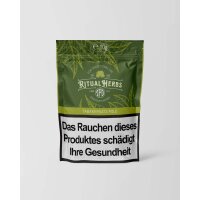
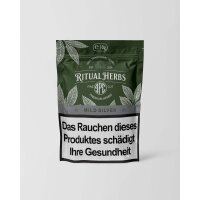
Mild and Mild Silver contain the same seven plant ingredients: mullein leaves, blackberry leaves, lotus flower petals, hollyhock leaves, turmeric leaves, licorice root and licorice leaves. Clove is not among them. Both varieties are free of tobacco and nicotine, and the ingredients are fully declared on the pack. You can find the varieties in the tobacco substitute range; more on the question of choosing plants is in Which herbs can you smoke?
Mild and Mild Silver: the blends in the shop
Frequently asked questions
That the smoke of pure clove is well tolerated cannot be substantiated. We found no study on it and therefore give no recommendation. The clove is known as a spice. And as with any plant material: whatever burns forms combustion products.9
No. According to the CDC, clove cigarettes (kretek) contained about 60 to 70% tobacco.4
Originally from the Maluku Islands. Most of the harvest today comes from Indonesia (2022: 133,955 of 184,772 tonnes), followed by Madagascar and Tanzania.1
70 to 85%. In addition there are about 15% eugenyl acetate and 5 to 12% β-caryophyllene.1
No. Both varieties consist of the same seven plant ingredients, without clove. They are free of tobacco and free of nicotine.
An honest assessment
Smoke remains smoke. Even nicotine-free herbal smoke contains combustion products such as carbon monoxide and tar. A review in ACS Omega (2022) lists carbon monoxide, polyaromatic compounds and N-nitrosamines among the hazardous substances in herbal cigarettes. Carbon monoxide forms during incomplete combustion and binds to the red blood pigment more strongly than oxygen does.9, 10, 11
A Korean study (2015) found more carbon monoxide and benzo[a]pyrene in the smoke of an herbal cigarette, in whose smoke no nicotine was detectable, than in the smoke of a tobacco cigarette; at the same concentration the smoke condensate showed a higher mutagenic potential. This concerns a single product, but it shows that “nicotine-free” is not a free pass.10
With Mild and Mild Silver, tobacco and nicotine are left out. We claim nothing more. They are not a health product and not a means of quitting smoking. If you want to stop, you can find free counselling at rauchfrei-info.de (in German), the portal of the German Federal Institute for Public Health, and by phone on 0800 8 31 31 31 (German-language service).12 Ritual Herbs is aimed at adults.
Read more

Sources
- Wikipedia (in German): Gewürznelkenbaum (clove tree). Retrieved in October 2026. Botany, origin, height, name, harvest and drying, harvest figures for 2022 (after FAOSTAT), constituents, trade, cooking.
- Wikipedia (en): Clove. Retrieved in October 2026. Find at Terqa (1720 BC, Buccellati), Pierre Poivre 1770, tree “Afo” on Ternate.
- Wikipedia (in German): Nelkenzigarette (clove cigarette). Retrieved in October 2026. Definition (tobacco plus crushed cloves), origin of the name, production in Indonesia.
- Centers for Disease Control: Illnesses Possibly Associated with Smoking Clove Cigarettes. Morbidity and Mortality Weekly Report (MMWR) 34(21), 1985, pp. 297–299. Retrieved in October 2026.
- World Health Organization: Evaluation of certain food additives. Sixty-fifth report of the Joint FAO/WHO Expert Committee on Food Additives. WHO Technical Report Series 934, Geneva 2006, p. 54 (eugenol: “The Committee maintained the previously established ADI of 0–2.5 mg/kg bw for eugenol.”). Retrieved in October 2026.
- IPCS INCHEM, JECFA evaluations: Eugenol (ADI 0–2.5 mg/kg body weight, set in 1982, TRS 683; maintained in 2005, TRS 934). Retrieved in October 2026.
- Wikipedia (in German): Eugenol. Retrieved in October 2026. Occurrence in allspice, cinnamon and bay laurel.
- Wikipedia (in German): Nelken (Dianthus) (carnations). Retrieved in October 2026. Pink family; the clove does not belong to the genus.
- Abdel Rahman RT, Kamal N, Mediani A, Farag MA: How Do Herbal Cigarettes Compare To Tobacco? A Comprehensive Review of Their Sensory Characters, Phytochemicals, and Functional Properties. ACS Omega 7(50), 2022. PMC9773184.
- Bak JH, Lee SM, Lim HB: Safety assessment of mainstream smoke of herbal cigarette. Toxicological Research 31(1), 2015, pp. 41–48. doi:10.5487/tr.2015.31.1.041.
- Wikipedia (in German): Kohlenstoffmonoxid (carbon monoxide). Retrieved in October 2026.
- German Federal Institute for Public Health (Bundesinstitut für Öffentliche Gesundheit): rauchfrei-info.de (in German). Retrieved in October 2026.
x
Please sign in to write a comment.