Key points
- Mint is above all a tea and culinary herb. That its smoke is well tolerated is not documented, and we do not invite you to smoke it.
- Peppermint (Mentha × piperita) is a largely sterile hybrid of water mint and spearmint (Mentha spicata). Its oil contains clearly noticeable menthol; in spearmint oil it is 9 percent at most.
- Menthol in cigarettes and roll-your-own tobacco has been banned EU-wide since 20 May 2020. The German Federal Institute for Risk Assessment (BfR) justifies this, among other things, by saying that menthol suppresses warning signals such as a scratchy throat and coughing.
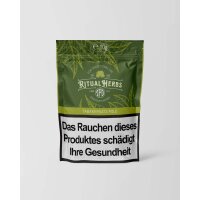
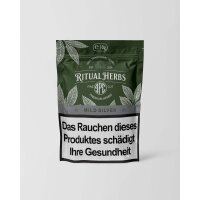
- Mint is not an ingredient of Mild or Mild Silver. They contain seven other plant ingredients.
- Nicotine-free herbal smoke is smoke too. Burning produces combustion products such as tar and carbon monoxide.
Table of contents
- Loading...
Smoking mint: can you do that? Any dried leaf can be lit. But it is not documented that mint smoke is well tolerated, and herbal cigarettes with peppermint also release harmful substances when burned.13
This article tells you what mint is botanically, where menthol comes from and why it was banned in cigarettes. You will not get instructions for smoking, and mint is not an ingredient of our blends either.
What is mint, and what is peppermint?
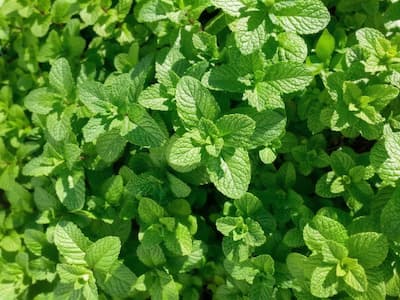
Mints (genus Mentha) are aromatic perennial herbs of the mint family (Lamiaceae) with underground runners. Depending on the source, around 20 to 30 species belong to it, most of them native to the temperate zones of the Northern Hemisphere.1 You know two of them from tea bags and the kitchen: peppermint and spearmint.
Quick answer: What is the difference between peppermint and spearmint?
Peppermint (Mentha × piperita) is a hybrid of water mint (Mentha aquatica) and spearmint (Mentha spicata). Its essential oil contains clearly noticeable menthol; in spearmint oil carvone predominates, and menthol makes up 9 percent at most. Spearmint therefore tastes sweeter and without the sharpness of menthol.
| Peppermint | Spearmint | |
|---|---|---|
| Botanical name | Mentha × piperita | Mentha spicata |
| Origin of the species | Hybrid of water mint and spearmint, largely sterile | Europe, North Africa, Western Asia, Caucasus; today cultivated and naturalised worldwide |
| Height | 30 to 90 cm | 30 to 130 cm |
| Characteristic component of the oil | menthol, plus menthone | carvone (39 to 74 %) |
| Taste | cool, with the sharpness of menthol | sweeter, without menthol sharpness |
What is in the oil, and what is menthol?
Menthol is a monocyclic monoterpene alcohol with the molecular formula C₁₀H₂₀O. It occurs mainly in the essential oils of the genus Mentha; in the oil of corn mint from Japan or China it is up to 90 percent.4 More than 19,000 tonnes are produced worldwide each year, about two thirds obtained from plants and one third synthetically.4
According to Wikipedia, dried peppermint contains 0.3 to 0.4 percent volatile oil. In it, menthol is 7 to 48 percent, menthone 20 to 46 percent, menthofuran 1 to 17 percent and 1,8-cineole 3 to 6 percent.3 The wide ranges show that the profile varies with variety, origin and harvest.
- Menthol: monoterpene alcohol, 7 to 48 % in peppermint oil (Wikipedia, en)
- Menthone: 20 to 46 % in peppermint oil
- Menthofuran: 1 to 17 %
- 1,8-cineole: 3 to 6 %
- Carvone (spearmint): 39 to 74 %, plus limonene 3 to 23 % and menthol up to 9 %
Menthol acts on the cold-menthol receptor TRPM8. On the skin it produces a cooling sensation without changing body temperature.4 What becomes of these substances when burned, we have not found documented. We therefore give no values for smoke.
Mint in cooking and cultural history
The genus owes its name to Greek mythology: according to the story, the nymph Minthe, loved by the god of the underworld, was turned into the herb.5 That is legend, not evidence of anything. It only shows that the plant already appears in the world of Greek myth.
The Capitulare de villis, Charlemagne’s decree on managing royal estates, lists as many as four mints (the dating is disputed; it falls around the year 800): pennyroyal mint, water mint, spike mint and horse mint.6 Spike mint is Mentha spicata, which we call spearmint today.
Today mint is above all a tea and culinary herb. Peppermint is found in tea, cocktails such as the mojito, confectionery and liqueurs.2 Spearmint flavours sauces and teas in North Africa and Western Asia.7 The best known is Maghrebi mint tea made from gunpowder green tea, spearmint and sugar. In North Africa it is traditionally offered to guests as a sign of hospitality.8
Why the EU banned menthol in cigarettes
Quick answer: Is menthol allowed in cigarettes?
No. Since 20 May 2020, menthol in cigarettes and roll-your-own tobacco has been banned EU-wide. The basis is the EU Tobacco Products Directive 2014/40/EU. For menthol products with a market share of more than three percent, a four-year transition period applied until then.9, 10
The German Federal Institute for Risk Assessment (BfR) welcomed the ban and justified it as follows: “Menthol masks the taste of tobacco and thus encourages people to start smoking.” And: “Menthol triggers a sensation of cold, which makes tobacco smoke, which is scratchy and irritates the throat, easier to inhale.” (our translation from German) This, it says, suppresses warning signals from the body such as a scratchy throat and coughing. For young people, who are often still in the starting or habit-forming phase, the BfR sees a particularly high risk from menthol cigarettes.9
The BfR describes this effect as a danger, not as an advantage: where a scratchy throat and coughing fail to appear, the warning signals are missing, and the smoke is still smoke. We therefore advise against smoking mint, menthol or menthol flavouring, or adding them to a smoking blend. None of this is in our blends.
For the facts on herbal smoke, see Is smoking herbs harmful?; the switch itself is described in Switching from tobacco to herbs.
What is in Mild and Mild Silver
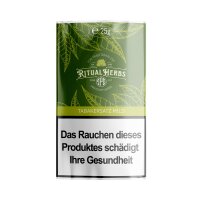
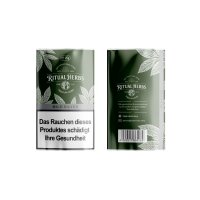
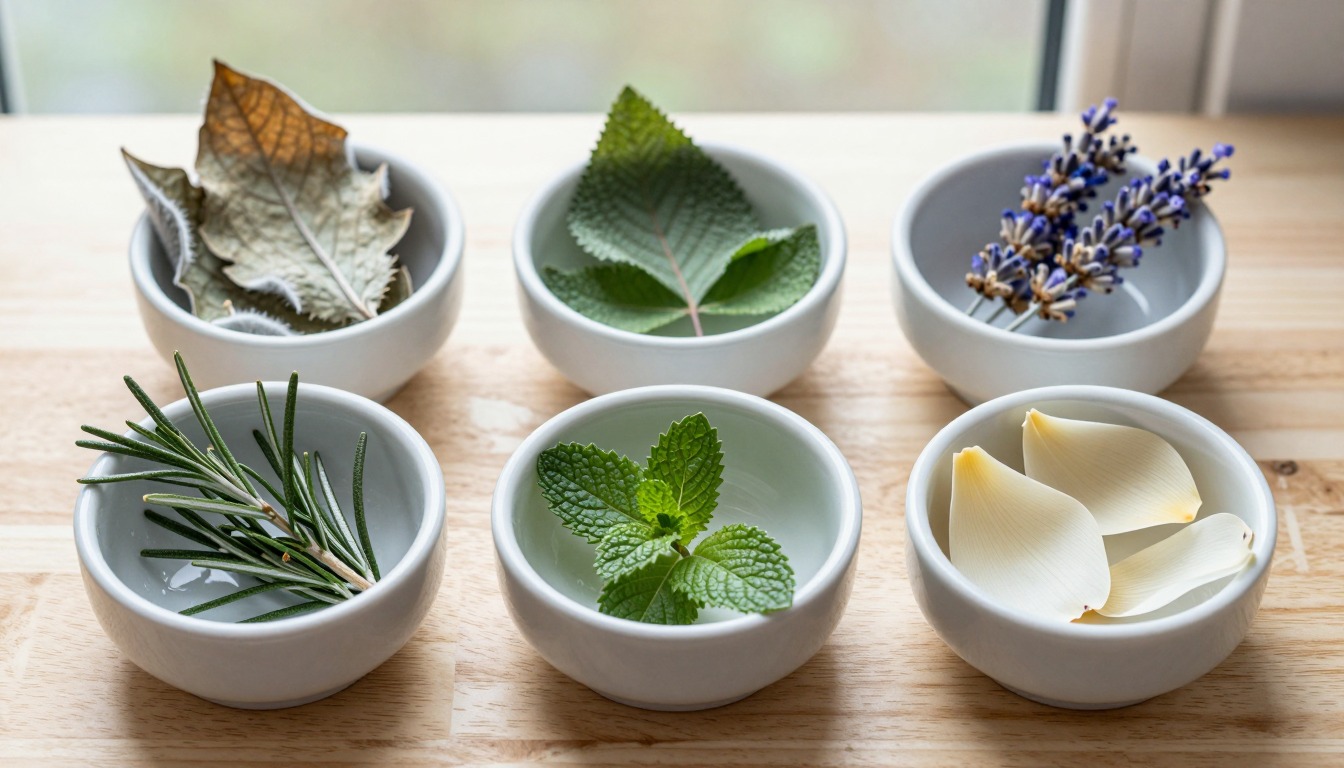
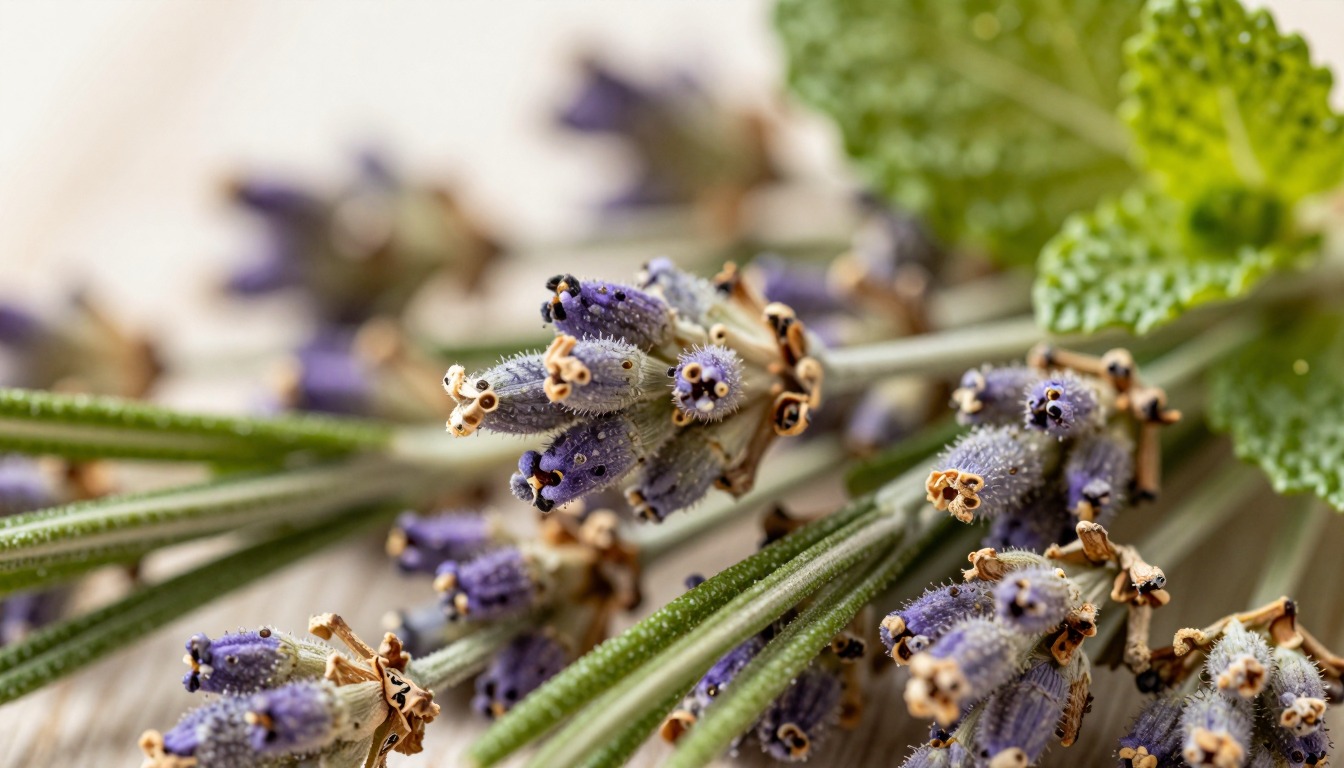
Mint is not an ingredient of Mild or Mild Silver. Both varieties consist of the same seven plant ingredients: mullein leaves, blackberry leaves, lotus flower petals, hollyhock leaves, turmeric leaves, licorice root and licorice leaves. They are tobacco-free and nicotine-free, and differ in mixing ratio and cut. You can find more about the two varieties on the Tobacco substitute page.
If you want to know which plants have ever been smoked at all, and why that is not a recommendation, read Which herbs can you smoke?.
How the blends are put together overall is explained in Tobacco substitute: what is an herbal smoking blend?.
Mild and Mild Silver: the blends in the shop
Frequently asked questions
Dried mint can be burned, yes. That the smoke is well tolerated is not documented, and we advise against it. Herbal cigarettes with peppermint exist. DAK, a German health insurer, writes that harmful substances are also produced when these are burned, and that they are inhaled.13 Burning plant material produces combustion products such as carbon monoxide and tar, whichever plant is burning.11, 12
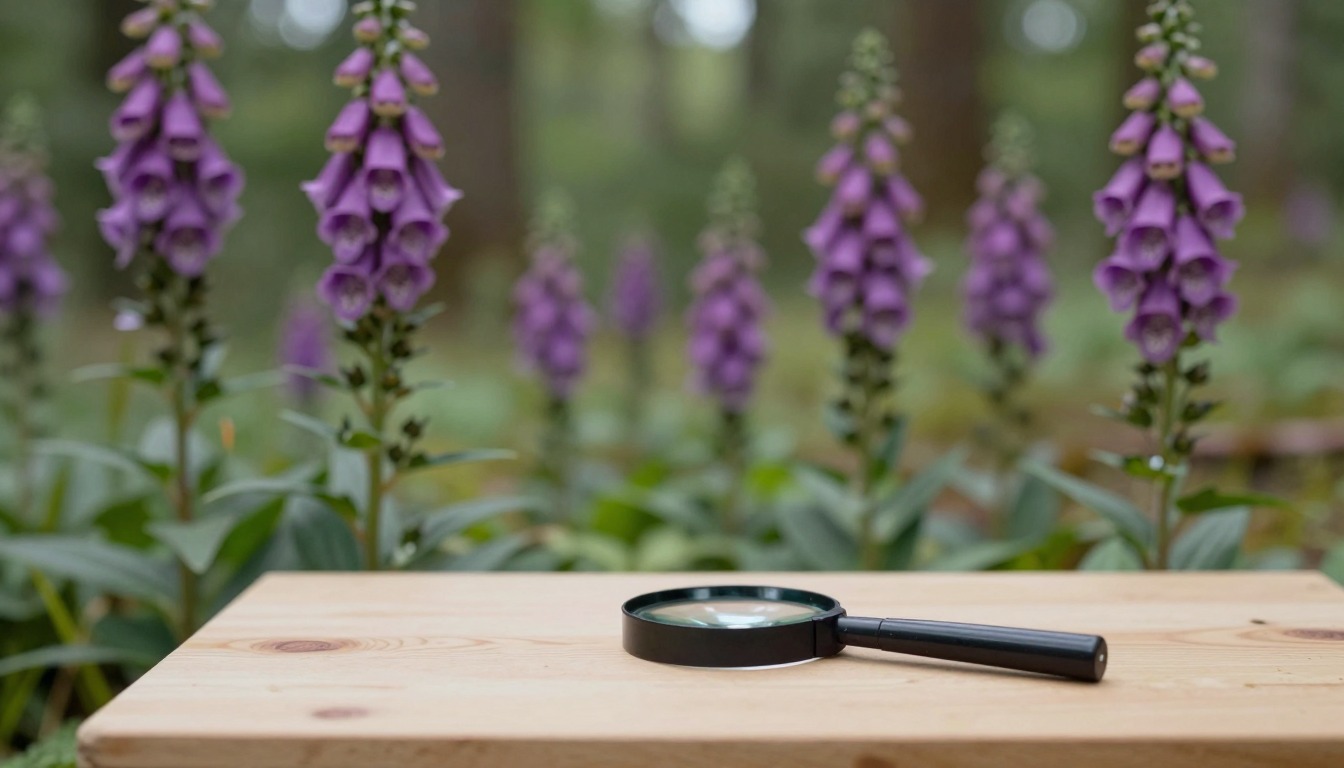
Not for smoking. Mix-ups with poisonous plants happen, even with well-known species. On wild garlic, the BfR writes: “Such mix-ups lead to poisoning cases every season, some of them fatal.” (our translation from German)15 Once dried and chopped, a plant is even harder to identify.
Menthol is a monoterpene alcohol that occurs mainly in mint oils. About two thirds are obtained from plants, one third is produced synthetically.4
According to the BfR, menthol masks the taste of tobacco, thereby encourages people to start smoking, and suppresses warning signals such as a scratchy throat and coughing. The ban has applied EU-wide since 20 May 2020.9
No. Both varieties contain mullein leaves, blackberry leaves, lotus flower petals, hollyhock leaves, turmeric leaves, licorice root and licorice leaves.
An honest assessment
Tobacco-free does not mean risk-free. Nicotine-free herbal smoke is smoke too: burning plant material produces combustion products such as carbon monoxide and tar.11, 12 Carbon monoxide forms when carbon-containing substances burn incompletely, and in the blood it binds to haemoglobin more strongly than oxygen does.12
What our blends leave out is the tobacco and the nicotine. We claim nothing more. Mild and Mild Silver are not a health product and not a means of quitting smoking. If you want to stop completely, you can find free counselling at rauchfrei-info.de (in German), the independent information portal of the German Federal Institute for Public Health, or by phone on 0800 8 31 31 31 (German-language service).14
Ritual Herbs is aimed at adults.
Read more
Sources
- Wikipedia (in German): Minzen (mints): number of species, distribution, characteristics. Retrieved in October 2026.
- Wikipedia (in German): Pfefferminze (peppermint): hybrid, height, discovery 1696, Linnaeus 1753, uses. Retrieved in October 2026.
- Wikipedia (en): Peppermint: hybrid, sterility, oil composition. Retrieved in October 2026.
- Wikipedia (in German): Menthol: chemical classification, occurrence, production, TRPM8. Retrieved in October 2026.
- Wikipedia (en): Mentha: etymology and the myth of the nymph Minthe. Retrieved in October 2026.
- Wikipedia (in German): Capitulare de villis: plant list (nos. 29, 41, 42, 43), dating. Retrieved in October 2026.
- Wikipedia (in German): Grüne Minze (spearmint): distribution, height, oil composition, uses. Retrieved in October 2026.
- Wikipedia (en): Maghrebi mint tea: ingredients, hospitality. Retrieved in October 2026.
- Bundesinstitut für Risikobewertung (German Federal Institute for Risk Assessment): Aus für Menthol in Zigaretten und Rauchtabak (in German), press release 19/2020 of 29 May 2020: ban since 20 May 2020, reasoning (taste, sensation of cold, suppression of a scratchy throat and coughing, TRPM8, young people).
- Ärzteblatt: EU-weites Verbot von Mentholzigaretten (in German): 19 May 2020: entry into force, directive of 2014, four-year transition period, market share above three percent. Retrieved in October 2026.
- Wikipedia (in German): Kräuterzigarette (herbal cigarette): harmful substances such as tar, no “healthy” smoking. Retrieved in October 2026.
- Wikipedia (in German): Kohlenstoffmonoxid (carbon monoxide): formation in incomplete combustion, binding to haemoglobin. Retrieved in October 2026.
- DAK-Gesundheit: Rauchen ohne Nikotin: Wie sinnvoll und gesund ist es wirklich? (in German): herbal cigarettes with herbs such as eucalyptus or peppermint, harmful substances and carbon monoxide when burned. Retrieved in October 2026.
- Bundesinstitut für Öffentliche Gesundheit (German Federal Institute for Public Health): rauchfrei-info.de (in German): portal operator, counselling number 0800 8 31 31 31 (German-language service). Retrieved in October 2026.
- Bundesinstitut für Risikobewertung (German Federal Institute for Risk Assessment): Bärlauch: Verwechslungen führen häufig zu Vergiftungen (in German), press release 07/2023 of 4 April 2023.
x
Please sign in to write a comment.