The key points
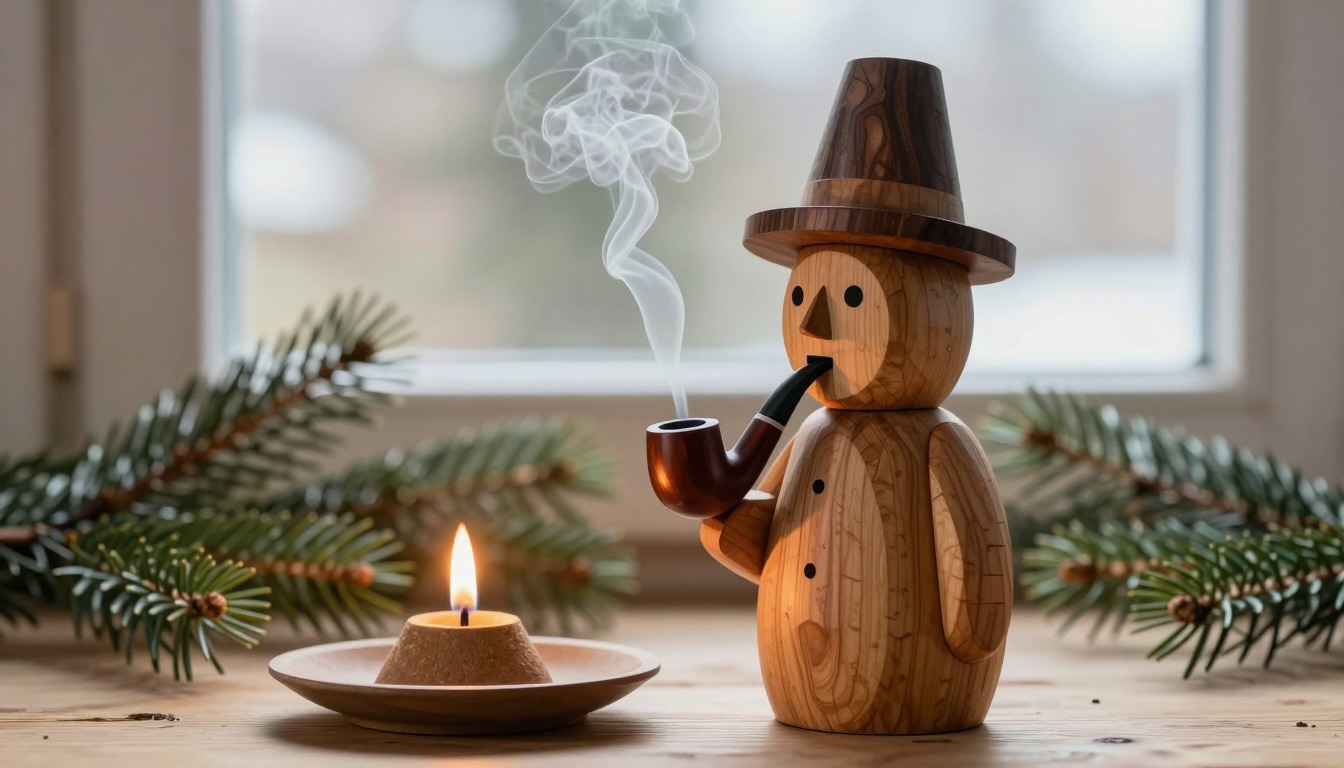
- The making of incense cones is already recorded around 1750 in Crottendorf in the Ore Mountains (Erzgebirge). Toy makers produced wooden smoker figures (Räuchermänner) from around 1850 in Heidelberg near Seiffen.
- According to Wikipedia, incense cones consist of frankincense resin, charcoal, potato flour, sandalwood and red beech flour, mixed into a dough, shaped and dried.
- Burning incense can make fine particulate matter in indoor air rise sharply. The Swiss Federal Office of Public Health advises avoiding the smoke of incense sticks indoors.
- Incense and tobacco substitute for smoking are two different things. Mild and Mild Silver are not incense.
Table of contents
- Loading...
Where does burning incense at Advent come from? The making of incense cones is recorded for the time around 1750 in Crottendorf in the Ore Mountains, and the wooden incense smoker figure was added around 1850 in Heidelberg near Seiffen. So the custom is considerably younger than the frankincense the churches have known for a long time. Here is what can be documented about origin, construction and dating, and what happens in the indoor air when it burns.
What is Advent?
The word comes from the Latin adventus, arrival, and refers to the arrival of Christ. Advent begins on the evening before the first Sunday of Advent, which falls between 27 November and 3 December, lasts 22 to 28 days and always includes four Sundays. The Advent wreath goes back to the year 1839: Johann Hinrich Wichern hung a wooden chandelier with 23 candles in the “Rauhes Haus” in Hamburg, 19 small red ones for the weekdays and four large white ones for the Sundays.1
The Ore Mountains as home
The Ore Mountains (Erzgebirge) extend across Saxony and Bohemia, about 150 kilometres long and on average 40 kilometres wide. At 1,215 metres, the Fichtelberg is the highest point in Saxony. Mining shaped the region; since 2019 the “Erzgebirge/Krušnohoří Mining Region” with 22 sites has been on the UNESCO World Heritage List.2
Seiffen, the place that today is associated with toys from the Ore Mountains, was initially a tin-mining settlement. After 1750 mining declined, and the people of Seiffen switched to toys; “Seiffener Ware” was exported from 1760.3
The incense cone
Briefly answered: where do incense cones come from?
According to Wikipedia, the making of incense cones is already recorded around 1750 in Crottendorf in the Ore Mountains. They became widespread in the middle of the 19th century, together with modern Christmas customs and the incense figures. The cone-shaped pieces are burned mainly during Advent and at Christmas to spread scents in the home.4
The construction is simple: frankincense resin, charcoal, potato flour, sandalwood and red beech flour are ground, mixed into a moist dough, put into moulds and dried.4 As classic Christmas scents, Wikipedia names frankincense, fir, honey and cinnamon. As makers, Wikipedia names, among others, Crottendorf (Original Crottendorfer), Mohorn-Grund (brand Knox) and Neudorf (company Huss).4
The incense smoker figure
At first the scent cones were simply placed on a base and lit. For the time around 1820 and 1830, smoking figures made of papier-mâché are recorded from Sonneberg in Thuringia. The wooden smoker figures people mean today came later from the Ore Mountains: the toy makers Ferdinand Frohs and Gotthelf Friedrich Haustein began making wooden smoking figures around 1850 in Heidelberg near Seiffen.5
The early figures showed occupations and types of the region: miners, toy makers, hunters, forest workers, pedlars or broom makers. Their characteristic feature is the pipe, usually made of wooden wire with a turned pipe bowl. From the middle of the 20th century the motifs widened, up to modern occupations and humorous figures.5 In the Ore Mountains, smoker figures stand alongside Schwibbögen (candle arches), miner figures, angels and pyramids in Advent decoration.5
The dates at a glance
| Time | Place | What is documented |
|---|---|---|
| around 1750 | Crottendorf, Ore Mountains | Beginning of the making of incense cones [4] |
| from 1760 | Seiffen | Export of “Seiffener Ware” after the decline of mining [3] |
| around 1820–1830 | Sonneberg, Thuringia | Smoking figures made of papier-mâché recorded [5] |
| 1839 | Hamburg | First Advent wreath in the “Rauhes Haus” (Wichern) [1] |
| around 1850 | Heidelberg near Seiffen | Frohs and Haustein make wooden smoker figures [5] |
| mid-19th c. | Ore Mountains | Incense cones become widespread [4] |
| from mid-20th c. | Ore Mountains | Motifs of the smoker figures become more varied [5] |
Frankincense in the liturgy
In the Catholic liturgy, frankincense is used mainly at Holy Mass and in the Liturgy of the Hours. The tradition is linked to the biblical story: among the gifts of the wise men from the East was frankincense from southern Arabia. Today the resin comes mainly from Somalia, the rest from southern Arabia, Eritrea, Ethiopia and Sudan.6 We did not find a special Advent custom involving frankincense in the sources we checked. You can find more on the biblical side in Frankincense and myrrh in the Bible.
For incense in antiquity, see Incense in antiquity; for smoke in Indigenous cultures, see Smoke in Indigenous traditions.
Incense cones and fine particulate matter
Briefly answered: do incense cones release fine particulate matter?
Burning incense produces smoke, and smoke carries fine particulate matter into the indoor air. The Swiss Federal Office of Public Health writes that tobacco smoke, incense sticks or sooty candles can make the concentration of fine particulate matter in a room rise sharply, and recommends avoiding the smoke of incense sticks.7 The agency does not mention incense cones specifically.
Among indoor sources of fine particulate matter, the German Environment Agency lists smoking, candles, cooking and frying, and the open fireplace, among others.8 We did not find reliable measurements specifically for Ore Mountain incense cones in agency sources or specialist studies, so we give no figures here.
A laboratory study by Lui and colleagues in Environmental Pollution (2016) examined the fine particles (PM2.5) from incense of various brands. Incense labelled “environmentally friendly” released less particle mass but contained more polycyclic aromatic hydrocarbons (PAHs) and their oxygen-containing derivatives. In experiments with lung cells, these substances were statistically associated with markers of inflammation; the authors see a need to revise the rules for such products.9 This concerns incense in general, not expressly incense cones from the Ore Mountains.
For what is produced when plant material burns, see Is smoking herbs harmful?.
The blends Mild and Mild Silver
Frequently asked questions
Wikipedia names their making in Crottendorf in the Ore Mountains as recorded for the time around 1750. They were not widespread until the middle of the 19th century.4
The wooden incense smoker figure comes from the Ore Mountains. Frohs and Haustein began making them around 1850 in Heidelberg near Seiffen. From Sonneberg, smoking figures made of papier-mâché are recorded for the time around 1820 to 1830.5
According to Wikipedia, of frankincense resin, charcoal, potato flour, sandalwood and red beech flour. The ingredients are ground, mixed into a dough, shaped and dried.4
Yes, burning produces smoke with fine particulate matter. The Swiss Federal Office of Public Health recommends avoiding the smoke of incense sticks indoors.7 We have not found checked measurements specifically for incense cones.
Frankincense belongs to the liturgy as a whole, above all to Holy Mass, and to the biblical story of the wise men from the East.6 We have not found a separate Advent custom documented.
An honest assessment
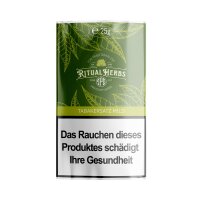
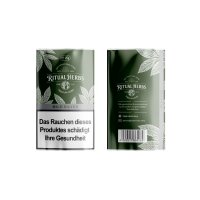
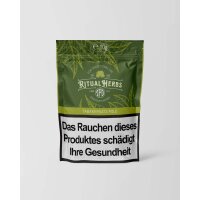
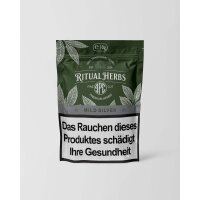
Tobacco substitute for smoking has nothing to do with incense. According to Wikipedia, incense cones are meant to spread scent in the home; Mild and Mild Silver are intended for smoking and contain mullein leaves, blackberry leaves, lotus flower petals, hollyhock leaves, turmeric leaves, licorice root and licorice leaves. More on this in the overview of the tobacco substitute.
Tobacco-free does not mean risk-free. Anyone who burns plant material produces combustion products, with incense as with herbal smoke. Carbon monoxide is formed when carbon-containing substances burn incompletely, and it binds more strongly to the red blood pigment than oxygen does.12 Tar and other harmful substances were also measured in the smoke of herbal cigarettes.10, 11
A Korean study (2015) found 12.30 mg of carbon monoxide and 7.45 mg of tar per cigarette in the smoke of a nicotine-free mugwort-based herbal cigarette, and 6.07 mg of carbon monoxide for the tobacco reference cigarette. That concerns a single product, but it shows: “nicotine-free” is no free pass.11 Mild and Mild Silver are not a health product and not a smoking cessation aid. If you want to quit, you can find free counselling at rauchfrei-info.de (in German), the portal of the Federal Institute for Public Health, and by phone at 0800 8 31 31 31 (German-language service).13 Ritual Herbs is aimed at adults.
Further reading

Sources
- Wikipedia (de): Advent (in German). Retrieved October 2026. Word origin, duration, Advent wreath 1839.
- Wikipedia (de): Erzgebirge (in German). Retrieved October 2026. Extent, Fichtelberg, UNESCO World Heritage 2019.
- Wikipedia (de): Seiffen (in German). Retrieved October 2026. Tin mining, decline after 1750, export from 1760.
- Wikipedia (de): Räucherkerze (incense cone; in German). Retrieved October 2026. Making recorded around 1750, ingredients, makers, spread, use.
- Wikipedia (de): Räuchermann (incense smoker figure; in German). Retrieved October 2026. Sonneberg around 1820/1830, Frohs and Haustein around 1850, pipe, motifs, Advent.
- Wikipedia (de): Weihrauch (frankincense; in German). Retrieved October 2026. Use in the liturgy, regions of origin.
- Federal Office of Public Health FOPH (Switzerland): Feinstaub in der Innenraumluft (fine particulate matter in indoor air; in German). Retrieved October 2026.
- German Environment Agency: Feinstaub in Innenräumen (fine particulate matter indoors; in German). Retrieved October 2026.
- Lui KH, Bandowe BAM, Ho SSH, Chuang HC, Cao JJ, Chuang KJ, Lee SC, Hu D, Ho KF: Characterization of chemical components and bioreactivity of fine particulate matter (PM2.5) during incense burning. Environmental Pollution 213, 2016, pp. 524–532. doi:10.1016/j.envpol.2016.02.053; entry of the Hong Kong Polytechnic University.
- Abdel Rahman RT, Kamal N, Mediani A, Farag MA: How Do Herbal Cigarettes Compare To Tobacco? ACS Omega 7(50), 2022, pp. 45797–45809. PMC9773184.
- Bak JH, Lee SM, Lim HB: Safety assessment of mainstream smoke of herbal cigarette. Toxicological Research 31(1), 2015, pp. 41–48. PMC4395654.
- Wikipedia (de): Kohlenstoffmonoxid (carbon monoxide; in German). Retrieved October 2026.
- Federal Institute for Public Health: rauchfrei-info.de (in German). Retrieved October 2026.
x
Please sign in to write a comment.