

Key points
- What was mostly burned as incense in antiquity was frankincense, the resin of Boswellia species from southern Arabia and the Horn of Africa, along with myrrh.
- Herodotus, Theophrastus, Pliny and Plutarch have left written traces on this. Theophrastus’ work on scents, however, deals mostly with ointments and perfumed oils, not with smoke.
- Pliny works out what frankincense cost on the way from Arabia to Gaza: 65 stages, payments along the route, 688 denarii per camel in total, plus Roman customs duties.
- We know of Nero’s extravagance at Poppaea’s funeral only from a single sentence of Pliny, who relies on unnamed authorities.
- Our tobacco substitute has nothing to do with incense. Mild and Mild Silver contain neither frankincense nor myrrh.
Table of contents
- Loading...
In ancient Greece and Rome, the incense burned was mainly frankincense, the resin of Boswellia species from southern Arabia and the Horn of Africa. It travelled along caravan routes to the Mediterranean, burned on altars and was a commodity that Herodotus, Theophrastus and Pliny wrote about. This article separates what can be backed up from their texts from what remains legend. It tells cultural history, not application.
What was burned as incense in antiquity?
The most important incense was frankincense. It comes from Boswellia trees, above all Boswellia sacra, and in antiquity came from southern Arabia and the Horn of Africa. Myrrh was added, a gum resin from Commiphora shrubs, which also belong to the frankincense family (Burseraceae) and grow in Somalia, Oman and Yemen, among other places.
The Greeks called the vessel in which such resins were burned a thymiaterion, derived from a word for “to burn incense”. There were thymiateria made of plain clay as well as of bronze. According to Wikipedia, Greeks were already using such vessels in the 6th century BC at temple rituals, weddings and funerals.
- Frankincense: resin of Boswellia species, main source Boswellia sacra
- Origin: southern Arabia (the classic source for Mediterranean trade), Horn of Africa
- Myrrh: gum resin of Commiphora species, family Burseraceae
- Incense vessel: Greek thymiaterion, made of clay or bronze
What does Herodotus report about frankincense?
Herodotus (about 484 to about 425 BC) writes in his Histories that frankincense is harvested from trees in southern Arabia. A second passage is more vivid: in Babylon, he writes, the Chaldeans offered a thousand talents of frankincense every year on the great altar at the festival of their god (Histories 1.183).
Whether Herodotus observed this offering himself, the passage does not say. In the same chapter he expressly cites the Chaldeans for other details about the temple, and of a golden statue he writes that he did not see it himself. The thousand talents are therefore a handed-down figure, not a measured quantity.
What did Theophrastus write about scents?
Theophrastus (about 371 to about 287 BC) was a student of Aristotle and took over the leadership of the Lyceum after him. A treatise of his on scents survives, Peri osmon, in Latin De odoribus. One sentence from it reads, roughly: odours arise like flavours through mixture, for what is unmixed has no smell.
The focus of the work is on ointments and perfumed oils, that is, on scent preparations and not on smoke. Theophrastus mentions frankincense and myrrh, among other things, as substances that give off their scent only with gentle warmth. But the work is not a guide to burning incense.
For frankincense itself, Theophrastus is interesting all the same: according to Wikipedia, his knowledge of plants such as pepper, cinnamon, myrrh and frankincense goes back to reports from the entourage of Alexander the Great. So he wrote about the frankincense tree second-hand.
How did frankincense reach Rome?
Frankincense reached the Mediterranean via a network of trade routes, the Incense Route. It connected southern Arabia with Gaza and Damascus via the Hejaz. The overland trade from southern Arabia to the Mediterranean flourished from about the 3rd century BC to the 2nd century AD, and in Roman times direct sea routes across the Red Sea were added. Two sections are now on the UNESCO World Heritage List: the Land of Frankincense in Oman (2000) and the Desert Cities of the Incense Route in the Negev (2005).
Pliny the Elder describes the route in more detail in Book 12 of his Naturalis Historia (written about 77 to 79 AD). In his account, the frankincense is brought by camel to Sabota and can only be exported through the land of the Gebbanitae, whose king receives a payment for it.
| Figure in Pliny (Naturalis Historia 12.63 to 65) | Value |
|---|---|
| Distance from Thomna to Gaza | 1,487 miles |
| Stages with halts for the camels | 65 |
| Costs up to the Mediterranean coast | 688 denarii per camel |
| Price per pound, best grade | 6 denarii |
| Price per pound, second grade | 5 denarii |
| Price per pound, third grade | 3 denarii |
Along the way, according to Pliny, the traders paid for water, fodder, lodging and dues, and priests, scribes and guards received their share. On the coast, Roman customs duties then fell due. The figures come from the English translation by H. Rackham.
What is handed down about Nero’s extravagance?
Pliny writes that good authorities say Arabia does not produce in a year as much scent as Emperor Nero burned in one day at the funeral of his wife Poppaea (Naturalis Historia 12.83). Poppaea died in 65 AD.
Whether that is true, we do not know. Pliny does not name his authorities, and the sentence stands in a passage in which he criticises the expense of funerals. Wikipedia words it just as cautiously: Nero is said to have burned Arabia’s annual production. As an image of Roman luxury the sentence works, as a figure it does not.
How was incense burned in the temple and at home?
In the Roman household, frankincense was one of several offerings at the household altar. In the cult of the Lares, the protective gods of the house, spelt, honey cakes, grapes, wine and frankincense were, according to Wikipedia, among the usual sacrifices. A fresco from the House of the Vettii in Pompeii shows such an altar.
An anecdote in Plutarch (before 50 to after 120 AD) shows how natural frankincense was at a sacrifice. At a sacrifice, the young Alexander took frankincense in both hands to throw it onto the altar fire. His teacher Leonidas told him to be sparing with it until he had conquered the spice-bearing lands. Later Alexander sent him five hundred talents of frankincense and a hundred talents of myrrh so that he would stop being sparing towards the gods. Whether it happened exactly like this cannot be checked. As an image of the resin’s value, the story is usable.
Frankincense also plays a role in Frankincense and myrrh in the Bible; in Advent it appears again in Incense at Advent.
Delphi: what is established?
The oracle of Delphi existed from the 8th century BC at the latest and was consulted until the late 4th century AD. The Pythia sat on a high gilded tripod and held laurel leaves and a bowl of spring water.
Whether gases rose from the ground there is disputed. A team around the geologist Jelle Zeilinga de Boer and the archaeologist John R. Hale found two intersecting faults beneath the temple, and in 2001 0.3 ppm of ethylene was measured in water samples from the Kerna spring. The researcher Lehoux, by contrast, considers the ethylene explanation impossible. We draw no conclusions from this about any effect. All that can be stated is this: the debate is open, and it is about gases from the ground, not about incense.
Plant knowledge from the Middle Ages is described in Herbs in the medieval monastery garden.
The sources at a glance
| Author | Time | What he records | Limitation |
|---|---|---|---|
| Herodotus | about 484 to about 425 BC | Frankincense from southern Arabia; 1,000 talents annually in Babylon | Handed-down figure, no proven eyewitness account |
| Theophrastus | about 371 to about 287 BC | Treatise on scents, Peri osmon | Focus on ointments and perfumed oils |
| Pliny the Elder | Naturalis Historia, about 77 to 79 AD | Route, stages, prices; Nero’s consumption at Poppaea’s funeral | Authorities for Nero unnamed |
| Plutarch | before 50 to after 120 AD | Alexander, Leonidas and the frankincense | Anecdote, cannot be checked |
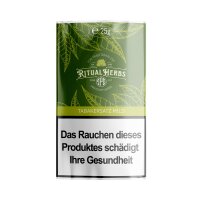
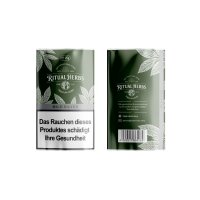
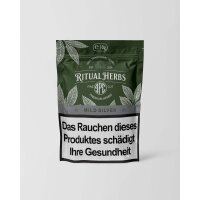
The blends Mild and Mild Silver

Frequently asked questions
Frankincense is a resin from Boswellia trees, above all Boswellia sacra. In antiquity it came from southern Arabia and the Horn of Africa. Today a large share of world production comes from the Horn of Africa, from the border region of Somalia and Ethiopia.
A thymiaterion is an ancient incense vessel. The name is derived from Greek and means roughly “for burning incense”. There were simple clay vessels as well as vessels made of bronze, used at temple rituals, weddings and funerals.
Theophrastus (about 371 to about 287 BC) wrote the treatise Peri osmon (“On Odours”). It deals with natural scents of plants and artificial preparations, mostly ointments and perfumed oils. Smoke is not its focus.
Pliny gives 6 denarii per pound for the best grade, 5 for the second and 3 for the third. He puts the cost of transport to the Mediterranean coast at 688 denarii per camel, plus the Roman customs duties.
That is a tradition from Pliny, who relies on “good authorities” without naming them. We have found no confirmation from another source.
Frankincense was among the offerings that could be made to the Lares, the protective gods of the house, alongside honey cakes, grapes and wine. How often and in what quantity, we do not know.
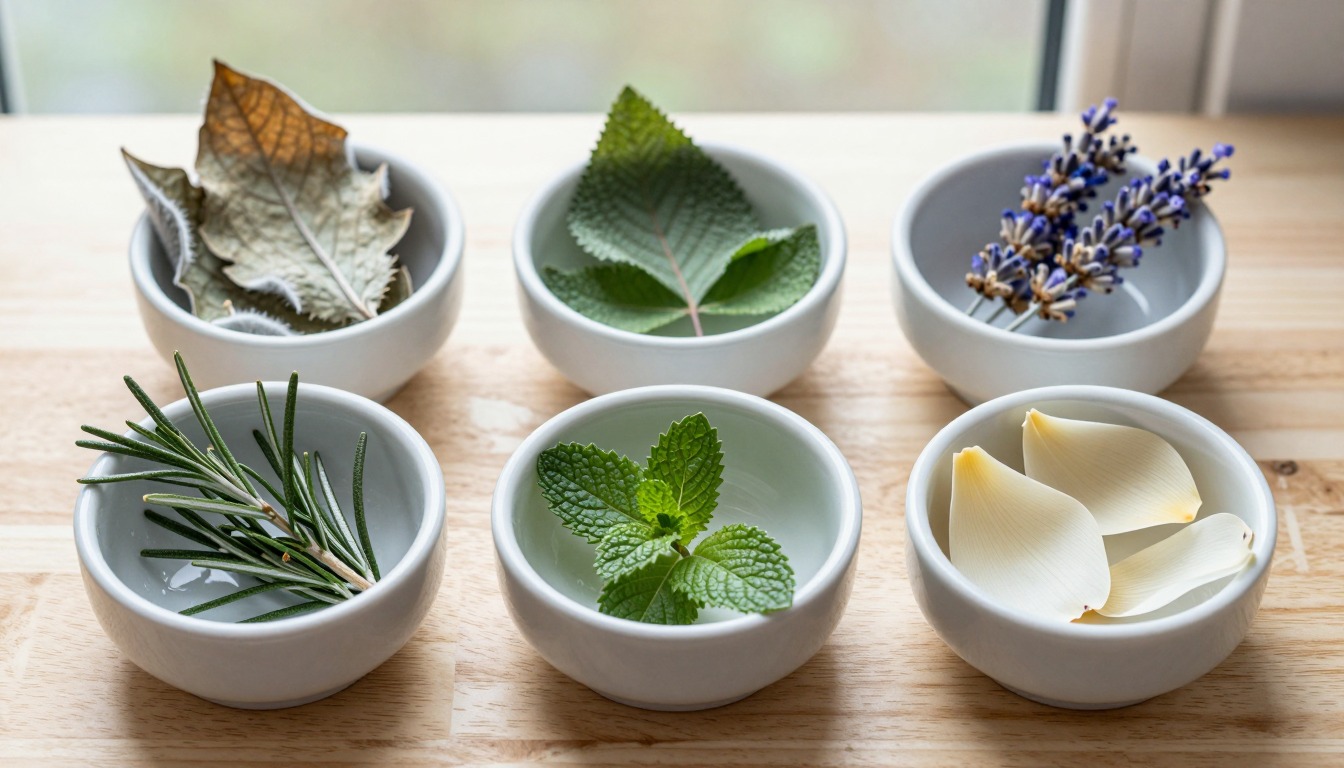
No. Mild and Mild Silver are a plant-based tobacco substitute for smoking. They contain mullein leaves, blackberry leaves, lotus flower petals, hollyhock leaves, turmeric leaves, licorice root and licorice leaves, neither frankincense nor myrrh.
Our honest take
This article tells history. It says nothing about how incense or herbs work, and it recommends nothing. We do not pass on the effects that ancient authors attributed to scents.
For smoke of any kind, this applies: even nicotine-free herbal smoke is smoke. Burning plant material produces combustion products such as tar and carbon monoxide. Carbon monoxide forms during the incomplete combustion of carbon-containing substances, whichever plant is burning. In a study in Toxicological Research (2015), tar was measured in the smoke of a nicotine-free herbal cigarette, and it contained more carbon monoxide and benzo[a]pyrene than that of a tobacco cigarette, and the smoke condensate showed a higher mutagenic potential at the same concentration. That applies to this one product, but it shows that nicotine-free is not the same as free of concern.
Ritual Herbs is aimed at adults. What falls away in our blends is the tobacco and the nicotine. We claim nothing more.
Tobacco substitute instead of incense
Mild and Mild Silver are tobacco-free, nicotine-free blends of seven plant ingredients, both available in 10 g and 25 g packs.
To the tobacco substituteKeep reading
Sources
- Frankincense, Wikipedia (en): Herodotus on frankincense from southern Arabia, Pliny, regions of origin in southern Arabia and the Horn of Africa.
- Weihrauch, Wikipedia (in German): Boswellia sacra as the main source, the Incense Route from Oman and Yemen via the Hejaz to Gaza and Damascus.
- Incense Route, Wikipedia (en): heyday of the overland trade (3rd century BC to 2nd century AD), direct sea routes in Roman times, UNESCO World Heritage 2000 and 2005.
- Herodotus, Histories 1.183, English translation (A. D. Godley) at Perseids: a thousand talents of frankincense annually in Babylon; in 1.183.3 the remark that he did not see the statue himself.
- Herodotus, Wikipedia (en): dates of his life.
- Theophrastus, De odoribus, English translation (A. F. Hort) at LacusCurtius: formation of scents through mixture, focus on perfumes and ointments, frankincense and myrrh need gentle warmth.
- Theophrastus, Wikipedia (en): dates of his life, student of Aristotle, successor as head of the Lyceum, reports from Alexander’s entourage.
- Pliny, Naturalis Historia, Book 12, translation H. Rackham, attalus.org: route, 1,487 miles, 65 stages, 688 denarii, prices of 6, 5 and 3 denarii (12.63 to 65), Nero and Poppaea in the context of the criticism of funerals (12.83).
- Natural History (Pliny), Wikipedia (en): date of composition, content of Books 12 and 13.
- Poppaea Sabina, Wikipedia (en): year of death 65 AD, Nero “is said to have” burned a year’s production of Arabian frankincense.
- Thymiaterion, Wikipedia (en): term, forms in clay and bronze, use in the 6th century BC.
- Myrrh, Wikipedia (en): Commiphora, Burseraceae, countries of origin.
- Lararium, Wikipedia (en): offerings to the Lares, fresco from Pompeii.
- Plutarch, Alexander 25, English translation at Perseids: Leonidas, frankincense and myrrh.
- Plutarch and Alexander the Great, Wikipedia (en): dates of their lives, Leonidas as teacher.
- Pythia, Wikipedia (en): duration of the oracle, tripod, laurel, faults, ethylene measurement in 2001 and Lehoux’s criticism.
- Bak JH, Lee SM, Lim HB: Safety Assessment of Mainstream Smoke of Herbal Cigarette, Toxicological Research, 2015: tar, carbon monoxide, benzo[a]pyrene, mutagenicity.
- Kohlenstoffmonoxid, Wikipedia (in German): formation during incomplete combustion.
x
Please sign in to write a comment.