
Key points
- Three sources from the early Middle Ages show what was meant to be grown or was grown: the Capitulare de villis (around 795, 73 useful plants), the Plan of St Gall (around 825/26) and the Hortulus by Walahfrid Strabo (around 840).
- The Plan of St Gall shows an ideal monastery layout with a medicinal garden (16 beds) and a kitchen garden (18 beds). It was never built in this form.
- “Ora et labora” is not in the Rule of Benedict. The Rule does provide, however, that the garden should lie within the monastery if possible.
- Hildegard of Bingen’s natural history work, the Physica, was written around 1150 to 1160. The form and scope of the original text are still debated today.
- Tobacco came to Europe only after the voyages of Columbus.13 Monastery garden herbs have nothing to do with Ritual Herbs Mild and Mild Silver.
Table of contents
- Loading...
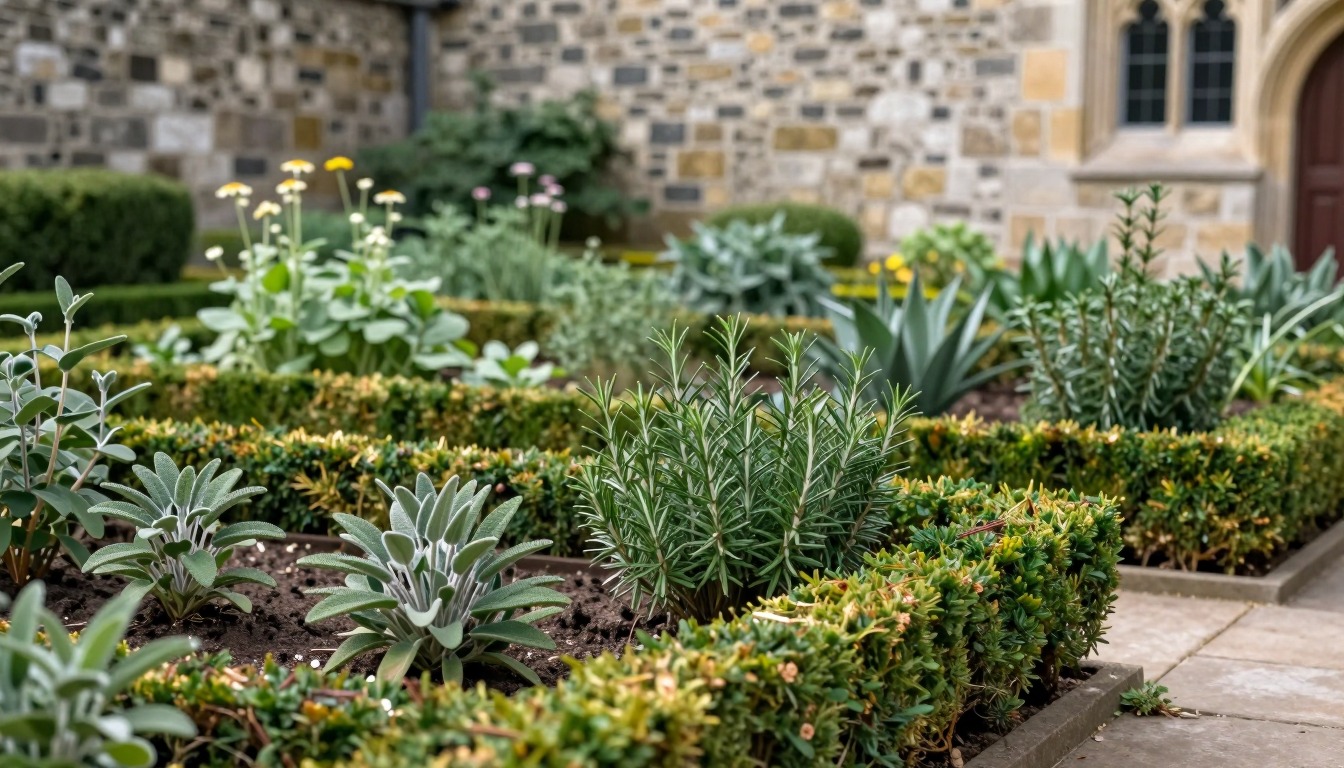
What grew in the medieval monastery garden? Three texts and plans from the early 9th century document it most precisely: the plant list of the Capitulare de villis, the Plan of St Gall with its medicinal garden and kitchen garden, and the garden poem Hortulus. Then there is Hildegard of Bingen in the 12th century, where you have to look closely at what is established.
Only what can be found in the sources is given here, with an indication of where.
Why did a garden belong to a monastery?
The Rule of Benedict, compiled around 540, expressly provides for the garden.1 Chapter 66 says: “Monasterium autem, si possit fieri, ita debet constitui ut omnia necessaria, id est aqua, molendinum, hortum vel artes diversas intra monasterium exerceantur …”2 Translated freely: If possible, the monastery should be laid out so that everything necessary, namely water, mill, garden and the various crafts, lies within the monastery. The sentence continues: so that the monks do not have to roam outside.
The much-quoted saying “Ora et labora”, by contrast, is not in the Rule. It dates from the late Middle Ages; the Rule does, however, prescribe a daily routine of prayer, work and spiritual reading.3
The Capitulare de villis
Which plants does the Capitulare de villis name? Chapter 70 lists 73 useful plants and 16 fruit trees to be planted on the imperial estates, including garden sage, rosemary, caraway, fennel, lovage, opium poppy, Madonna lily, dog rose and several mints. The ordinance is not a monastery text; on behalf of the emperor, it regulated the administration of the crown estates.4
The dating is disputed. Older proposals range from 770–800 to 810–813; more recent datings are “ca. 795” and 792–800. The author is unknown; the only known manuscript is held in the Herzog August Library in Wolfenbüttel.4 The ordinance was meant to secure supplies for Charlemagne and his itinerant court.4
Marshmallow and common mallow also appear in the table, lavender does not.4 The list says what was to be grown. How the plants were used cannot be seen from it.
The Plan of St Gall
What does the Plan of St Gall show? The plan was made around 825/26 on Reichenau. Its walled gardens consist of a medicinal garden (herbularius) with 16 beds and a kitchen garden with 18 beds. Whether it was meant as an ideal plan or as a design for rebuilding St Gall is disputed; it was never built in this form.5, 6
The original is held in the Abbey Library of St Gall (Codex Sangallensis 1092). It consists of five sheets of sheepskin parchment sewn together and measures 112 by 77.5 centimeters.5 All plants of the two gardens are also in the list of the Capitulare de villis, ten plants of the medicinal garden also in the Hortulus.5 Which plant stands in which bed we could not verify from an open source and therefore do not state.
The Hortulus of Walahfrid Strabo
Walahfrid Strabo was appointed abbot of Reichenau by Louis the Pious in 838 and took up the office in 842.7 Around 840 the Hortulus was written there, a didactic poem in verse about the monastery garden, dedicated to his teacher Grimald. In 23 stanzas it deals with 24 plants and draws on ancient sources such as Pliny the Elder and Pseudo-Apuleius.7, 9
The plants described include sage, rue, fennel, lovage, mint, celery, opium poppy, lily and rose.9 Sage comes first, and at the end comes the rose, which Walahfrid calls the “flower of flowers”.8, 9 The poem is a literary portrayal of a monastery garden and, from his own observation, also deals with the work of the gardener.9
Somewhat older is the Lorsch Pharmacopoeia (Lorscher Arzneibuch, around 800). It contains 482 surviving recipes in five books, is held in the Bamberg State Library and has been part of the UNESCO Memory of the World register since 2013. It is regarded as the oldest surviving pharmacopoeia from a monastery of the early medieval West.10
Hildegard of Bingen
Hildegard (1098–1179) first worked at Disibodenberg and between 1147 and 1150 founded the Rupertsberg convent near Bingen.11 Her natural history work is known as the Physica or Liber simplicis medicinae and was written around 1150 to 1160. It has nine books on plants, trees, stones, animals and metals. The first, De plantis, describes herbs and staple foods in 217 chapters.12
Less is established than the name Hildegard on the market suggests. The Physica originally formed a single work with Causae et curae; the two were separated as early as the early 13th century.12 According to Wikipedia, the “form, scope and mutual relationship” of the two texts (our translation) are still a subject of discussion today.11 Since the 1970s, moreover, a commercial market of guidebooks, courses and ready-made products with an alleged connection to Hildegard has established itself. Source-critical studies warn against projecting modern ideas of therapy and health back into her texts.11 We therefore do not reproduce any claims about effects from the Physica.
A wider view of plant knowledge is offered by What is ethnobotany?; for frankincense and myrrh, see Frankincense and myrrh in the Bible.
The sources compared
| Source | Time and place | What it documents |
|---|---|---|
| Rule of Benedict | around 540 | The garden should lie within the monastery if possible (chapter 66). |
| Capitulare de villis | around 795, disputed; crown estates | 73 useful plants and 16 fruit trees in chapter 70. |
| Lorsch Pharmacopoeia | around 800, Lorsch Abbey | 482 surviving recipes in five books. |
| Plan of St Gall | around 825/26, Reichenau | Plan of a monastery with medicinal garden (16 beds) and kitchen garden (18 beds), never built this way. |
| Hortulus | around 840, Reichenau | Didactic poem about the monastery garden, 24 plants in 23 stanzas. |
| Hildegard, Physica | about 1150–1160, Rhine | Nine books, the first with 217 chapters on herbs and staple foods; original text still debated today. |
Seven plants: Mild and Mild Silver


Frequently asked questions
The Capitulare de villis names, among others, garden sage, rosemary, caraway, fennel and mints, the Hortulus sage, rue, fennel, mint and rose. The Capitulare, however, is an ordinance for crown estates, not a monastery text.4
A didactic poem by Walahfrid Strabo, abbot of Reichenau, written around 840. In 23 stanzas it describes 24 plants of a monastery garden and is dedicated to Grimald.9
No. The saying dates from the late Middle Ages. The Rule does, however, prescribe a daily routine of prayer, work and spiritual reading.3
Tobacco reached Europe only after the voyages of Columbus; the Spanish introduced it in 1518.13 The sources named above deal with garden, kitchen and pharmacopoeia. In our research we came across no evidence of herbs being smoked in the monastery garden.
An honest assessment
Sage, rosemary, mint and the other plants from the medieval lists are not contained in Mild and Mild Silver, and this text is not an invitation to smoke them. We claim no connection between the monastery garden and our blends. We have compiled which plants were smoked historically in Which herbs can you smoke?.
Tobacco-free does not mean risk-free. Even nicotine-free herbal smoke is smoke: burning plant material produces combustion products such as tar and carbon monoxide. In a 2015 study, the smoke of a nicotine-free herbal cigarette contained no detectable nicotine, but tar, and carbon monoxide and benzo(a)pyrene were higher than in the tobacco comparison cigarette.14 That applies to this one tested product and not automatically to other blends. Ritual Herbs is aimed at adults and makes no health claims.
Seven plants, openly declared
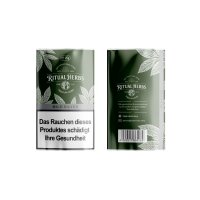
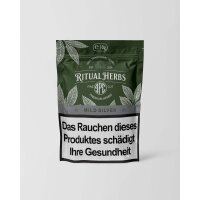
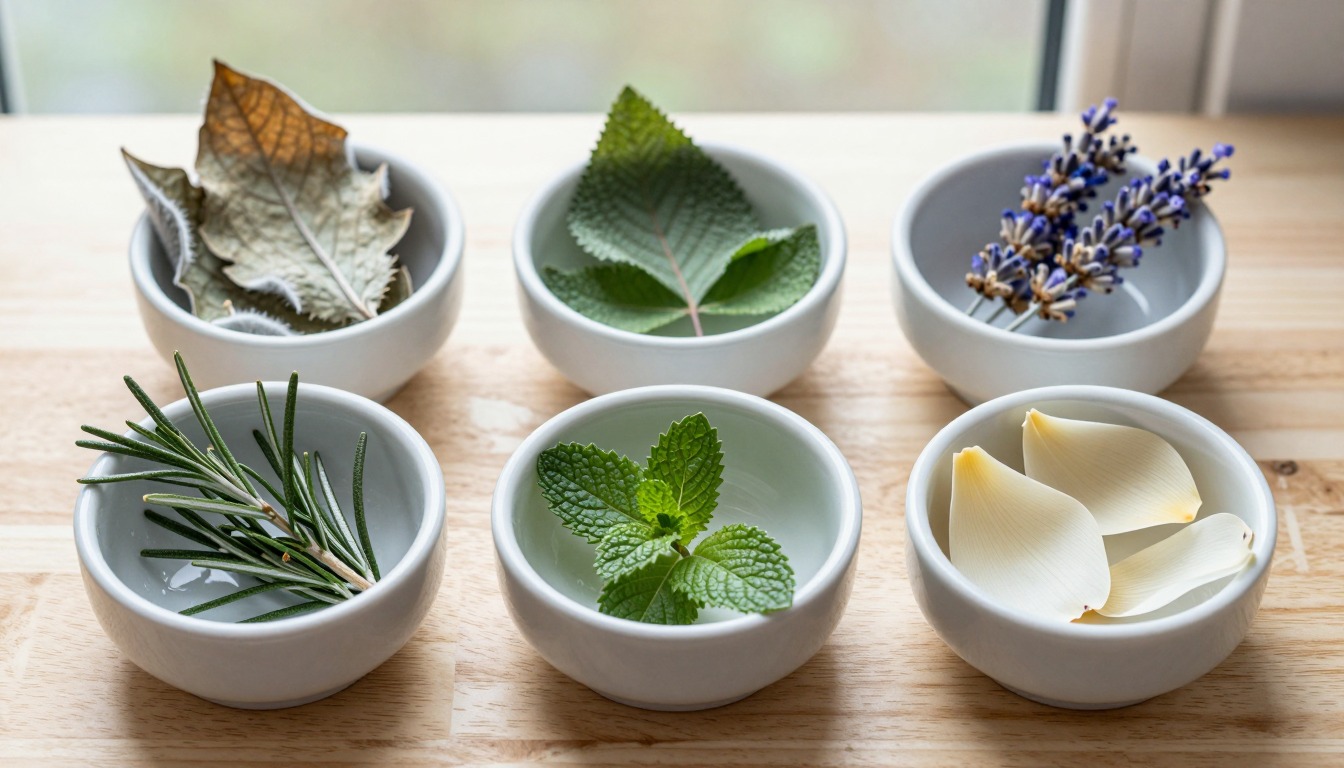
Mild and Mild Silver consist of mullein leaves, blackberry leaves, lotus flower petals, hollyhock leaves, turmeric leaves, licorice root and licorice leaves. Both come in 10 g and 25 g packs.
How the blends are put together is covered in Tobacco substitute: what is an herbal smoking blend?; you will find the blends under tobacco substitute herbal blends.
Keep reading
Sources
- Wikipedia (in German): Benediktsregel: compiled around 540. Retrieved October 2026.
- Regula Benedicti, Caput 66, The Latin Library: sentence on water, mill and garden (chapter 66). Retrieved October 2026.
- Wikipedia (in German): Ora et labora: not contained in the Rule, late Middle Ages; prayer, work, reading. Retrieved October 2026.
- Wikipedia (in German): Capitulare de villis: dating, purpose, manuscript, chapter 70 (73 useful plants, 16 fruit trees) and plant table. Retrieved October 2026.
- Wikipedia (in German): St. Galler Klosterplan: origin, storage (Cod. Sang. 1092), dimensions, medicinal and kitchen garden, relation to the Capitulare and Hortulus, disputed purpose. Retrieved October 2026.
- Wikipedia (en): Plan of Saint Gall: “The Plan was never actually built.” Retrieved October 2026.
- Wikipedia (in German): Walahfrid Strabo: appointment as abbot 838, taking office 842, Hortulus around 840, 24 plants in 23 stanzas. Retrieved October 2026.
- Wikipedia (en): Walafrid Strabo: sage in the place of honor, rose as “flower of flowers”. Retrieved October 2026.
- Wikipedia (in German): Hortulus (Liber de cultura hortorum): plant list, 23 stanzas and 24 plants, dedication to Grimald, ancient models, literary portrayal, work of the gardener. Retrieved October 2026.
- Wikipedia (in German): Lorscher Arzneibuch: origin around 800, 482 recipes in five books, Bamberg State Library, Memory of the World 2013. Retrieved October 2026.
- Wikipedia (in German): Hildegard von Bingen: life dates, convents, state of research on the natural history writings, commercialized reception. Retrieved October 2026.
- Wikipedia (in German): Physica (Liber simplicis medicinae): time of origin, nine books, 217 chapters in De plantis, separation from Causae et curae. Retrieved October 2026.
- Wikipedia (in German): Tabak: introduction to Europe after Columbus, 1518. Retrieved October 2026.
- Bak JH, Lee SM, Lim HB: Safety Assessment of Mainstream Smoke of Herbal Cigarette, Toxicological Research 31(1), 2015: tar, no nicotine, carbon monoxide and benzo(a)pyrene higher than in the tobacco cigarette. Retrieved October 2026.
x
Please sign in to write a comment.