Key points
- Ethnobotany studies the relationship between people and plants: how societies use plants, name them and build them into their culture.
- The term goes back to the US botanist John W. Harshberger. He first used it in 1895, and it appeared in print in 1896.
- The work relies on conversations, field stays, herbarium vouchers and traceable documentation.
- Traditional use is not proof of an effect. The field documents what people do with plants, not what the plants do.
- Even nicotine-free herbal smoke is smoke. Burning produces, among other things, carbon monoxide and tar.
Table of contents
- Loading...
Ethnobotany is the science of the relationships between people and plants. It asks who uses which plant for what, how the knowledge is passed on and what it reveals about the culture behind it. The word dates from the 1890s.
What does ethnobotany mean?
Ethnobotany studies plants in the context of their use by people: as useful and medicinal plants, in folk medicine and in cultural practices. The interest lies especially with pre-industrial ethnic groups and indigenous peoples. The English-language literature describes the field as interdisciplinary, with a focus on traditional knowledge about the use, care and cultural perception of plants.
The word is made up of ethnos (people) and botany. Anyone doing this kind of research needs several skills: botanical ones, to identify plants and keep vouchers, anthropological ones, to understand the cultural ideas surrounding a plant, and linguistic ones, to record at least the local plant names accurately.
Where does the term come from?
The term ethnobotany was first used in 1895 by the American botanist John William Harshberger. In 1896 it appeared in print in the essay “The Purposes of Ethno-Botany” in the journal Botanical Gazette.
The interest in the subject is older than the word:
| When | Event |
|---|---|
| 1st century AD | Pedanius Dioscorides documents more than 600 plants of the Mediterranean region in De materia medica. |
| 1732 | On a journey through Scandinavia, Carl von Linné asks the Sámi about their use of plants. |
| 1895 / 1896 | Harshberger coins the term ethnobotany. In the same year, 1896, Leopold Glück’s work on traditional plant knowledge in Bosnia appears, regarded as the first modern ethnobotanical study. |
| from 1941 | Richard Evans Schultes (1915 to 2001) works for an extended period in Colombian rainforests and lives there among indigenous communities. He is regarded as the “father of ethnobotany”. |
How do ethnobotanists work?
Ethnobotanical fieldwork relies on conversations with the people who apply the plant knowledge, on extended stays on site and on voucher specimens of the plants named. The analysis is both qualitative and quantitative. As the basic unit of the data, the standards published in 2018 (see below) name the individual “use report”, that is, the statement that one person uses a particular plant in a particular way.
| Building block | What lies behind it |
|---|---|
| Conversations | Knowledge is asked for from those who apply it. Whom you ask and how open the people asked are towards strangers influences the result. |
| Field stay | Extended stays among the people whose knowledge is being documented. Schultes spent long periods in Colombia for this. |
| Herbarium vouchers | Every documented use is linked to a voucher specimen so that the plant species can be verified. |
| Analysis | Qualitative and quantitative analysis, the basic unit is the use report. |
| Law and ethics | The research is meant to be legal and ethical and to comply with local and national regulations. |
These requirements are summarised in a commentary by Weckerle and co-authors in the Journal of Ethnopharmacology (2018): a clear research question, thorough literature work, a suitable method, voucher specimens and a transparent, traceable presentation of the data.
Which well-known examples are there?
Two examples show how plant knowledge travelled from one culture to another. The table tells the history of science. It makes no statement about the effect of these plants and none about smoking herbs.
| Plant | What is handed down | What happened next |
|---|---|---|
| Conifer, probably spruce | According to tradition, the French explorer Jacques Cartier learned from the Iroquois about a tea made from needles that was used against scurvy. | An early example of Europeans taking over plant knowledge from local people. |
| Cinchona tree (Cinchona) | South American cultures used the bark before contact with Europeans. From the 1630s or 1640s it was exported to Europe, and Jesuits played an important role in passing it on. | In 1820, the chemists Pelletier and Caventou isolated the alkaloids quinine and cinchonine from the bark. |
What actually happens with a plant or its constituents is not something ethnobotany settles itself. That is a matter for chemistry and pharmacology. Traditional use is a pointer to where research might be worthwhile, nothing more.
An example of historical plant knowledge is Herbs in the medieval monastery garden; for how smoke is treated in Indigenous cultures, see Smoke in Indigenous traditions.
Who owns plant knowledge?
Today the field also deals with intellectual property and the fair sharing of benefits arising from traditional knowledge. The International Society of Ethnobiology has drawn up a code of ethics for research.
At the level of international law, the Nagoya Protocol regulates access to genetic resources and the fair sharing of benefits. It was adopted in Nagoya on 29 October 2010 and entered into force on 12 October 2014. It also protects traditional knowledge associated with genetic resources.
What ethnobotany is not
Ethnobotany is not a seal of quality. That a plant was used in a culture does not mean that the use achieves anything or is free of concern. The field documents, it promises nothing.
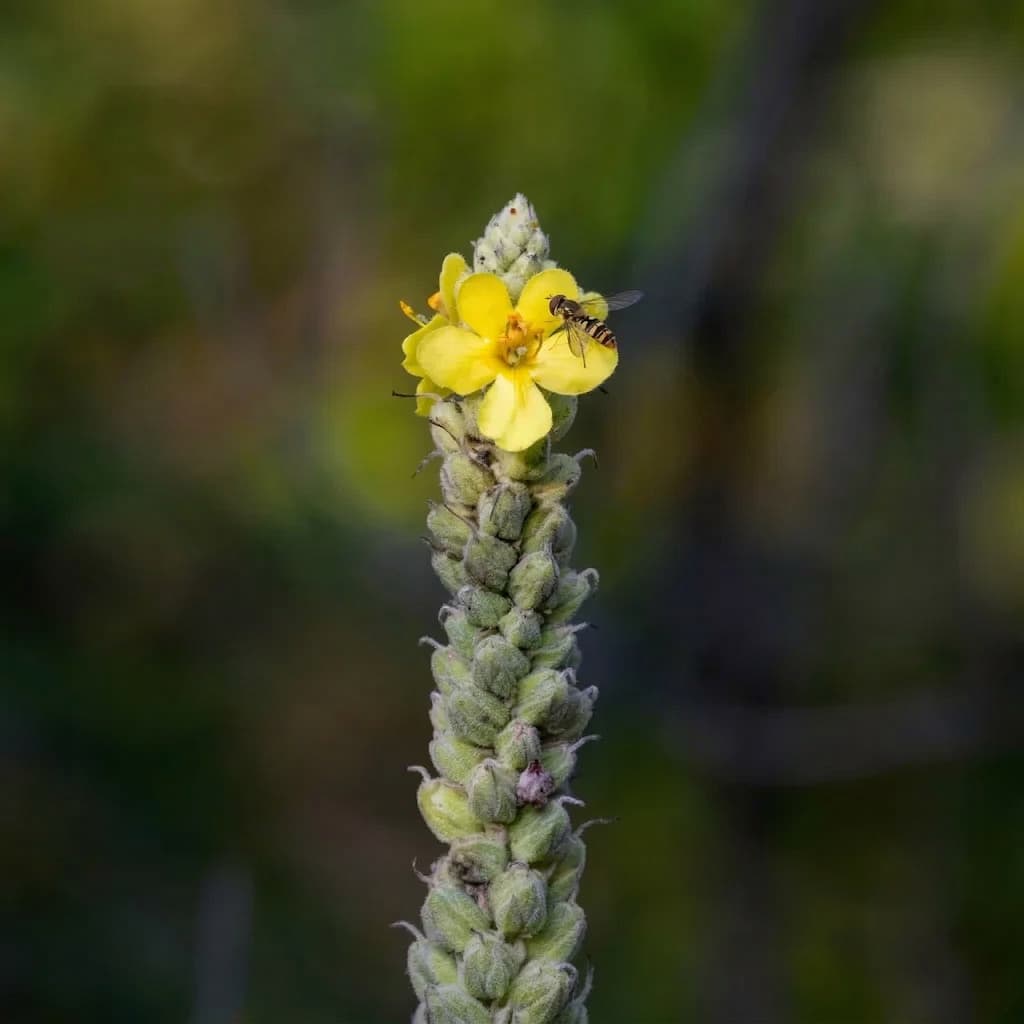
At Ritual Herbs, this standard is behind the blog: we do not do fieldwork, we read sources and name them. The article on mullein shows what that looks like. Which plants are used for smoking at all and what to bear in mind is covered in Which herbs can you smoke.
If you are interested in herbal smoking blends, you will find Mild and Mild Silver under tobacco substitute herbal blends.
The blends Mild and Mild Silver



Frequently asked questions
Ethnobotany investigates how people use plants and what meaning they give them. It combines botany with the cultural and social sciences.
The American botanist John William Harshberger. He first used the word in 1895, and it appeared in print in the Botanical Gazette in 1896.
Botany describes plants themselves. Ethnobotany studies the relationship between people and plants and additionally needs anthropological methods such as interviews and field stays.
No. Ethnobotany documents use. Whether a constituent achieves anything is settled by other fields with their own methods.
No. Burning plant material produces combustion products such as carbon monoxide and tar, regardless of how the plant is otherwise used. This also applies to nicotine-free herbal blends.
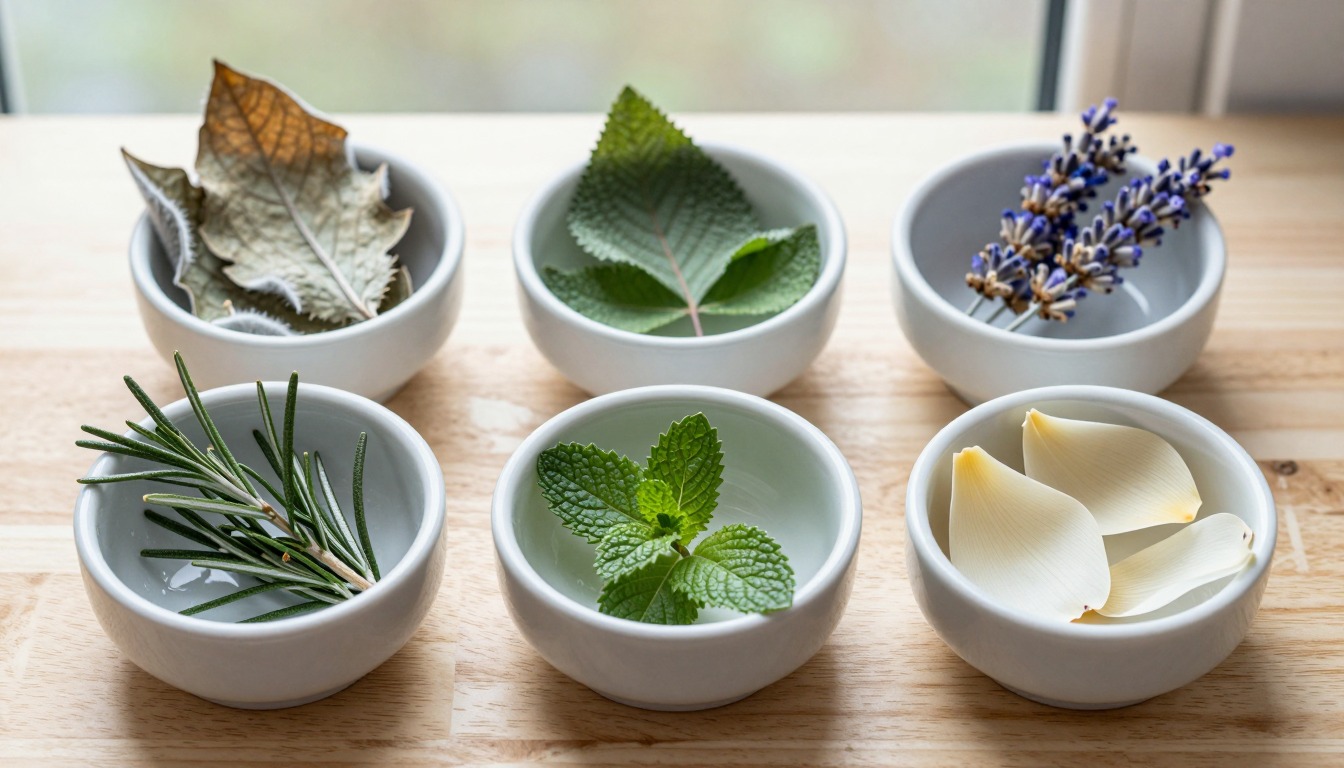
Only in its standard of sourcing. The ingredients of Mild and Mild Silver are mullein leaves, blackberry leaves, lotus flower petals, hollyhock leaves, turmeric leaves, licorice root and licorice leaves. We back up statements about the history and botany of the plants in the respective articles.
Our honest take
Tobacco-free does not mean risk-free. Even nicotine-free herbal smoke is smoke. Carbon monoxide is produced by the incomplete combustion of carbon-containing substances, whether tobacco or an herb is burning.
In 2000, the US Federal Trade Commission (FTC) obliged a manufacturer of herbal cigarettes to carry the warning that herbal cigarettes are dangerous to health and produce tar and carbon monoxide. A Korean study of 2015 found no nicotine in the smoke of a nicotine-free, mugwort-based herbal cigarette, but it did find carbon monoxide, benzo(a)pyrene and a mutagenic potential similar to that of a tobacco cigarette. The German Federal Institute for Public Health (BIÖG) writes on rauchfrei-info.de (in German) that smoking herbal cigarettes produces a high concentration of carbon monoxide, and advises against them as an alternative to cigarettes.
Ritual Herbs is aimed at adults. If you want to quit completely: you can reach the BIÖG advice line free of charge on 0800 8 31 31 31 (German-language service), and there is information on rauchfrei-info.de (in German).
Keep reading
Sources
- Ethnobotanik, Wikipedia (in German): definition, coining of the term by Harshberger in 1895, methods from botany and anthropology.
- Ethnobotany, Wikipedia (en): interdisciplinary field, Dioscorides, Linné 1732, Glück 1896, botanical, anthropological and linguistic training, sources of error in interviews, Cartier and the needle tea, intellectual property and benefit sharing, code of ethics of the International Society of Ethnobiology.
- Harshberger JW: The purposes of ethno-botany. Botanical Gazette 21, 1896. Bibliographic reference in the Indian Medicine Database of the University of Groningen.
- Richard Evans Schultes, Wikipedia (in German): dates of his life, stays in Colombia from 1941, the title “father of ethnobotany”.
- Weckerle CS et al.: Recommended standards for conducting and reporting ethnopharmacological field studies, Journal of Ethnopharmacology 210, 2018: voucher specimens, qualitative and quantitative analysis, use reports, transparent presentation of data, legal and ethical research.
- Nagoya-Protokoll, Wikipedia (in German): adoption on 29 October 2010, entry into force on 12 October 2014, access and benefit sharing.
- Cinchona, Wikipedia (en): use in South America before contact with Europeans, export from the 1630s/1640s, role of the Jesuits, isolation of quinine and cinchonine in 1820.
- Kräuterzigaretten (herbal cigarettes), rauchfrei-info.de of the German Federal Institute for Public Health (BIÖG) (in German): carbon monoxide, assessment, advice line.
- Analysis of Proposed Consent Order, Alternative Cigarettes, Inc., Federal Trade Commission, 2000: warning for herbal cigarettes.
- Bak JH, Lee SM, Lim HB: Safety Assessment of Mainstream Smoke of Herbal Cigarette, Toxicological Research 31(1), 2015.
- Kohlenstoffmonoxid, Wikipedia (in German): formation during incomplete combustion.
x
Please sign in to write a comment.