Key points
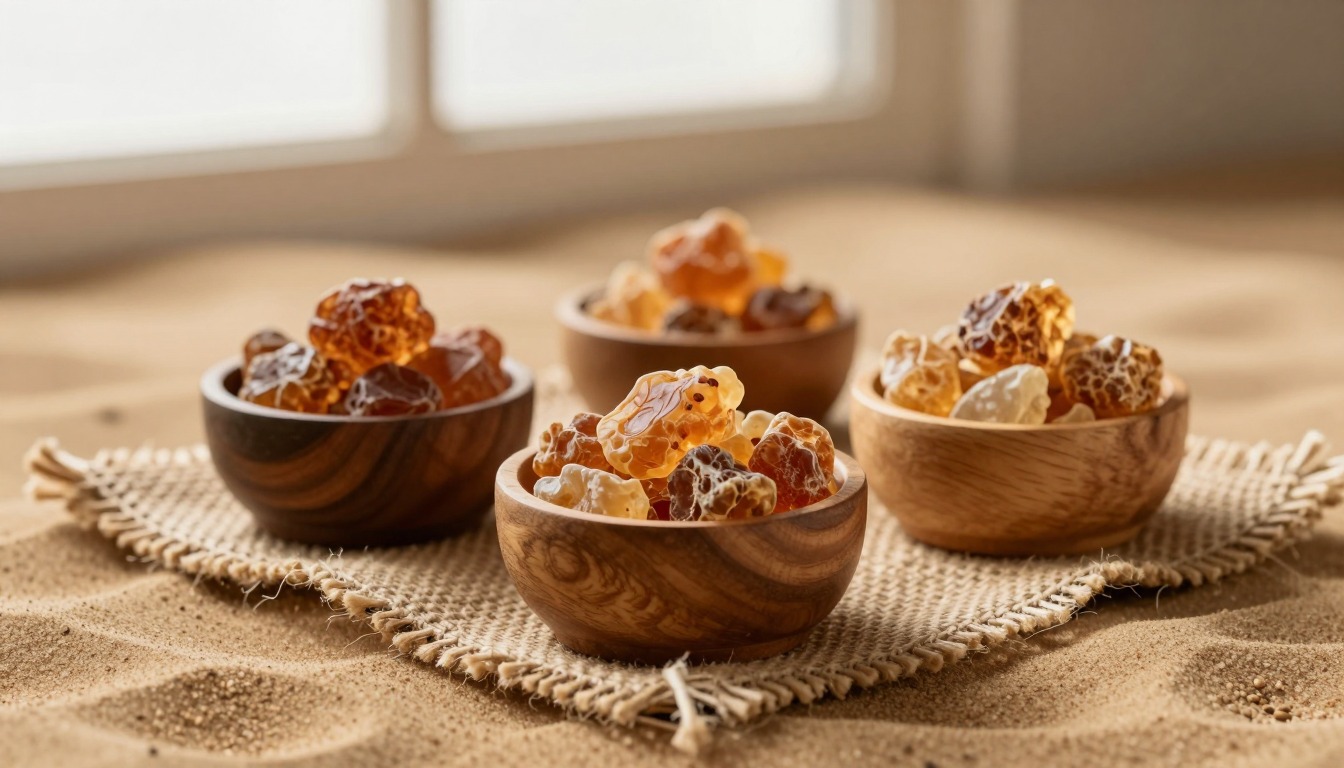
- Frankincense and myrrh are tree resins. Frankincense comes from Boswellia species, myrrh mainly from Commiphora myrrha and related species. Both grow in arid regions of the Horn of Africa and southern Arabia.
- In the Bible, frankincense appears in the holy incense mixture (Exodus 30:34) and among the gifts in Matthew 2:11. Myrrh is the first ingredient of the anointing oil (Exodus 30:23) and appears in Matthew 2:11 and John 19:39.
- Matthew 2 names neither the number three nor the title of king. Both were added later through tradition.
- The Incense Route from what is now Oman to Gaza was around 3,400 kilometers long.
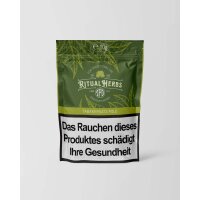
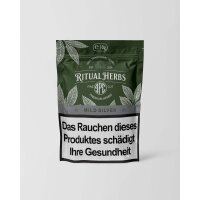
- Tobacco substitute for smoking has nothing to do with incense. Frankincense and myrrh are not contained in Mild and Mild Silver.
Table of contents
- Loading...
In the Bible, frankincense appears in the holy incense mixture in Exodus 30:34 and among the gifts in Matthew 2:11, and myrrh in the anointing oil in Exodus 30:23 and likewise in Matthew 2:11. Both are resins from arid regions of the Horn of Africa and southern Arabia. Much of what people think they know about the “three kings” is not in the text at all.
This is about incense and cultural history, not about anything you smoke. We stick to the biblical text, botany and trade history, and every statement has its source at the end.
What are frankincense and myrrh?
Frankincense is the air-dried resin of various Boswellia species. The genus belongs to the balsam tree family (Burseraceae) and comprises about 24 species, with centers in the Horn of Africa, Arabia and the Indian subcontinent.11 To harvest it, the trunk and branches are scored. A sticky, milky liquid emerges and dries in the air to resin.10 The harvest begins between the end of March and the beginning of April and lasts several months. The first harvest yields only very poor-quality resin.11
The German word Weihrauch goes back to Old High German wīhrou[c]h, “holy incense”. Olibanum originally referred to a very light-colored frankincense resin.10 The English word frankincense comes from Old French franc encens, “genuine incense”.16
Myrrh comes mainly from Commiphora myrrha and related species, likewise members of the balsam tree family.12 Commiphora myrrha is a thorny, deciduous shrub or small tree. It grows from northeastern Kenya through Ethiopia, Djibouti and Somalia to Oman and Yemen.13 The name goes back to the Semitic root m-r-r, Arabic murr, “bitter”.12
| Frankincense | Myrrh | |
|---|---|---|
| Genus | Boswellia | Commiphora |
| Family | Balsam tree family | Balsam tree family |
| Distribution | Horn of Africa, Arabia, Indian subcontinent | C. myrrha: northeastern Kenya to Oman and Yemen |
| Harvest | Cuts in trunk and branches, resin dries in the air | Gum resin of the trees |
| Origin of the name | Old High German wīhrou[c]h, “holy incense” | Semitic m-r-r, Arabic murr, “bitter” |
| Key Bible passage | Exodus 30:34 (incense mixture) | Exodus 30:23 (anointing oil) |
Where do they appear in the Bible?
Literal quotations come from the Luther Bible of 1912 (Luther 1912), whose text is in the public domain; we give them in our own English translation. Everything else we summarize in our own words. Translations differ in individual plant names, as can be seen further below.
| Passage | What it says | Source |
|---|---|---|
| Exodus 30:7–8 | Aaron is to burn incense on the incense altar every morning and toward evening, as a daily incense offering. | 1 |
| Exodus 30:23–24 | Ingredients of the holy anointing oil: “the finest myrrh, five hundred Lot” (Luther 1912, our translation; Lot is an old German unit of weight), plus cinnamon, calamus, cassia and olive oil. | 2 |
| Exodus 30:34–35 | Incense made from “balm, stacte, galbanum and pure frankincense, of one as much as of the other” (Luther 1912, our translation). | 3 |
| Luke 1:8–9 | During his temple service, the priest Zechariah is given the task of offering the incense offering. | 6 |
| Psalm 141:2 | The one praying wishes that his prayer may count before God “like an incense offering” (Luther 1912, our translation). | 7 |
| Matthew 2:11 | The wise men give the child “gold, frankincense and myrrh” (Luther 1912, our translation). | 5 |
| John 19:39 | Nicodemus brings “myrrh and aloe mixed together, about a hundred pounds” (Luther 1912, our translation). | 8 |
| Revelation 8:3–4 | An angel receives much incense, which he is to offer with the prayers of the saints on the golden altar; the smoke rises before God. | 9 |
The image of rising smoke as prayer thus runs from the Psalms to Revelation. As cultural history this is well documented. We claim nothing more about it than the passages themselves say.
The incense mixture from Exodus 30
Exodus 30:34–38 describes an incense mixture with frankincense as a recipe. According to Luther 1912, it consists of balm, stacte, galbanum and pure frankincense, in equal parts, “mixed according to the art of the ointment maker, that it be pure and holy” (our translation).3 Part of it is to be ground to powder.3
The Textbibel of 1899 names the ingredients differently: “stacte, incense claw and galbanum” and pure frankincense, “all in equal parts” (our translation).4 The translations thus render the plant and resin names differently.
Verses 37–38 are remarkable: nobody was allowed to make the mixture for himself. Anyone who did so anyway, to enjoy the scent, was to be cut off from his people.3, 4 The recipe was thus expressly reserved for the sanctuary. That Aaron was to serve the incense altar morning and evening is stated a few verses earlier.1 By the second temple in Jerusalem at the latest, that is from about 540 BCE, the incense altar stood in front of the curtain of the Holy of Holies, where an incense offering was made morning and evening.10
The gifts in Matthew 2
What does Matthew 2:11 say about frankincense and myrrh? The verse names gold, frankincense and myrrh as gifts of the “wise men from the East”, who visit the child in a house. How many wise men there were and that they were kings, the text does not say; both were added only later through legend.5, 15
The Greek text speaks of magoi, astrologers. Origen (185–254) was the first to mention three wise men. They became kings only in later authors.15 The gifts, too, were interpreted later: gold for the king, frankincense for the priest and God, myrrh for the mortal body and the later embalming.15 That is an interpretive tradition, not biblical text. In John 19:39, Nicodemus brings myrrh with aloe to the burial.8
From southern Arabia to Gaza: the trade routes
How long was the Incense Route? The route led from Dhofar in present-day Oman via Yemen, Asir and the Hejaz to the Mediterranean port of Gaza and on to Damascus. According to accounts by ancient authors, camel caravans needed 100 daily stages for the roughly 3,400 kilometers between Dhofar and Gaza.14
The route was probably used from the 10th century BCE, and its heyday began in the 5th century BCE. Stations included Shabwa, Sanaa, Medina, Tayma and Petra.14 Around the turn of the era, the Roman Empire alone is said to have consumed 1,500 tonnes of an estimated annual production of 2,500 to 3,000 tonnes.14 That is an estimate, not a counted quantity.
UNESCO added sites in Oman in 2000 and the desert cities in the Negev in 2005 to the World Heritage List as parts of the Incense Route.14 Today most of the frankincense production comes from the Horn of Africa.16
Frankincense in Greek and Roman antiquity is covered in Incense in antiquity: frankincense in Greece and Rome; for the Middle Ages and monasteries, see Herbs in the medieval monastery garden.
Frankincense in the liturgy
In the Catholic Church, incense stands for veneration and for prayer rising to God. The rule to use incense at High Mass applied at least since 1570, and since 1970 it can be used at all Masses.10 That is liturgical history. We derive no benefit for you in everyday life from it.
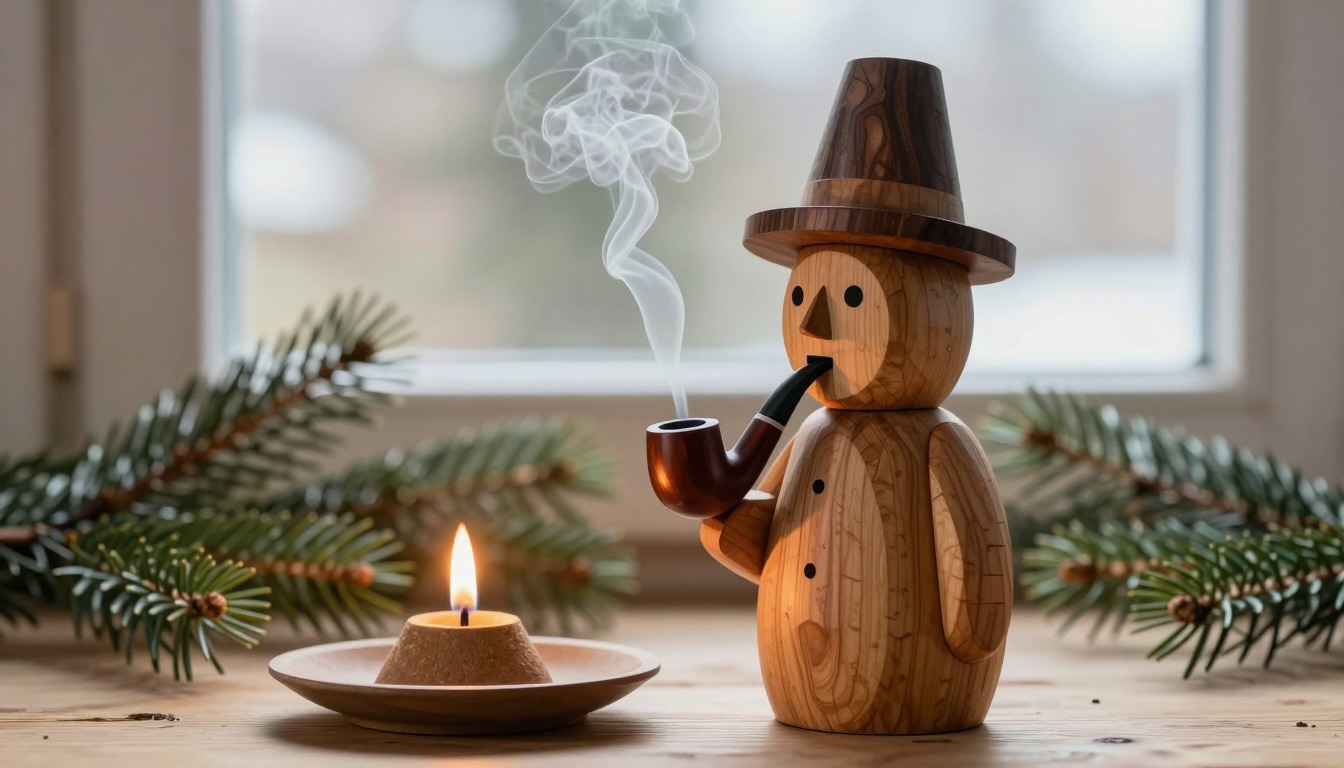
How incense is used in Advent is described in Incense at Advent: incense cones and incense smokers.
The blends Mild and Mild Silver
Frequently asked questions
Frankincense appears in Exodus 30:34 and Matthew 2:11. Myrrh appears in Exodus 30:23, Matthew 2:11 and John 19:39. Incense without a precise list of ingredients appears, among others, in Exodus 30:7, Luke 1:9 and Revelation 8:3.
That is not in the text. Matthew 2 speaks of “wise men from the East” and gives no number. The number three first appears in Origen; the title of king was added through later legends.
Frankincense comes from Boswellia species in the Horn of Africa, Arabia and the Indian subcontinent. Myrrh comes mainly from Commiphora myrrha, whose range extends from northeastern Kenya to Oman and Yemen.
Both are resins from the balsam tree family, but from different genera: Boswellia yields frankincense, Commiphora myrrh. In Exodus 30, frankincense appears in the incense mixture, myrrh in the anointing oil.
No. Verse 37 forbids making it for oneself, and verse 38 threatens anyone who does so anyway with exclusion from his people.
Ancient authors report 100 daily stages for the roughly 3,400 kilometers between Dhofar in Oman and Gaza.
No. Mild and Mild Silver consist of mullein leaves, blackberry leaves, lotus flower petals, hollyhock leaves, turmeric leaves, licorice root and licorice leaves. Frankincense and myrrh are incense resins; this article is not an invitation to smoke them.
An honest assessment
Smoke remains smoke, even with incense. In a church, the fine-dust levels measured during services with candles and incense were 91.6 µg/m³ (PM10) and 38.9 µg/m³ (PM2.5), above the EU air quality guideline values. In the combustion chamber, frankincense released more fine dust than candles.17
The same applies to smoking products. Tobacco-free and nicotine-free does not mean risk-free: burning plant material produces combustion products such as tar and carbon monoxide. In a 2015 study, the smoke of a nicotine-free herbal cigarette contained no detectable nicotine, but carbon monoxide and benzo(a)pyrene were higher than in the tobacco comparison cigarette.18 That applies to this one tested product, but it shows that nicotine-free is not the same as free of concern.
Tobacco substitute for smoking has nothing to do with incense. Ritual Herbs is aimed at adults and makes no health claims.
Plant ingredients, openly declared
Mild and Mild Silver contain the same seven plant ingredients, mixed and cut differently. Both come in 10 g and 25 g packs.
For herbal smoking blends, see tobacco substitute herbal blends.
Read more

Sources
- Luther Bible 1912 (public domain, in German), parallel text at saintebible.com: Exodus 30:7 and 30:8. Retrieved October 2026.
- Luther Bible 1912, saintebible.com: Exodus 30:23 and 30:24 (anointing oil). Retrieved October 2026.
- Luther Bible 1912, saintebible.com: Exodus 30:34, 30:35, 30:36, 30:37, 30:38 (incense mixture). Retrieved October 2026.
- Textbibel 1899 (Kautzsch/Weizsäcker, public domain, in German), on the same pages as source 3: Exodus 30:34, 30:38. Retrieved October 2026.
- Luther Bible 1912, saintebible.com: Matthew 2:1 and 2:11. Retrieved October 2026.
- Luther Bible 1912 and Textbibel 1899, saintebible.com: Luke 1:8 and 1:9. Retrieved October 2026.
- Luther Bible 1912, saintebible.com: Psalm 141:2. Retrieved October 2026.
- Luther Bible 1912, saintebible.com: John 19:39. Retrieved October 2026.
- Luther Bible 1912, saintebible.com: Revelation 8:3 and 8:4. Retrieved October 2026.
- Wikipedia (in German): Weihrauch: extraction, origin of the name, olibanum, incense altar in the second temple, liturgy. Retrieved October 2026.
- Wikipedia (in German): Boswellia: family, number of species, distribution, harvest. Retrieved October 2026.
- Wikipedia (in German): Myrrhe: source plants, etymology, use in Egypt. Retrieved October 2026.
- Wikipedia (in German): Commiphora myrrha: growth form and distribution. Retrieved October 2026.
- Wikipedia (in German): Weihrauchstraße: route, duration, periods, stations, World Heritage, Roman consumption. Retrieved October 2026.
- Wikipedia (in German): Heilige Drei Könige: astrologers, the number three, title of king, interpretation of the gifts. Retrieved October 2026.
- Wikipedia (en): Frankincense: origin of the word, Punt Colonnade of Hatshepsut, current production. Retrieved October 2026.
- Chuang HC, Jones T, BéruBé K: Combustion particles emitted during church services: implications for human respiratory health, Environment International, 2012. Retrieved October 2026.
- Bak JH, Lee SM, Lim HB: Safety Assessment of Mainstream Smoke of Herbal Cigarette, Toxicological Research 31(1), 2015. Retrieved October 2026.
x
Please sign in to write a comment.