Key points
- True lavender (Lavandula angustifolia) is a small shrub of the mint family (Lamiaceae) and comes from the Mediterranean region. Tobacco belongs to a different plant family.
- Lavender is not an ingredient of Mild or Mild Silver.
- The essential oil consists largely of linalool and linalyl acetate. Linalool is a fragrance compound. We make no claim about what follows from that when it is smoked.
- We give no recommendation and no approval for lavender smoke. What is documented: burning plant material produces carbon monoxide and other combustion products.
Table of contents
- Loading...
Smoking lavender? We give no recommendation on that. Lavender is an ornamental, fragrance and culinary plant. We found no study on its smoke. Here is what can be documented: botany, cultivation, harvest, fragrance compounds. And what is actually in our blends.
Which lavender do we mean?
Quick answer: What is true lavender?
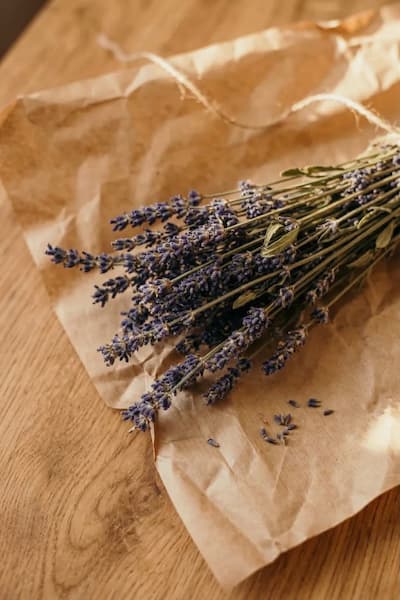
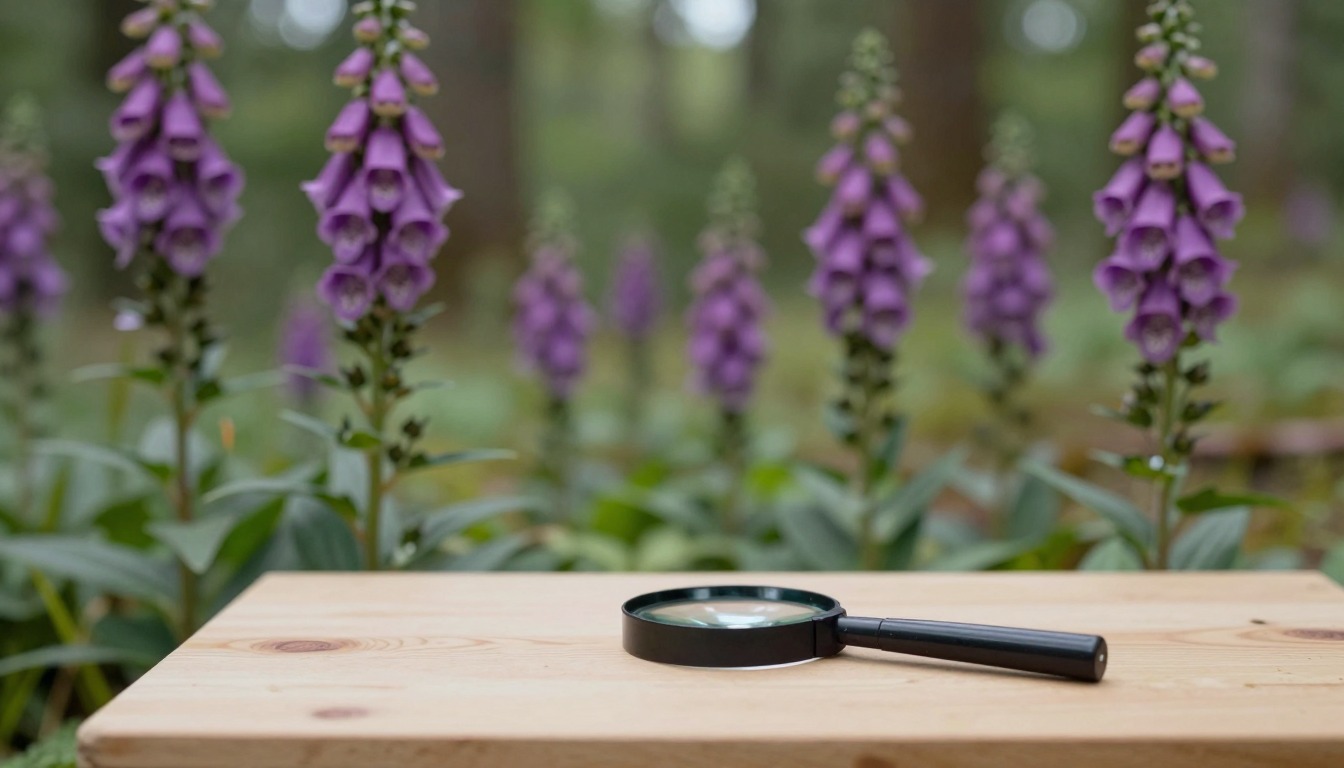
True lavender (Lavandula angustifolia) is a small shrub, usually 100 to 150 centimetres tall, of the mint family (Lamiaceae). Its original home is the coastal regions of the Mediterranean; most of the original stands are in eastern Spain. The corolla is violet to blue.1
The genus Lavandula comprises 28 to 37 species. Three are economically important: true lavender, spike lavender (Lavandula latifolia) and lavandin (Lavandula hybrida).2 This article is about true lavender.
True lavender: botany
True lavender grows as an aromatic small shrub and reaches 100 to 150, rarely up to 200 centimetres in height. In Central Europe it usually flowers from July to October. Original stands are found mainly in eastern Spain, as well as in the southeast of France and neighbouring parts of Italy. It occurs as an escape from cultivation in Dalmatia, Greece and Tuscany. Benedictine monks introduced it north of the Alps.1
- Botanical name: Lavandula angustifolia (true lavender, narrow-leaved lavender)
- Family: mint family (Lamiaceae). Tobacco belongs to the nightshade family.8
- Growth form: small shrub, 100 to 150 cm, rarely up to 200 cm
- Flower: violet to blue, in Central Europe usually July to October
- Native to: coastal regions of the Mediterranean
- In Mild and Mild Silver: not included
Cultivation, harvest and drying
Provence is known for its lavender fields. However, lavandin is grown there more often than true lavender; it is a natural hybrid of true lavender and spike lavender.1 Spiegel reported in 2013 that the area under lavender had halved within ten years. It named pests and winters with too little snow, which protects the plants from severe frost, as reasons.9
Harvesting takes place early in the morning or shortly after rain, once the flowers have dried again. This is said to keep the raw material rich in content. The flowers are collected shortly before they are fully open and then dried. The essential oil is obtained from the flower spikes with stem by steam distillation.1
Linalool and linalyl acetate
Quick answer: What does the essential oil of true lavender consist of?
In the essential oil of true lavender, R-(−)-linalool makes up 20 to 45 percent and R-(−)-linalyl acetate 30 to 50 percent, in varying proportions. Other constituents include ocimene, β-caryophyllene, terpinen-4-ol and 1,8-cineole. Dried flowers contain 1 to 3 percent essential oil, in pharmacopoeial quality at least 1.3 percent.1
Linalool is used as a fragrance and flavour compound, both as a component of essential oils and as a pure substance. It is one of the prohaptens: its oxidation products in the air can trigger allergies.3 These figures say nothing about an effect when smoked. How such fragrance compounds should be assessed in general is explained in Terpenes in herbal blends.
Lavender in cooking and perfumery
Young leaves and soft shoots season stews, fish, poultry, lamb, sauces and soups, especially in French, Italian and Spanish cooking. Lavender is not a standard component of herbes de Provence, but it is often included. In perfumery the genus is valued, above all true lavender.1 In both cases it is about fragrance and flavour, not smoke.
Lavender and Ritual Herbs
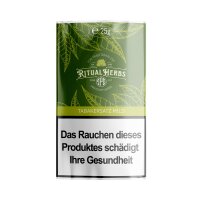
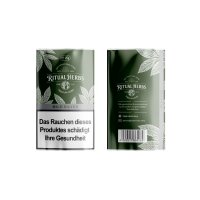
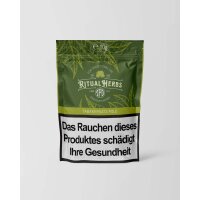
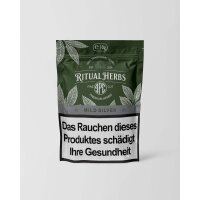
Ritual Herbs Mild and Mild Silver contain the same seven plant ingredients: mullein leaves, blackberry leaves, lotus flower petals, hollyhock leaves, turmeric leaves, licorice root and licorice leaves. Lavender is not among them, not even as a flavouring. The ingredients are fully declared on the packaging. More in Which herbs can you smoke?
Lavender and smoke
We found no study on the smoke of lavender. A review in ACS Omega (2022) names carbon monoxide, polyaromatic compounds and N-nitrosamines, among others, as harmful substances released when plants are burned.4 That a plant smells good or is used in cooking says nothing about its smoke.
Then there is the question of species: true lavender, spike lavender and lavandin are three different plants.2 With dried, chopped material you can no longer check leaf shape and growth. We give no approval for smoking any of them.
Two more herb profiles are Smoking sage and Smoking rosemary?.
Mild and Mild Silver: the blends in the shop
Frequently asked questions
That lavender smoke is well tolerated cannot be demonstrated. We found no study on it and give no recommendation.
No. Both varieties contain mullein leaves, blackberry leaves, lotus flower petals, hollyhock leaves, turmeric leaves, licorice root and licorice leaves. They are tobacco-free and nicotine-free.
In the essential oil of true lavender, the linalool share is 20 to 45 percent. The oil itself makes up 1 to 3 percent of dried flowers.1
Lavandin is a natural hybrid of true lavender and spike lavender. In Provence it is grown more often than true lavender.1
It is grown there, but it originally comes from the coastal regions of the Mediterranean, with most of the original stands in eastern Spain.1
An honest assessment
Tobacco-free does not mean risk-free. Burning plant material produces smoke, and that smoke contains combustion products such as carbon monoxide and tar. Carbon monoxide forms when carbon-containing substances burn incompletely, and it binds to the red blood pigment more strongly than oxygen does.6
A Korean study (2015) found more carbon monoxide and benzo[a]pyrene in the smoke of a nicotine-free herbal cigarette than in the smoke of a tobacco cigarette, and the smoke condensate was more mutagenic in the test. That concerns a single product, but it shows that “nicotine-free” is no free pass.5
With Mild and Mild Silver, tobacco and nicotine are left out. We claim nothing more. They are not a health product and not a means of quitting smoking. If you want to stop, you can find free counselling at rauchfrei-info.de (in German), the portal of the German Federal Institute for Public Health, and by phone on 0800 8 31 31 31 (German-language service).7 Ritual Herbs is aimed at adults.
What is in our blends
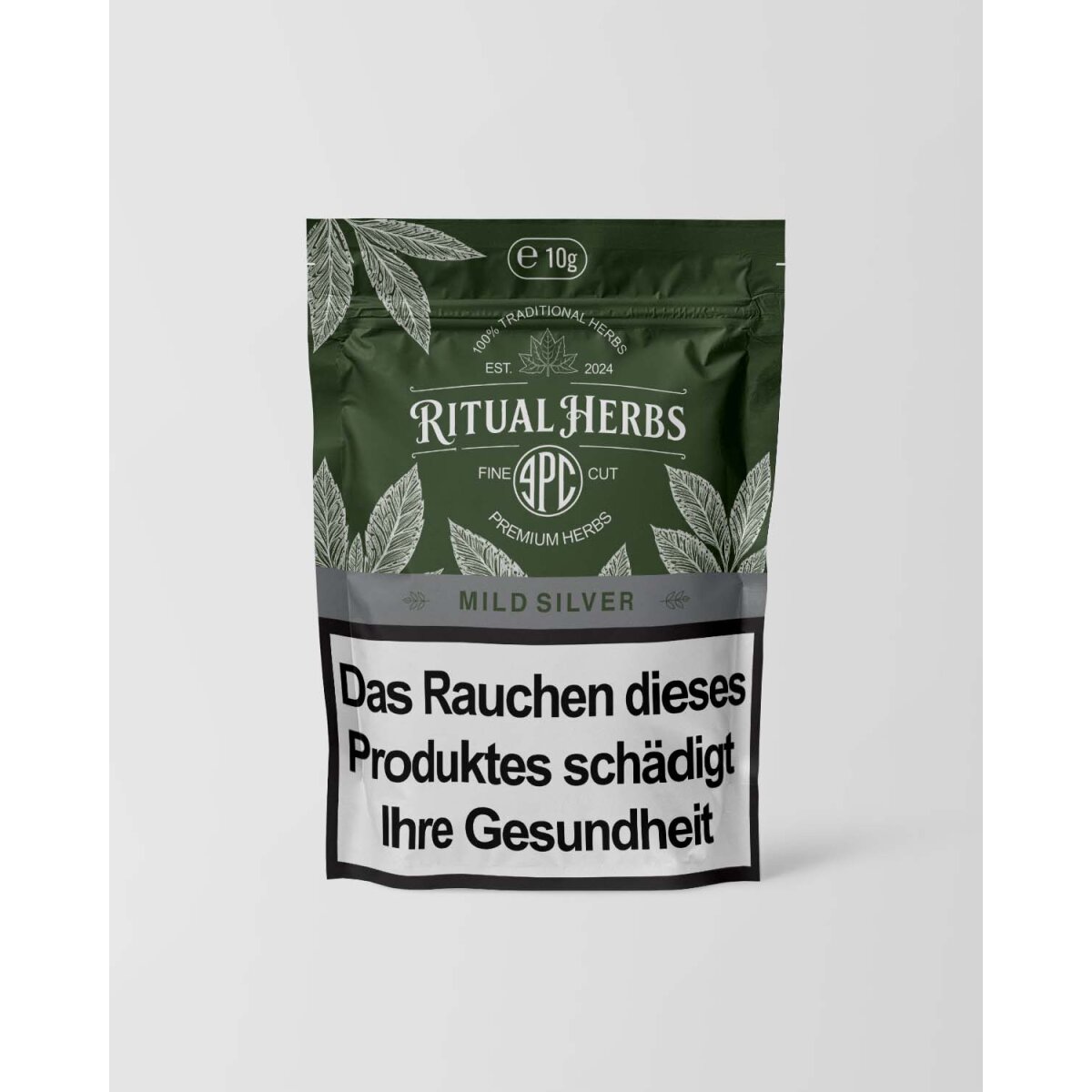
Mild and Mild Silver consist of the same seven plant ingredients, mixed and cut differently. Lavender is not one of them. Both come in 10 g and 25 g packs, both are resealable.
To the tobacco substituteRead more

Sources
- Wikipedia (in German): Echter Lavendel (true lavender). Retrieved in October 2026. Family, native range, growth form, flower, Benedictines, lavandin in Provence, harvest, oil extraction, oil content, linalool and linalyl acetate, cooking, perfumery.
- Wikipedia (in German): Lavendel (Gattung Lavandula) (lavender, genus Lavandula). Retrieved in October 2026. Number of species, the three economically important species.
- Wikipedia (in German): Linalool. Retrieved in October 2026. Fragrance and flavour compound, prohaptens.
- Abdel Rahman RT, Kamal N, Mediani A, Farag MA: How Do Herbal Cigarettes Compare To Tobacco? ACS Omega 7(50), 2022. PMC9773184.
- Bak JH, Lee SM, Lim HB: Safety assessment of mainstream smoke of herbal cigarette. Toxicological Research 31(1), 2015. doi:10.5487/tr.2015.31.1.041.
- Wikipedia (in German): Kohlenstoffmonoxid (carbon monoxide). Retrieved in October 2026. Formation in incomplete combustion, binding to haemoglobin.
- German Federal Institute for Public Health (Bundesinstitut für Öffentliche Gesundheit): rauchfrei-info.de (in German). Retrieved in October 2026. Telephone counselling 0800 8 31 31 31 (German-language service).
- Wikipedia (in German): Virginischer Tabak (Virginia tobacco). Retrieved in October 2026. Nightshade family.
- Helge Sobik: Lavendelfelder in der Provence: Leben in Lila (Lavender fields in Provence: life in purple; in German). Spiegel Online, 22 August 2013. Retrieved in October 2026.
x
Please sign in to write a comment.