Key points
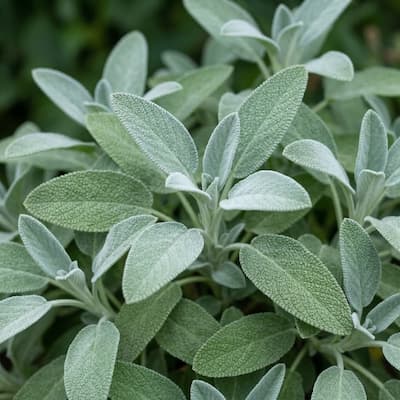
- This article is about common sage (Salvia officinalis), a culinary and tea plant from the Mediterranean region. White sage (Salvia apiana) is a different species.
- Sage is not an ingredient of Mild or Mild Silver. We do not invite you to smoke it.
- The essential oil of the leaves is rich in thujone. The European Medicines Agency (EMA) calls thujone toxic in high doses and restricts it for sage leaf preparations.
- We found no study on sage smoke. What is documented: burning plant material produces carbon monoxide and other combustion products.
Table of contents
- Loading...
Smoking sage? We do not recommend it. Sage is a culinary and tea plant, and we found no evidence on how well its smoke is tolerated. Here is what can be documented: botany, constituents, cultural history, and why sage is not one of the seven ingredients of Ritual Herbs.
Which sage do we mean?
Quick answer: What is the difference between common sage and white sage?
Common sage (Salvia officinalis) comes from the Mediterranean region and is used as a spice and for tea. White sage (Salvia apiana) grows in the southwestern United States and northwestern Mexico. Both belong to the genus Salvia, but they are different species.1, 2, 3
| Common sage | White sage | |
|---|---|---|
| Botanical name | Salvia officinalis | Salvia apiana |
| Other names | Garden sage, kitchen sage | “Indianischer Räuchersalbei” (German folk name) |
| Native to | Mediterranean region | Southwestern USA (Nevada, California, Mojave and Sonoran deserts), northwestern Mexico (Baja California) |
| Growth | subshrub, up to 80 cm | evergreen, herbaceous to subshrubby, up to 1 m |
| Source | 1 | 2, 3 |
The genus Salvia comprises 850 to over 900 species.2 “Sage” alone therefore does not tell you which plant is meant. Salvia divinorum is also a different species and is not meant here.
Common sage: botany
- Botanical name: Salvia officinalis L.1
- Family: mint family (Lamiaceae)
- Native to: Mediterranean region; today cultivated throughout Europe, only moderately winter-hardy in Central Europe
- Growth form: subshrub, up to 80 cm
- Leaf: opposite, oblong-ovate to narrowly elliptic, 2 to 9 cm, wrinkled, grey-green due to white felty hairs
- Flower: violet, rarely pink or white; in Central Europe May to July
- In our blends: not included
In the kitchen, sage goes with meat, game, poultry and fish, especially fatty dishes. In many countries, such as Turkey, sage tea is a traditional drink.1
What is in the essential oil, and what is thujone?
According to the European Pharmacopoeia (Ph. Eur. 8.0, as cited in the EMA report), dried leaves only count as sage leaf above a minimum essential oil content: at least 10 millilitres per kilogram for cut leaves, at least 12 for whole leaves. According to the EMA, the oil is “rich in thujone”, and its composition varies greatly with origin, harvest time and other factors.4
| Constituent of the essential oil (up to 3 % of the leaves) | Share of the oil |
|---|---|
| α-thujone | 10 to 60 % |
| β-thujone | 4 to 36 % |
| camphor | 5 to 20 % |
| 1,8-cineole | 1 to 15 % |
An analysis cited in the EMA report shows how uneven this can be: of 50 randomly chosen leaves from a commercial sample, some contained more 1,8-cineole than thujone and camphor.4
Quick answer: Is thujone toxic?
The EMA writes: thujone is toxic and may cause seizures at high doses, as shown by animal studies and case reports. For sage leaf preparations covered by the EU monograph, an upper limit of 6.0 mg thujone per person per day applies, for a maximum of two weeks.5
The dosage forms listed in the EMA report are herbal tea for oral use, infusions and preparations for the mouth and skin, as well as forms for oral use. Smoke is not among them.4 We found no source saying how much thujone ends up in the smoke when sage is burned. That is why we give no figure for it, and why we do not say the smoke is harmless.
What has been handed down about sage?
The name goes back to the Latin salvus. Charlemagne ordered its cultivation in the Capitulare de villis, a decree on managing royal estates; salviam appears there as the fifth entry of the plant list. The dating is disputed; suggestions include “around 795” and 792 to 800.1, 6
Around 840, Walahfrid Strabo, a monk and abbot on the island of Reichenau, described 24 plants in 23 stanzas in his Hortulus. The list begins with sage.7 That says something about its place in the medieval garden, and nothing about smoke.
Sage and Ritual Herbs
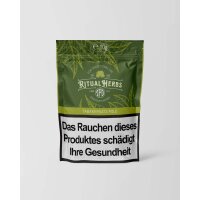
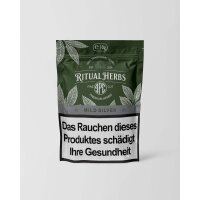
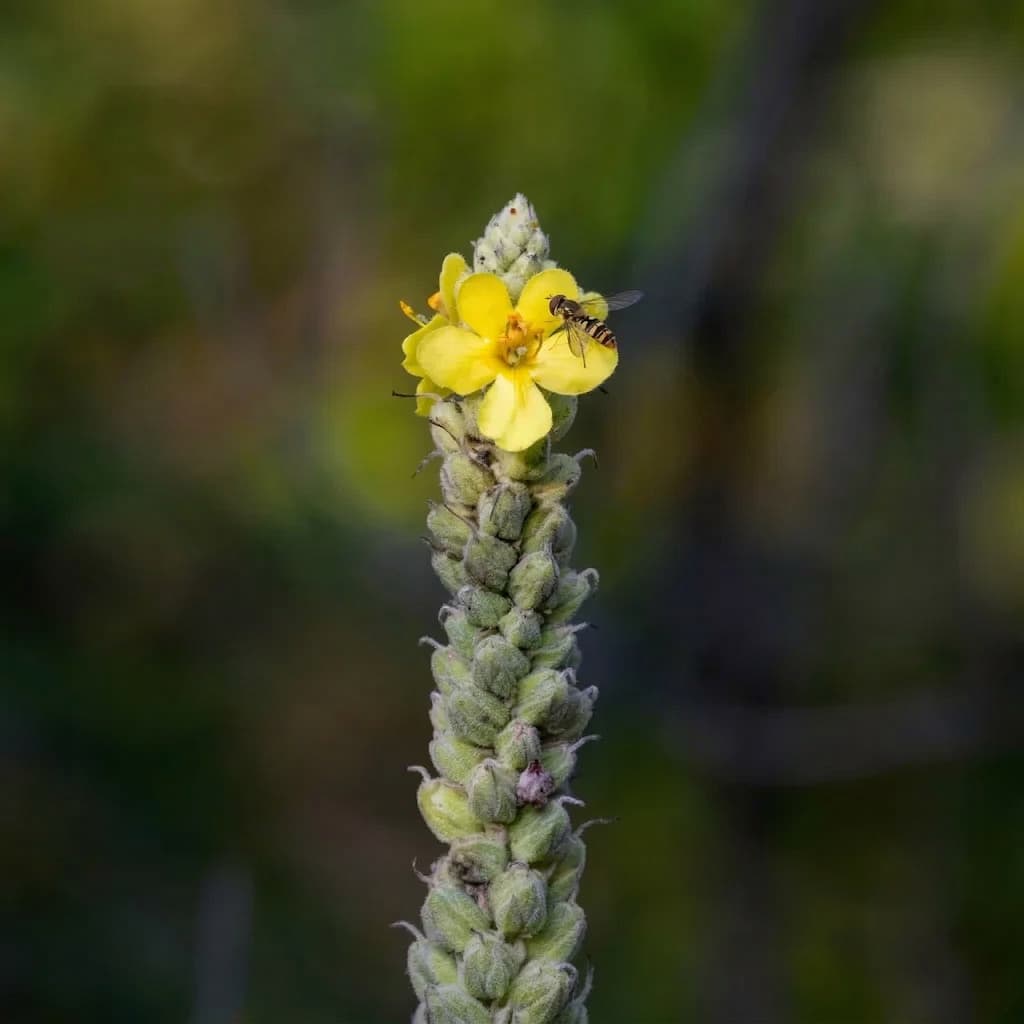
Mild and Mild Silver contain the same seven plant ingredients: mullein leaves, blackberry leaves, lotus flower petals, hollyhock leaves, turmeric leaves, licorice root and licorice leaves. Sage is not among them, neither common nor white. The ingredients are fully declared on the packaging. More in Which herbs can you smoke?
Sage and smoke
We found no study on the smoke of sage. A review in ACS Omega (2022) names carbon monoxide, polyaromatic compounds and N-nitrosamines among the toxic substances released when plant material is burned in general.8 That a plant is common as a spice or tea says nothing about how its smoke should be assessed.
There is also the risk of mix-ups: with more than 850 Salvia species, the word “sage” does not automatically mean common sage. Only the botanical name tells you which plant it is. Even that is not a green light for smoking.
An overview of constituents such as terpenes is in Terpenes in herbal blends explained; for sage in smudge bundles, see Smoke in Indigenous traditions. Whether herbal smoke is harmful is covered in Is smoking herbs harmful?.
Mild and Mild Silver: the blends in the shop
Frequently asked questions
That sage smoke is well tolerated cannot be demonstrated. Sage is known as a spice and a tea; we found no study on its smoke. We do not recommend smoking it.
No. Both varieties consist of the same seven plant ingredients, without sage. They are tobacco-free and nicotine-free.
An honest assessment
Tobacco-free does not mean risk-free. Smoke from plant material contains combustion products such as carbon monoxide and tar. Carbon monoxide forms when carbon-containing substances burn incompletely, and it binds to the red blood pigment more strongly than oxygen does.10
A Korean study (2015) found more carbon monoxide and benzo[a]pyrene in the smoke of a nicotine-free herbal cigarette than in the smoke of a tobacco cigarette; the smoke condensate was also more mutagenic in the test. That concerns a single product, but it shows that “nicotine-free” is no free pass.9
With Mild and Mild Silver, tobacco and nicotine are left out. We claim nothing more. They are not a health product and not a means of quitting smoking. If you want to stop, you can find free counselling at rauchfrei-info.de (in German), the portal of the German Federal Institute for Public Health, and by phone on 0800 8 31 31 31 (German-language service).11 Ritual Herbs is aimed at adults.
What is in our blends
Mild and Mild Silver: the same seven plant ingredients, a different mixing ratio and a different cut. Both come in 10 g and 25 g packs, both are resealable.
To the tobacco substituteRead more
Sources
- Wikipedia (in German): Echter Salbei (common sage). Retrieved in October 2026. Botany, origin of the name, Capitulare de villis, cuisine, tea.
- Wikipedia (in German): Salbei (Gattung Salvia) (sage, genus Salvia). Retrieved in October 2026. Number of species; the name “Indianischer Räuchersalbei”.
- Wikipedia (in German): Weißer Salbei (white sage). Retrieved in October 2026. Native range, growth form.
- European Medicines Agency, HMPC: Assessment report on Salvia officinalis L., folium and Salvia officinalis L., aetheroleum, EMA/HMPC/150801/2015, 20 September 2016. p. 1 (dosage forms), p. 5 (Ph. Eur., thujone, variability), p. 6 (constituents), p. 7 (50 leaves).
- European Medicines Agency, HMPC: Public statement on Salvia officinalis L., aetheroleum, EMA/HMPC/41843/2009 Corr. 1, 2 February 2016.
- Wikipedia (in German): Capitulare de villis. Retrieved in October 2026.
- Wikipedia (in German): Hortulus (Walahfrid Strabo). Retrieved in October 2026.
- Abdel Rahman RT, Kamal N, Mediani A, Farag MA: How Do Herbal Cigarettes Compare To Tobacco? ACS Omega 7(50), 2022. PMC9773184.
- Bak JH, Lee SM, Lim HB: Safety assessment of mainstream smoke of herbal cigarette. Toxicological Research 31(1), 2015. doi:10.5487/tr.2015.31.1.041.
- Wikipedia (in German): Kohlenstoffmonoxid (carbon monoxide). Retrieved in October 2026.
- German Federal Institute for Public Health (Bundesinstitut für Öffentliche Gesundheit): rauchfrei-info.de (in German). Retrieved in October 2026.
x
Please sign in to write a comment.