Key points
- In Ritual Herbs, turmeric appears as a leaf, not as a root and not as a spice powder.
- The yellow spice comes from the rhizome of Curcuma longa. The sources also attribute the pigment curcumin to the rhizome. Statements about curcumin cannot be transferred to the leaves.
- Turmeric leaves are a kitchen ingredient in India and Southeast Asia: in Goa, a sweet rice dish is steamed in them, and in Indonesia and Malaysia they go into some curries and rendang variants.
- The leaves are one of seven ingredients in Mild and Mild Silver. We do not describe any effect of smoking. Even nicotine-free herbal smoke is still smoke.
Table of contents
- Loading...
Turmeric is more than the yellow powder.
You know turmeric as a spice, and that comes from the plant’s root stock, the rhizome. Ritual Herbs Mild and Mild Silver contain something else: the leaves of Curcuma longa. That is a separate plant part, with its own role in the kitchen.
This article keeps the two apart. That is not hair-splitting. What is said about the rhizome and its pigment curcumin belongs to the rhizome. We do not transfer it to the leaf.
The plant: Curcuma longa
Turmeric belongs to the ginger family. The plant is perennial, forms a rhizome and grows up to about one meter tall[1][2][3]. Its leaves are arranged alternately in two rows[2]; the leaf blade is usually 30 to 45 centimeters long, rarely up to 90 centimeters[1][3]. Large leaves, then, and in India they are used in the kitchen as a wrapping for steamed dishes[4].
- Botanical name: Curcuma longa L.
- Family: Zingiberaceae (ginger family)
- Origin: South Asia, i.e. the Indian subcontinent, and Southeast Asia
- Growth habit: perennial, herbaceous, up to about 1 m tall
- Leaves: usually 30 to 45 cm long, rarely up to 90 cm
- Rhizome: heavily branched, yellow to orange, aromatic
- Climate: 20 to 30 °C and high rainfall
Rhizome or leaf: the difference
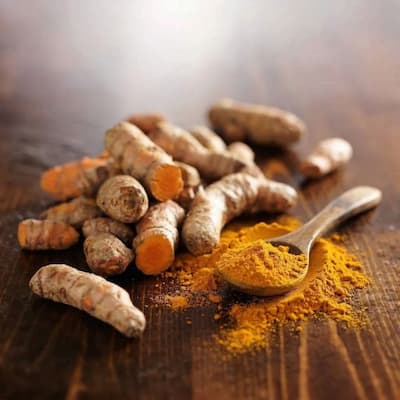
For the spice, the rhizome is often boiled in water, dried and ground. The powder tastes warm and bitter, with a peppery note and an earthy, mustard-like aroma[2]. The yellow pigment curcumin is found in the rhizome; how much varies widely by origin and measurement[1].
Anyone who types “turmeric” and “study” into a search engine almost always ends up at curcumin. The German-language Wikipedia attributes the substance to the rhizome[1]; about the leaves it says nothing on this point. That is why we cite no curcumin studies in this article and draw no statement from them for turmeric leaves.
The leaf in the kitchen
In India and Southeast Asia, it is not only the powder that goes into the pot, but the leaf as well. On the west coast of India, in Goa for example, rice paste is spread on fresh turmeric leaves and topped with grated coconut and jaggery, a palm sugar. The leaf is then folded, closed and steamed. The dish is called Patoleo; the Catholic community in Mangalore calls it Patoli[4].
In Indonesia, turmeric leaves are part of the curry base of Minang or Padang cuisine[2]. They are also named as an ingredient in rendang, alongside ginger, galangal and lemongrass. Two Malaysian variants, rendang from Kedah and from Sarawak, are explicitly described as made with turmeric leaves[5].
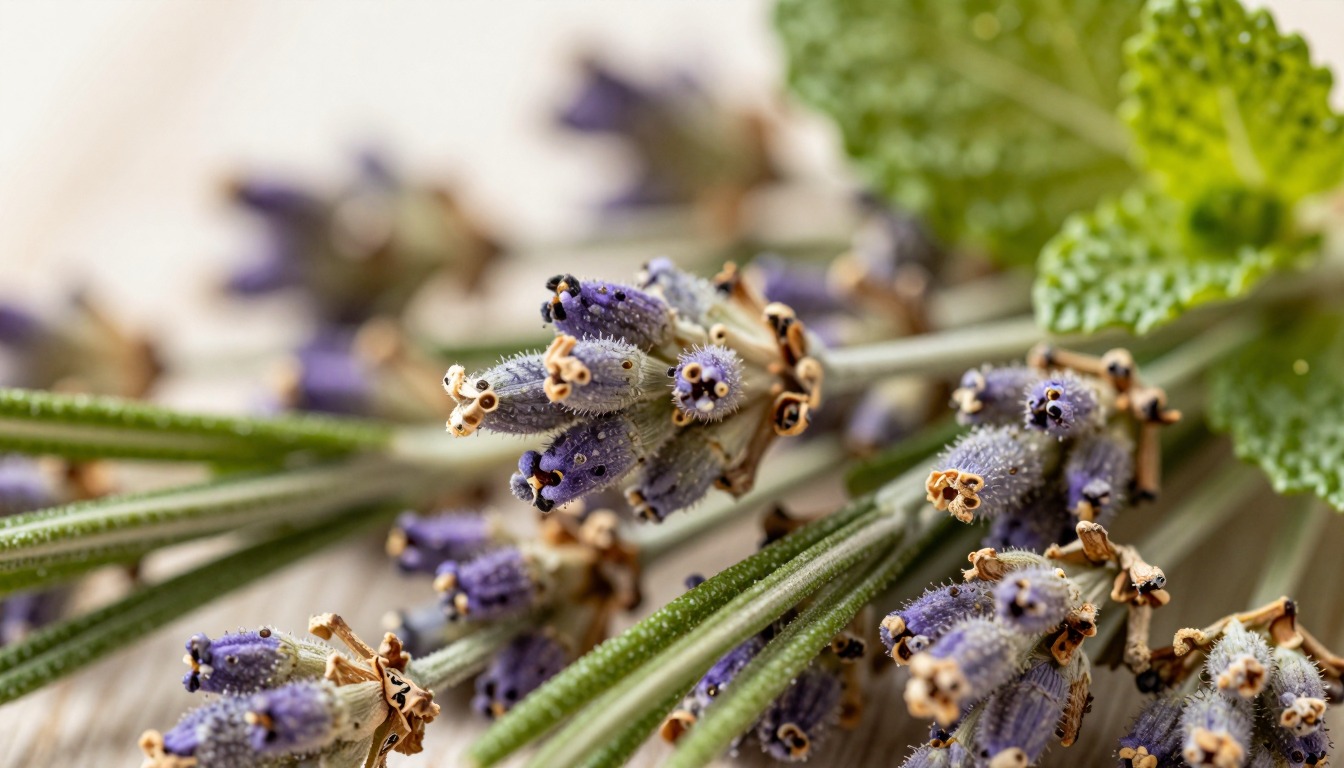
On aroma, there is less that is reliable. The cooking site Singaporean Malaysian Recipes describes fresh leaves as spicy, ginger-like and citrusy; the aroma only appears when you cut, tear or cook them[6]. That is the assessment of a single cooking author, not a specialist source.
And it applies only to fresh leaves in the kitchen. How a dried, finely cut leaf behaves in the smoke of a blend is not described by any of the sources. We therefore do not claim it either.
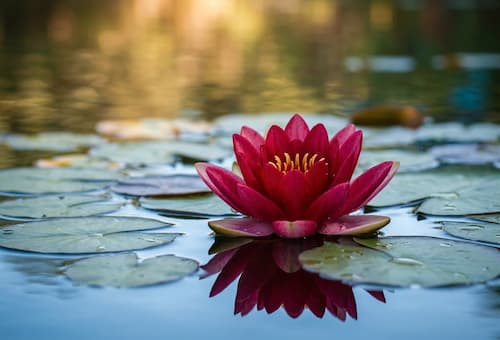
More plants at a glance: Which herbs can you smoke?. Another ingredient with a profile of its own is Smoking lotus flower.
Turmeric leaves in Mild and Mild Silver
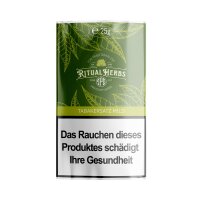
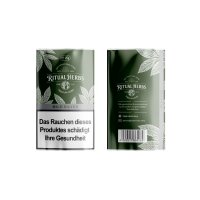
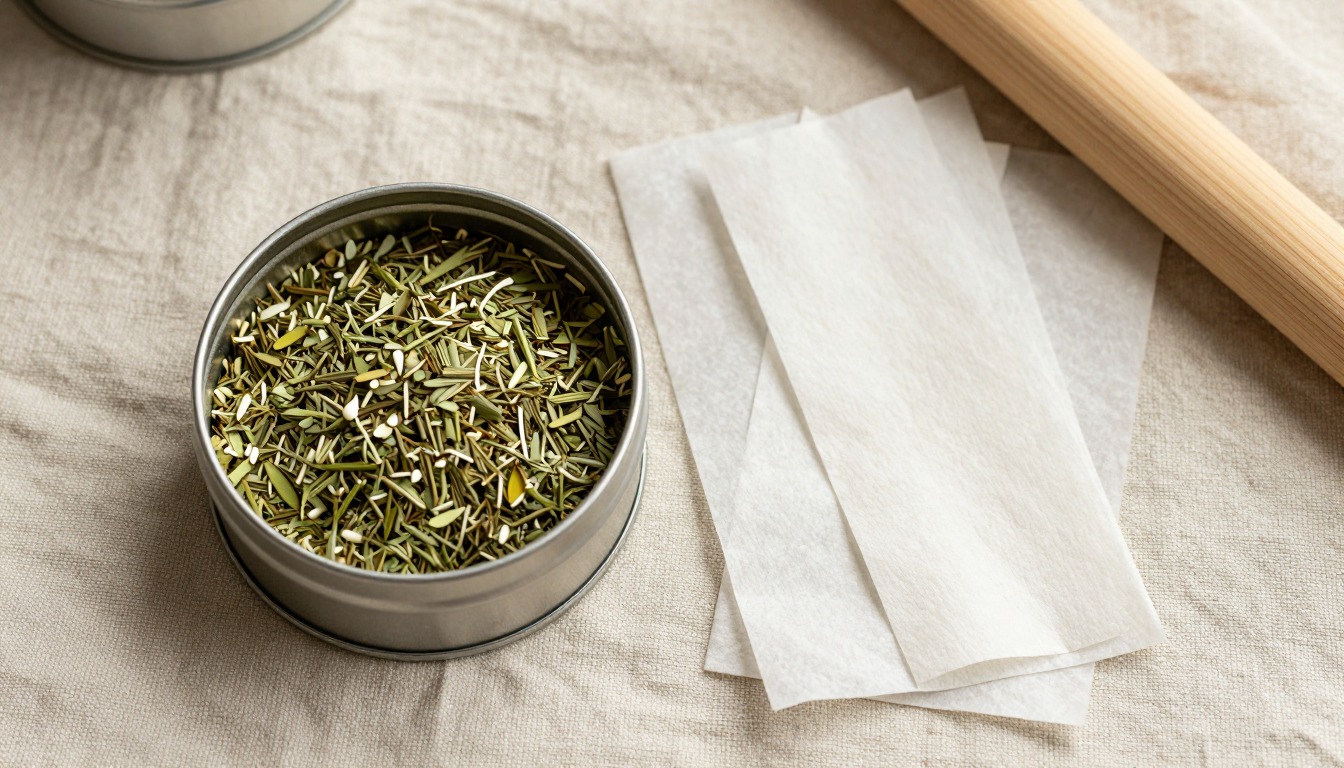
Ritual Herbs Mild and Mild Silver contain the same seven plant ingredients: mullein leaves, blackberry leaves, lotus flower petals, hollyhock leaves, turmeric leaves, licorice root and licorice leaves. The difference lies in composition, mixing ratio and cut. Mild is softer and more balanced, Mild Silver somewhat more distinctive in character.
The seven plant ingredients
mullein leaves
blackberry leaves
lotus flower petals
hollyhock leaves
turmeric leaves
licorice root
licorice leaves
The blends are fine-cut; an even cut supports airflow, dosing and burning behavior. Our product documentation does not list individually how much flavor the turmeric leaves contribute. We therefore describe the blend as a whole: soft and balanced for Mild, somewhat more distinctive for Mild Silver.
On aroma compounds, see Terpenes in herbal blends explained; how the blends are put together overall is covered in Tobacco substitute: what is an herbal smoking blend?.
Frequently asked questions
No. They contain turmeric leaves, not the rhizome and not the spice powder. Both varieties are fine-cut.
The leaf is the above-ground plant part, usually 30 to 45 centimeters long. The rhizome is the underground, yellow to orange root stock from which the spice powder is made. The sources attribute the pigment curcumin to the rhizome.
A cooking site for Singaporean and Malaysian recipes describes fresh leaves as spicy, ginger-like and citrusy. We have not found a specialist source for this. For dried material in a blend, we cannot give a description.
In Goa and on the west coast of India, as a wrapping for Patoleo, a steamed dish of rice paste, coconut and jaggery. In Indonesia, for the curry base of Padang cuisine; in Malaysia, among other things, for rendang from Kedah and Sarawak.
Nothing can be derived from them for the leaves. The sources attribute curcumin to the rhizome, and we do not transfer statements from it to the leaves. Mild and Mild Silver are also not a health product.
No. Both varieties are tobacco-free and nicotine-free.
An honest assessment
Even nicotine-free herbal smoke is smoke. Burning plant material produces harmful substances such as tar[7], and smoking herbal cigarettes produces a high concentration of carbon monoxide; the smoke can also contain heavy metals[8]. This is true regardless of which herb is burning, turmeric leaves included.
What is left out is the nicotine. We claim nothing more. Ritual Herbs is not a health product and not a smoking cessation aid; according to rauchfrei-info.de, there is no reliable scientific evidence that herbal cigarettes effectively help with quitting[8]. The products are intended for adults.
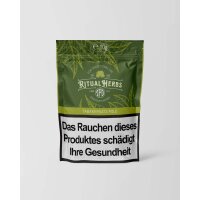
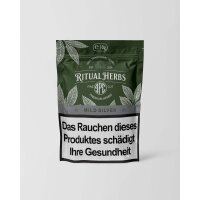
Mild and Mild Silver contain the same seven herbs, mixed and cut differently. Both are available in 10 g and 25 g packs.
Mild and Mild Silver
Read more
Sources
- Wikipedia (in German): Kurkuma
- Wikipedia: Turmeric
- Flora of China: Curcuma longa Linnaeus
- Wikipedia: Patoleo
- Wikipedia: Rendang
- Singaporean Malaysian Recipes (cooking site): What are Turmeric Leaves (Daun Kunyit) & How to Use Them?
- Wikipedia (in German): Kräuterzigarette
- rauchfrei-info.de (in German): Kräuterzigaretten
x
Please sign in to write a comment.