The key points
- Smoking in forests is restricted by state law: in Bavaria and Baden-Württemberg from 1 March to 31 October, in Brandenburg all year round, there also within a 50-metre strip along the forest edge. The rules talk about smoking, not about tobacco.
- The German Weather Service’s forest fire danger index has five levels. In Brandenburg, at levels 4 and 5 the exemptions that otherwise apply to forest owners and other authorised persons fall away as well.
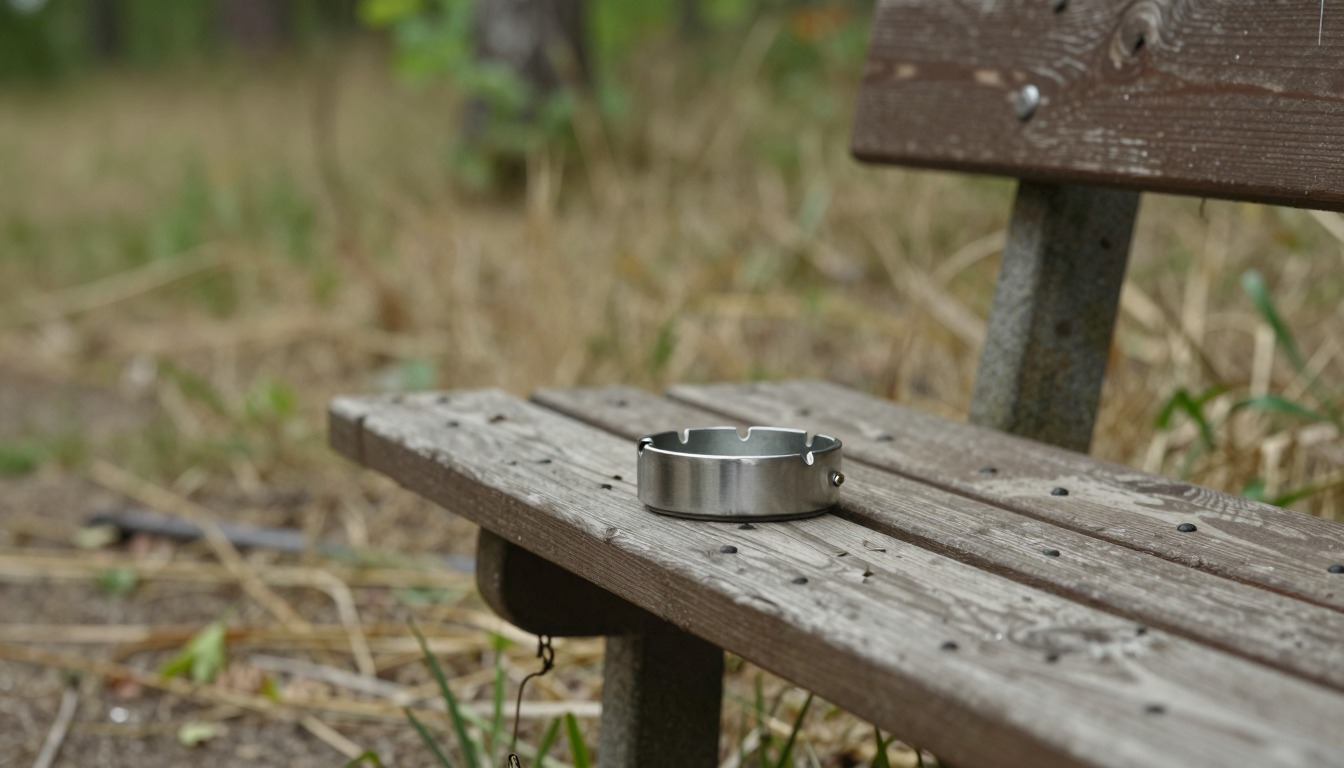
- Put embers out completely, on a non-flammable surface and with water. Burying them or pushing them under leaves is not enough.
- Butts, filters and paper belong in the bin, not in nature. Bring a small container and pack them up.
- Smoke is still smoke, even without tobacco and nicotine. Wind carries it to others: keep your distance and avoid places where children are.
Table of contents
- Loading...
Smoking outdoors mainly means knowing where it is prohibited, putting the ember out completely and taking the leftovers with you.
In forests, the German states regulate smoking, and they do it differently: some prohibit it for the months March to October, Brandenburg all year round and additionally near forests. For gardens, balconies and parks other rules apply; there, house rules, space and consideration for others decide. This guide sorts out what you should check before smoking outdoors. It does not try to talk smoking outdoors up.
Smoking in forests: what applies?
Is smoking allowed in forests?
In Germany, the states regulate smoking in forests. In Bavaria and Baden-Württemberg it is prohibited from 1 March to 31 October. In Brandenburg the ban applies without a time limit, in the forest and less than 50 metres from the forest edge.123
The rules we checked (Bavaria, Baden-Württemberg, Brandenburg) talk about smoking, not about tobacco. For dry leaf litter, a smouldering herbal blend is the same ignition risk as a cigarette. We have found no state regulation that exempts herbal blends. So assume that the ban applies to you.
| State | Rule on smoking | Source |
|---|---|---|
| Bavaria | Smoking in forests prohibited from 1 March to 31 October | Art. 17 BayWaldG |
| Baden-Württemberg | General smoking ban in forests from 1 March to 31 October. Open fires outside the forest at least 100 metres from the forest edge | State of Baden-Württemberg |
| Brandenburg | Year-round smoking ban in forests and less than 50 metres from the forest edge. At forest fire danger levels 4 and 5 it also applies to forest owners and other persons otherwise exempt | § 23 LWaldG |
The table names three states as examples. What counts is the state forest act of the state you are travelling in and, where applicable, any local order. If you hike across state borders, it is worth checking beforehand.
Assessing forest fire danger
The German Weather Service (DWD) publishes a forest fire danger index with five levels, from 1 (very low danger) to 5 (very high danger). The maps are updated once a day, in the morning at around 7 a.m. summer time.4 The calculation takes into account air temperature, humidity, precipitation and wind speed, among other things.5 That is the number you can look up before a trip near forests or heathland.
For context: according to an analysis by the Bavarian State Institute of Forestry (LWF), the mean number of forest fires in Germany fell from 2,611 (1961 to 1990) to 1,139 (1991 to 2020).6 For 2023, the Federal Office for Agriculture and Food (BLE) reports 1,059 fires on around 1,240 hectares. For around 77 percent of the burned area the cause remained unknown, and in second place came negligence at around 14 percent. According to the BLE, more than half of the fires caused by negligence were attributable to the general public, for example campers, forest visitors and children.7 The release does not say how many of them were caused by cigarettes. The State of Baden-Württemberg does write, however, that a single carelessly discarded cigarette is enough to set a forest on fire when leaves and branches are dry.1
Smoking outdoors, step by step
There is no official guide for this. The order is our practical tip and draws on the advice of the forestry authorities.
Schritt 1
Check beforehand.
Look up the DWD forest fire danger level and the rules of your state. If the danger is high or you are in a forest, the blend stays in the pouch.
Schritt 2
Choose a spot.
Find a place with a non-flammable surface, such as stone or a firm path, and at a distance from dry grass, bushes and leaves. Do not park on dry meadow, because a car’s hot catalytic converter can ignite grass. [8]
Schritt 3
Mind the wind.
Wind blows embers away and carries smoke to others. In gusty wind it is better to wait than to shield it with your hand.
Schritt 4
Put the ember out.
Press the remainder out completely on stone or in a container until nothing glows any more, and add water if in doubt. Do not push anything under leaves or soil: embers can keep burning below the surface. [8]
Schritt 5
Pack up the leftovers.
Butt, filter and paper go into a small container and later into the bin. Close the pouch properly after taking some out.
If you discover a fire, call 112 straight away and state the exact location, what is burning and whether people or buildings are in danger. You may try to smother small flames with sand, soil or branches, but only if that is safe, and the fire brigade still has to be called, because embers can keep burning under the ground.8
Butts and filters
Where do butts and filters go?
Butts and filters belong in the bin or in a pocket ashtray, never in nature or drains. The Consumer Advice Centre of North Rhine-Westphalia points out that cigarette filters are made of cellulose acetate, which breaks down only very slowly in nature.10 The WHO estimates that around 4.5 trillion cigarette filters end up in the environment worldwide every year.9
These figures refer to tobacco cigarettes. We know of no measurement for herbal butts. Filters and paper are waste regardless of what was inside, so the same rule applies. A rolled cardboard strip used as a filter also belongs in the bin after smoking, not in the flower bed. The Consumer Advice Centre puts the number of butts on German streets at around 100 to 140 million per year.10
Wind and consideration
Outdoors, smoke does not disappear, it drifts on: to neighbours on the balcony, to people on the next bench, into open windows. So keep your distance, position yourself so that the wind carries the smoke away from others, and if in doubt, briefly ask.
In certain places smoking is restricted by law. In Baden-Württemberg, a new state non-smoker protection act has applied since 1 June 2026, with smoking bans on public children’s playgrounds and on school grounds including schoolyards, among other places. It names classic tobacco products as well as e-cigarettes, heated tobacco products and comparable products regardless of nicotine or cannabis content. Purely plant-based smoking products are not expressly mentioned in the state’s announcement.11 Other states regulate this in their own laws; local law is what counts. In addition, on a balcony or terrace your house rules apply, which you should know.
The simplest rule: where children are, you do not smoke, and where you are unsure, you treat the blend like a cigarette.
The blend on the go
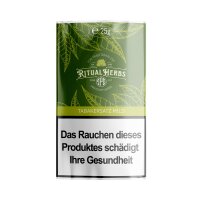
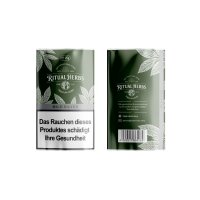
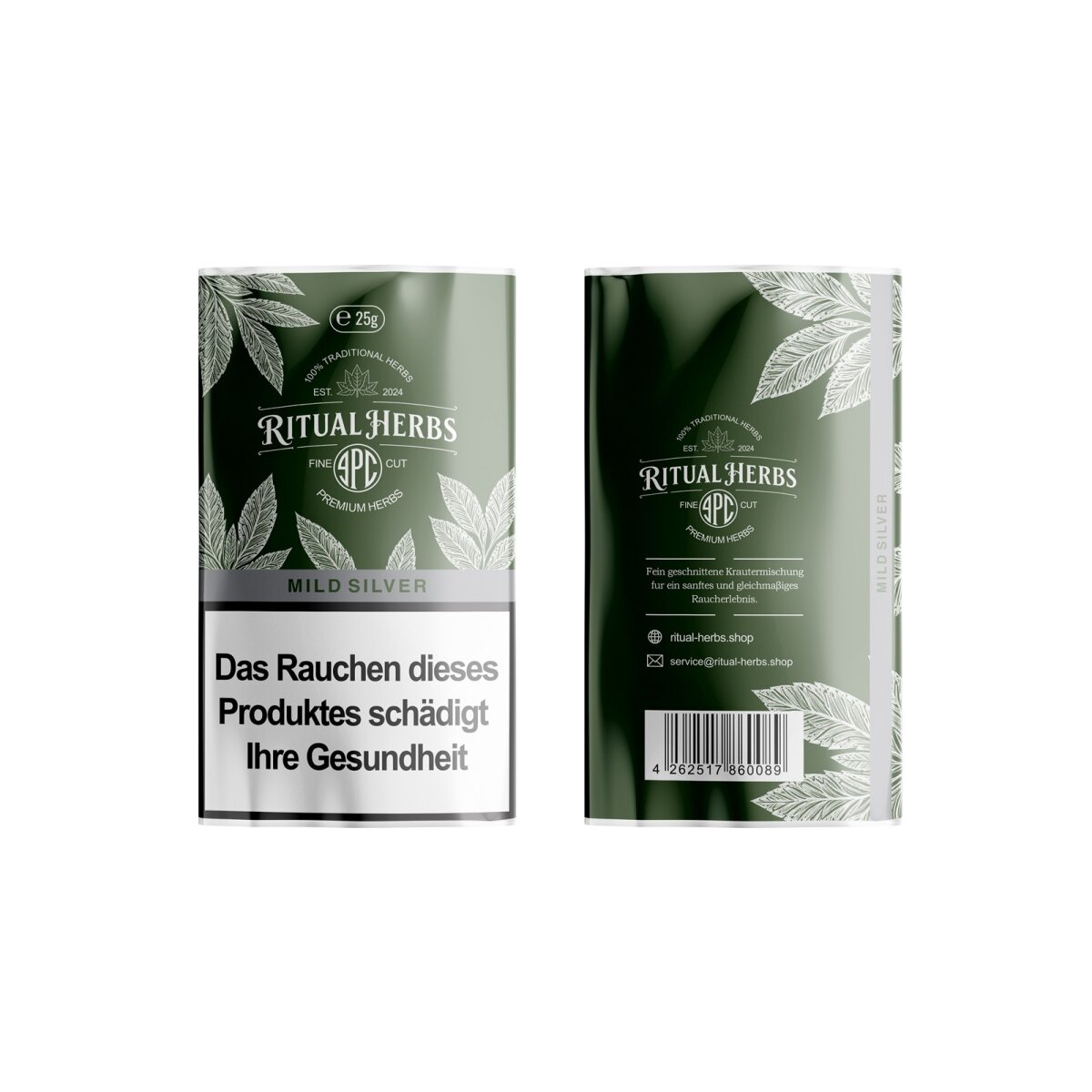
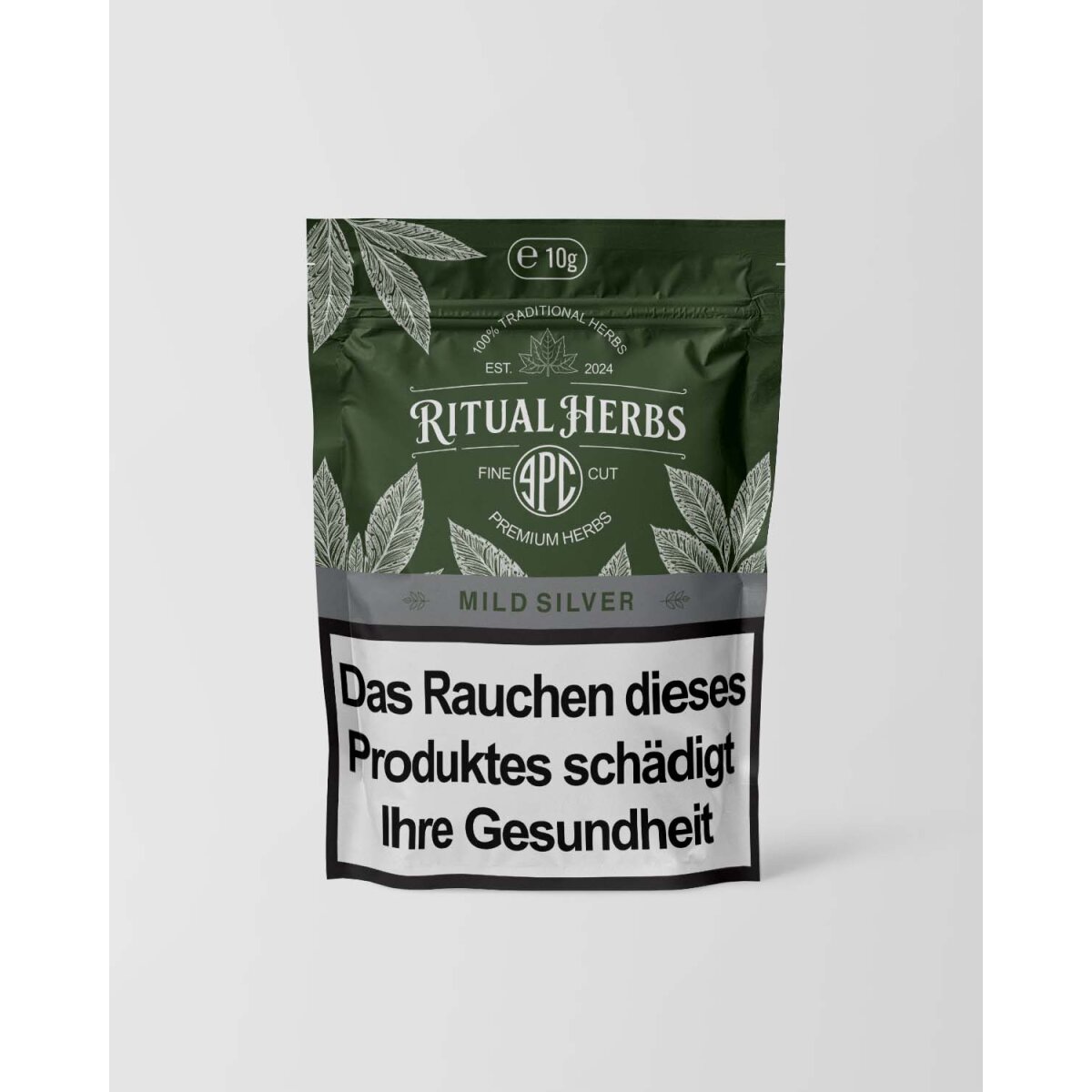
For storage, the manufacturer names three points: cool, dry and protected from direct sunlight. That applies on the go too. A pouch lying in the sun in the car does not fit that. According to the manufacturer, residual moisture partly determines how a blend can be lit and how it burns: too dry and it ignites immediately and burns hard through, too moist and it keeps going out. Both pack sizes from Ritual Herbs are resealable; press them shut cleanly after every use, rather than just folding them loosely closed. According to the manufacturer, the 10 g pack is also suitable for taking along. Both varieties, Mild and Mild Silver, are available under Tobacco substitute. You can find more on storage in the article How to store herbal blends.
How to roll the blend correctly is shown in How to roll and smoke tobacco substitute; what changes when you switch from tobacco is described in Switching from tobacco to herbs. For the facts, see Is smoking herbs harmful?.
Mild and Mild Silver in 10 g and 25 g
Frequently asked questions
Assume not. The state forest acts prohibit smoking, and a smouldering blend is the same risk to dry leaf litter as a cigarette. In Bavaria and Baden-Württemberg this applies from 1 March to 31 October, in Brandenburg all year round. Other states have their own rules.
Press the remainder out completely on stone or in a container until nothing glows any more, and add water if in doubt. Do not push it under leaves or soil: embers can keep burning below the surface.
Pack them up and put them in the bin later, not in nature. Cigarette filters are made of cellulose acetate, which breaks down only very slowly. We know of no measurement for herbal butts; the rule applies regardless of what was inside.
From the German Weather Service. The forest fire danger index has five levels, and the maps are updated once a day. The state forestry authorities also provide information on rules and the situation.
On private property you decide within the limits of the law; on a balcony your house rules apply in addition. Keep your distance from neighbours and open windows and mind the wind.
That depends on the state. In its announcement, Baden-Württemberg names tobacco products, e-cigarettes and comparable products; purely plant-based smoking products are not expressly named. Regardless of that, smoke near children is not a good idea.
We do not claim that. Outdoors the smoke disperses differently, but the combustion products are still produced. Consideration for other people remains.
An honest assessment
Tobacco-free does not mean risk-free. Even nicotine-free herbal smoke is smoke, and burning plant material produces combustion products such as tar and carbon monoxide. In a laboratory study from 2015, both were measured in the smoke of a herbal cigarette (not Ritual Herbs); nicotine was not detectable.12
We do not claim any health advantage over tobacco. Ritual Herbs is not a smoking cessation aid. If you want to quit, you can find free counselling from the Federal Institute for Public Health at 0800 8 31 31 31 (German-language service) and at rauchfrei-info.de (in German).13
Our products are intended for adults who smoke and want to do without tobacco and nicotine.
Sources
- State of Baden-Württemberg: Smoking ban in forests from 1 March (Ab 1. März Rauchverbot in den Wäldern), press release of 01.03.2023 (in German). baden-wuerttemberg.de
- Bavarian Forest Act (BayWaldG), Art. 17 (in German). gesetze-bayern.de
- Forest Act of the State of Brandenburg (LWaldG), § 23 (in German). bravors.brandenburg.de
- German Weather Service: Forest fire danger index (WBI) (Waldbrandgefahrenindex) (in German). dwd.de
- Chtioui Y, Kaulfuß S: Waldbrandprognose (forest fire forecast). waldwissen.net (Forest Research Institute of Baden-Württemberg) (in German). waldwissen.net
- Zimmermann L: Waldbrände in Deutschland (forest fires in Germany). LWF aktuell 154 (2025), on waldwissen.net (in German). waldwissen.net
- Federal Office for Agriculture and Food (BLE): press release on the 2023 forest fire statistics, 07.05.2024. ble.de
- waldwissen.net: Code of behaviour in fire risk areas. waldwissen.net
- World Health Organization (WHO): WHO raises alarm on tobacco industry environmental impact, 31.05.2022. who.int
- Consumer Advice Centre North Rhine-Westphalia: Zigarettenkippen: Teuer für alle, schlecht für die Umwelt (cigarette butts: expensive for everyone, bad for the environment) (in German). verbraucherzentrale.nrw
- State of Baden-Württemberg: Neue Regeln für Raucherinnen und Raucher vom 1. Juni an (new rules for smokers from 1 June), press release of 29.05.2026 (in German). baden-wuerttemberg.de
- Bak JH, Lee SM, Lim HB: Safety assessment of mainstream smoke of herbal cigarette. Toxicological Research 2015; 31(1): 41–48. doi.org/10.5487/tr.2015.31.1.041
- Federal Institute for Public Health (BIÖG): information portal rauchfrei-info.de (in German) with free telephone counselling at 0800 8 31 31 31 (German-language service)
Further reading


x
Please sign in to write a comment.