
Key points
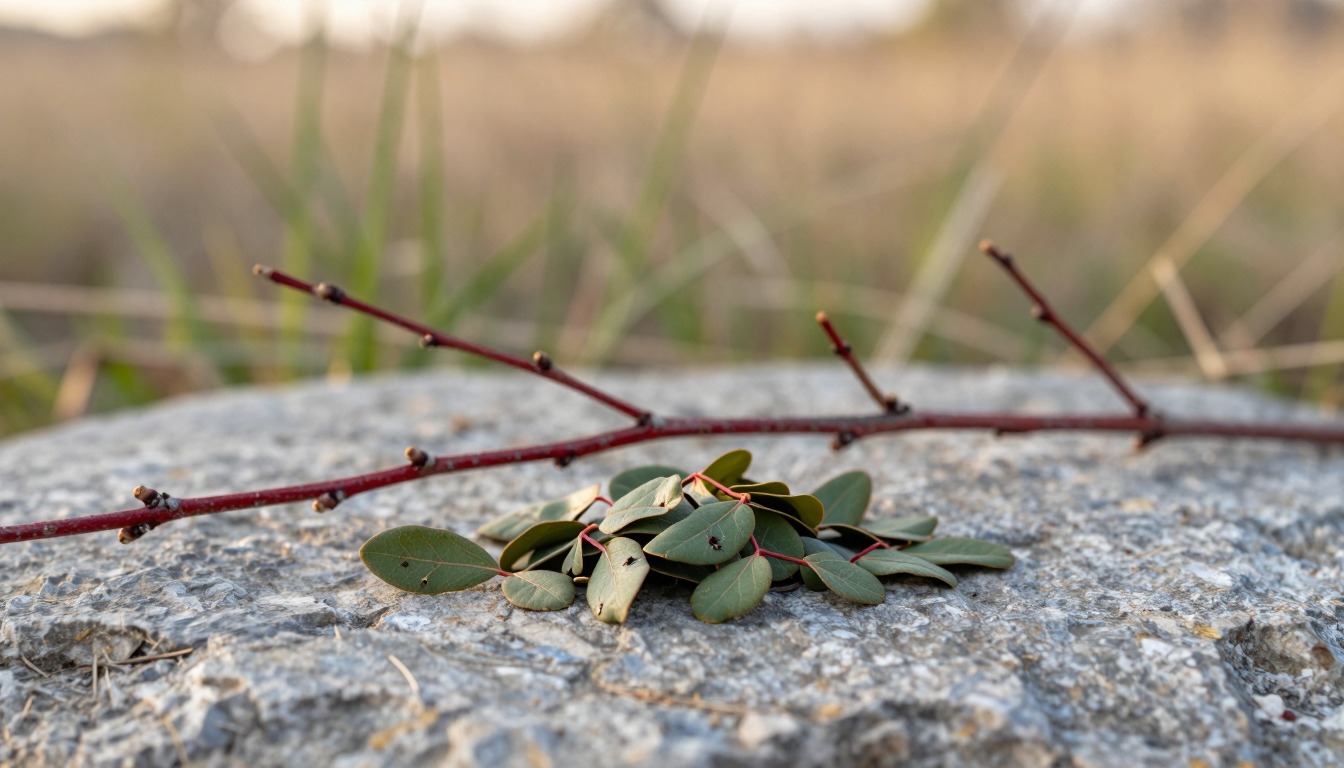
- Kinnikinnick refers to smoking mixtures of leaves and bark that Indigenous peoples of North America put together differently depending on region and nation. The word comes from an Algonquian language and roughly means "mixture".1, 2
- The plant named most often is bearberry (Arctostaphylos uva-ursi), followed by the inner bark of red osier dogwood (Cornus sericea) and sumac species. Whether tobacco was part of the mixture is answered differently by the sources.1, 2, 6
- Pipe residues from the Columbia Basin (Washington) contained nicotine, but no arbutin, the marker of bearberry. That bearberry was the main smoking plant there before contact with Europeans is therefore not proven.10
- Mild and Mild Silver contain none of these plants and are not a copy of kinnikinnick. Smoke is smoke, even without tobacco.
Table of contents
- Loading...
Kinnikinnick is not a single herb but a word for mixtures. It refers to smoking materials made from leaves and bark that Indigenous peoples of North America put together in different ways over centuries. This article collects what can be documented: where the word comes from, which plants are named, where archaeology stands and which gaps remain.
What is kinnikinnick?
Short answer: What does kinnikinnick mean?
Kinnikinnick traditionally refers to smoking mixtures of leaves or bark used by Indigenous peoples of North America. The word comes from an Algonquian language and roughly means "mixture". Later, European settlers also applied it to individual shrubs, most often to bearberry.1, 2
The sources do not agree on exactly where the word comes from. Wikipedia traces it back to Unami Delaware, compares it with the Ojibwe verb giniginige ("to mix") and derives it from Proto-Algonquian.1 The Dictionary of Canadianisms on Historical Principles of the University of British Columbia names Cree or Ojibwe as the origin and gives the meaning "that which is mixed".2
Important for everything that follows: the composition was not fixed. It differed from nation to nation and from place to place. The Cowasuck Band of the Pennacook-Abenaki writes on its own website that the mixture and the amount of each ingredient change from year to year, depending on what is available.11 There is no "original recipe".
Which plants are in kinnikinnick?
Three plants appear again and again in the sources. The table shows what is documented for each and where the statement comes from:
| Plant | Family | Part named | What the source says |
|---|---|---|---|
| Bearberry Arctostaphylos uva-ursi |
Heath family (Ericaceae) | dried leaves | According to the US Forest Service, smoking the leaves is the most frequently reported human use.3 |
| Red osier dogwood Cornus sericea |
Dogwood family (Cornaceae) | inner bark, sometimes leaves | In tobacco mixtures for the pipe; several nations are named.6 |
| Smooth sumac Rhus glabra |
Sumac family (Anacardiaceae) | according to pipe analysis: plant material in the smoking residue | Identified as probable in a pipe from central Washington (radiocarbon dated to 1,334 to 1,524 years before present).9 |
The list is not complete. The Cowasuck Band lists 16 plants on its site that were used in earlier mixtures, including mint, sage, wintergreen and yarrow. Mullein (Verbascum thapsus, German Königskerze) is also on this list, one of the seven ingredients of Mild and Mild Silver. That is a parallel, not a recipe.11 Wikipedia names further dogwood and sumac species.1
Bearberry, dogwood and sumac
Bearberry: the leaf behind the name
Bearberry is a low-growing, evergreen dwarf shrub with long creeping shoots. Its leaves are leathery and dark green, according to the US Forest Service a little over one to two and a half centimetres long.3 It grows circumpolar. In North America its range runs from northern California to Alaska, across Canada and the northern USA to New England and Newfoundland.3 In Europe it occurs from Iceland and northern Norway to the mountains of the Mediterranean region.5
That the plant grows across large parts of the continent does not mean it played the same role everywhere. A university source from Shoreline Community College states that there is little evidence that kinnikinnick was smoked on the Northwest Coast before contact with the Hudson's Bay Company and Western settlers. The source itself does not back this up further.4
A side note on the plant itself: in Germany, bearberry (Echte Bärentraube) is considered endangered and is legally protected.13 Gathering it is not an option.13
Dogwood and sumac
Red osier dogwood (Cornus sericea, German Seidiger Hartriegel) is a shrub 1.4 to 6 metres tall with reddish-purple twigs that grows in wet places along lakes, ponds and watercourses.6 In Germany the species has become naturalised.14
The Plant Guide of the US Department of Agriculture (USDA NRCS) summarises: the inner bark is used in tobacco mixtures intended for the pipe in the sacred pipe ceremony. Citing Daniel Moerman's ethnobotany (1986), it names the Apache, Cheyenne, Dakota, Ojibwe, Potawatomi, Omaha, Ponca and Thompson as well as the Montana Indians as users. According to the guide, the Okanagan-Colville, Flathead, Kootenay and Blackfeet also smoked the leaves or inner bark as a smoking mixture.6 The Lakota knew the inner bark as čhaŋšáša and, according to Wikipedia (citing Cutler 2002), used it alone or with other plants.7
Smooth sumac (Rhus glabra) is a shrub up to about three metres tall with pinnate leaves that turn scarlet in autumn and deep red fruit clusters that stay on through the winter.8 That it was smoked is known from a laboratory analysis: the team around Korey Brownstein and Shannon Tushingham examined smoking residues from two pipes. The older pipe from central Washington, radiocarbon dated to 1,334 to 1,524 years before present, contained nicotine; the authors name Rhus glabra and Nicotiana quadrivalvis as probably smoked. They stress themselves that the method was applied to only two pipes and that contamination or degradation can influence the results.9
What does archaeology say?
Short answer: Was kinnikinnick smoked before contact with Europeans?
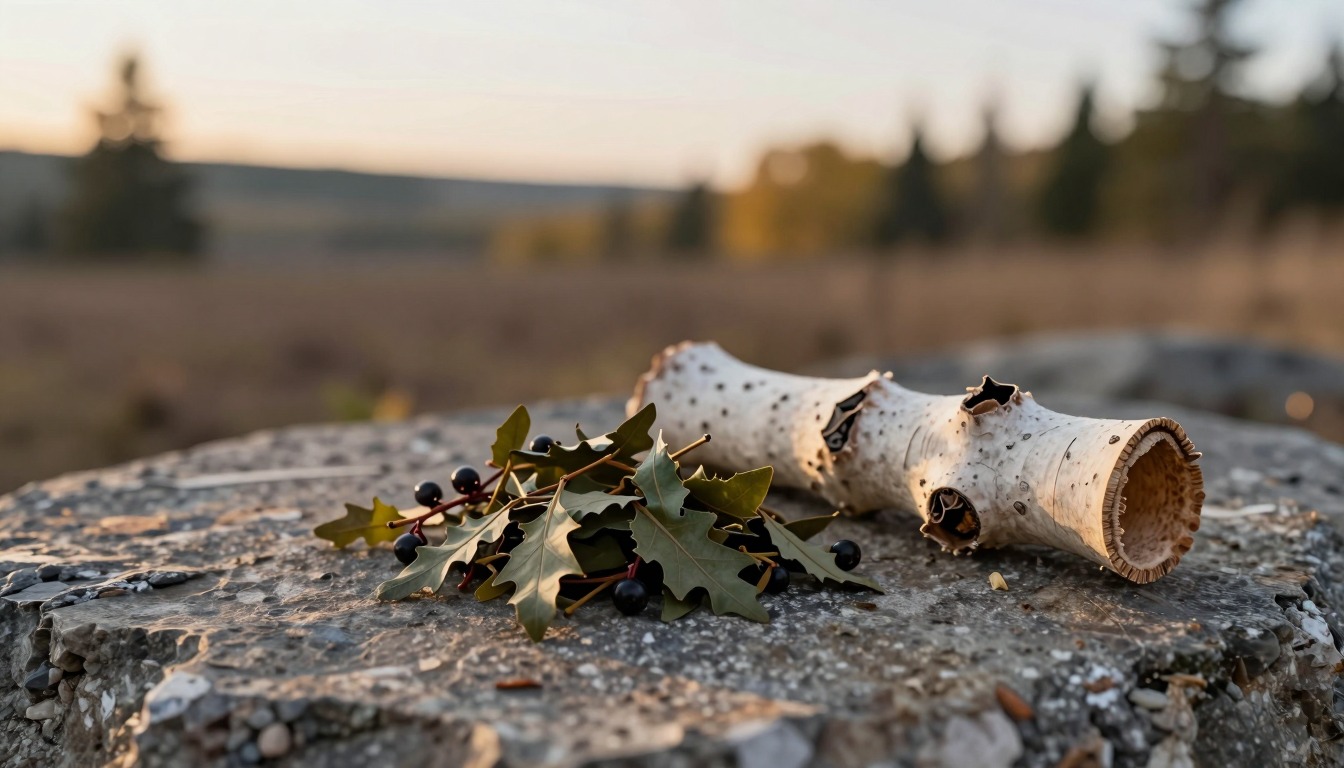
In part yes, but not proven for every plant. A study of twelve pipes and pipe fragments from the Columbia Basin found nicotine in eight and arbutin, the marker of bearberry, in none. That bearberry was the main smoking plant there is therefore not proven; it is not ruled out either.10
The study in the Proceedings of the National Academy of Sciences (2018) analysed twelve pipes and pipe fragments from five sites in the Columbia Basin, ranging from about 1,200 years before present into historical times. Nicotine was found in eight of them. The authors write that early use probably included the tending and cultivation of native tobaccos. Arbutin was absent from all samples, and the authors conclude that kinnikinnick was probably not smoked in any of these pipes. They leave open that the amount was below the detection limit or the sample was too small.10
What this means for this article: the written reports from colonial times and the finds from the ground do not agree everywhere. Both sides have limits. A single study from one region also says nothing about all of North America.
Kinnikinnick and tobacco: substitute or ingredient?
For a brand that sells a tobacco substitute, precision matters here. Historically, kinnikinnick was not simply "smoking without tobacco". The sources paint a mixed picture:
| Source | Statement on tobacco |
|---|---|
| Dictionary of Canadianisms (UBC)2 | The mixture typically contained bearberry or sumac, the inner bark of dogwood "and often tobacco". |
| Cowasuck Band (Pennacook-Abenaki)11 | A typical mixture included sumac or willow bark, native tobacco, spicebush and bearberry. |
| Wikipedia, entry Friedenspfeife (peace pipe, German)12 | Tobacco usually was not part of these mixtures, but some groups smoked it separately. |
| US Forest Service (FEIS)3 | Smoking bearberry leaves as a tobacco substitute is the most frequently reported use. |
Wikipedia also names a rough regional line: eastern groups traditionally smoked Nicotiana rustica for social smoking, while western groups mostly smoked kinnikinnick plants for ceremonial occasions.1 That is a summary, not a rule, and the archaeology from Washington (see above) shows a different picture for the Northwest.10
What we do not explain here
We do not describe any ceremony or pipe practice. The Cowasuck Band writes on its website that many people smoke today for pleasure, but that it is more appropriate to regard the pipe and smoking as "a sacred matter"; there are no right or wrong ways, but everything should be done with respect and reverence.11 Anyone interested in the cultural side will find a better route in the nations themselves and in museums through their collections than in a shop blog. You can read on in Smoke in Indigenous traditions and in Peace pipe and calumet.
We also do not recommend gathering or smoking these plants yourself. We found no study on the smoke of the plants mentioned (see An honest assessment below).
Kinnikinnick and Ritual Herbs
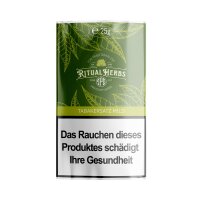
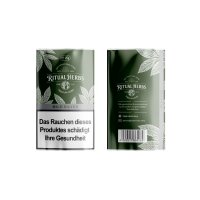
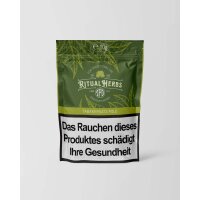
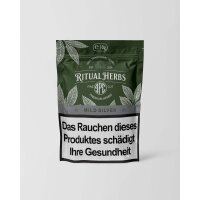
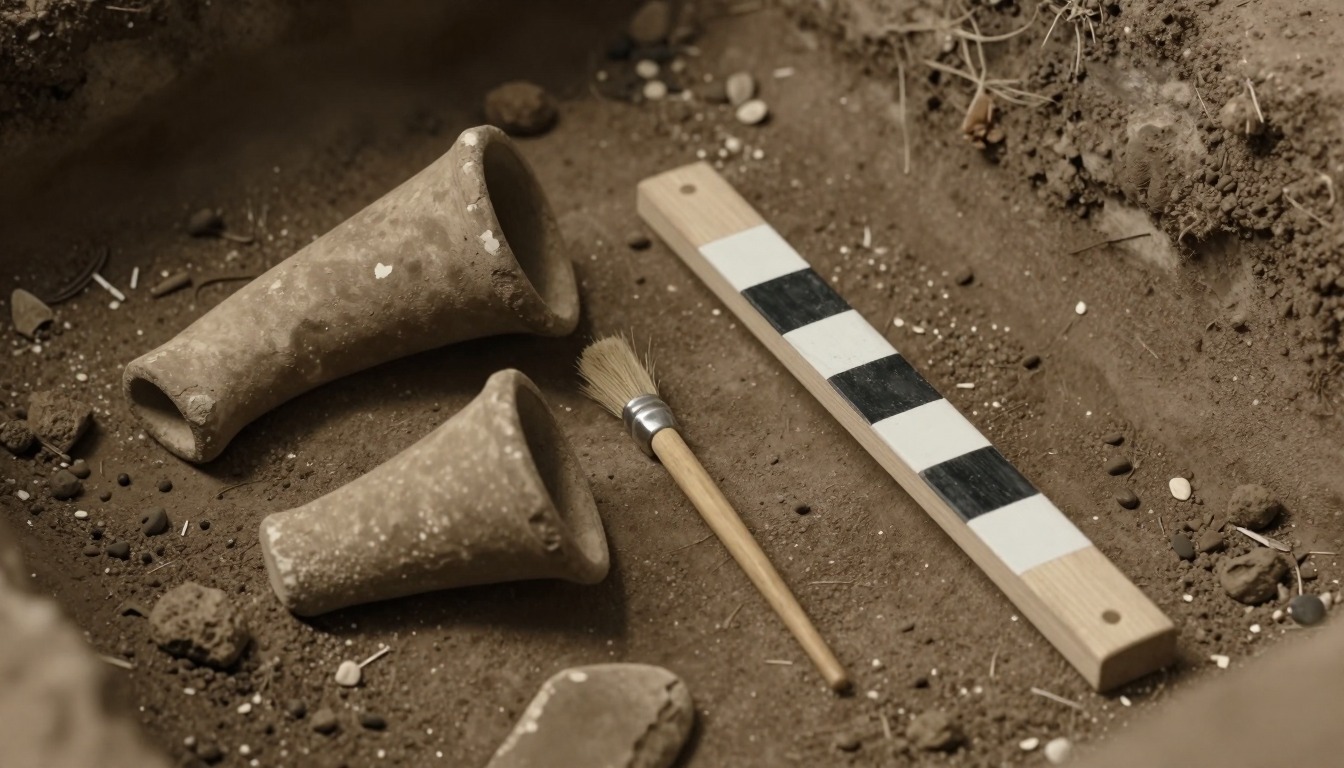
Mild and Mild Silver contain the same seven plant ingredients: mullein leaves, blackberry leaves, lotus flower petals, hollyhock leaves, turmeric leaves, liquorice root and liquorice leaves. Bearberry, dogwood and sumac are not included. Both varieties are tobacco-free and nicotine-free, and the ingredients are listed in full on the pack. The herbs come mainly from Europe, supplemented by selected wild-picked lots from India; cutting, blending and testing take place in Germany.
A mixture is not a new idea, and the word kinnikinnick is a reminder that people put plants together long before us. We claim no more than this parallel: our blends are not a replica of Indigenous smoking mixtures. How we think about choosing plants is described in Herbal tobacco substitute blend, and you can find the range under Tobacco substitute.
Mild and Mild Silver: the blends in the shop
Frequently asked questions
Yes, it is documented for the Columbia Basin in Washington: nicotine was found in eight of twelve pipes examined, and the oldest finds are around 1,200 years old. Which tobacco species was smoked cannot be determined from nicotine alone; the authors consider native tobaccos likely.10
For one pipe from central Washington (1,334 to 1,524 years before present), the analyses point to it as probable. The authors of the study stress that the method was applied to only two pipes and the result is therefore not final. Nothing can be derived from it for North America as a whole.9
No. Mild and Mild Silver consist of mullein, blackberry, lotus flower, hollyhock, turmeric and liquorice leaves as well as liquorice root. Bearberry, dogwood and sumac are not ingredients. Both varieties are tobacco-free and nicotine-free. They are not a replica of Indigenous smoking mixtures and do not rely on their tradition.
No. Even without tobacco and nicotine, burning produces carbon monoxide, tar and other substances that are not good for the body. A review in ACS Omega (2022) concludes that herbal cigarettes are at least as dangerous as normal cigarettes; according to the authors, reliable long-term studies are lacking.15, 16
An honest assessment
Tobacco-free does not mean risk-free. Smoke from plant material contains combustion products. A review in ACS Omega (2022) lists carbon monoxide, polyaromatic compounds and N-nitrosamines among the dangerous substances in herbal cigarettes and concludes that herbal cigarettes are "at least as dangerous as normal cigarettes"; the authors also stress that reliable long-term studies are lacking.15
A Korean study (2015) found more carbon monoxide and benzo[a]pyrene in the smoke of a nicotine-free herbal cigarette than in the smoke of a tobacco cigarette; the smoke condensate was more mutagenic in the test. That concerns a single product, but it shows that "nicotine-free" is not a free pass.16 We found no study on the smoke of the plants in this article.
With Mild and Mild Silver, tobacco and nicotine are left out. We claim nothing more. They are not a health product and not a means of quitting smoking. If you want to stop, you will find free advice at rauchfrei-info.de (in German), the portal of the German Federal Institute for Public Health, and by phone on 0800 8 31 31 31 (Germany).17 Ritual Herbs is aimed at adults.
Read more
Sources
- Wikipedia (en): Kinnikinnick. Retrieved in October 2026. Origin of the word, plants named, east/west, compilation of older sources.
- University of British Columbia: kinnikinik, Dictionary of Canadianisms on Historical Principles. Retrieved in October 2026. Meaning, composition, tobacco.
- USDA Forest Service: Arctostaphylos uva-ursi, kinnikinnick, Fire Effects Information System. Retrieved in October 2026. Botany, distribution, human use.
- Shoreline Community College, Ray W. Howard Library: Kinnickinnick, Arboretum. Retrieved in October 2026. Northwest Coast, time before contact (no individual reference given there).
- Wikipedia (en): Arctostaphylos uva-ursi. Retrieved in October 2026. Distribution in Europe.
- USDA NRCS, National Plant Data Center: Plant Guide: Redosier Dogwood, Cornus sericea L. Retrieved in October 2026. Description, habitat, use of the inner bark (there after Moerman 1986).
- Wikipedia (en): Cornus sericea. Retrieved in October 2026. Lakota name, use (after Cutler 2002).
- Wikipedia (en): Rhus glabra. Retrieved in October 2026. Botany.
- Brownstein KJ, Tushingham S, Damitio WJ, Nguyen T, Gang DR: An Ancient Residue Metabolomics-Based Method to Distinguish Use of Closely Related Plant Species in Ancient Pipes. Frontiers in Molecular Biosciences 7:133, 2020. doi:10.3389/fmolb.2020.00133.
- Tushingham S, Snyder CM, Brownstein KJ, Damitio WJ, Gang DR: Biomolecular archaeology reveals ancient origins of indigenous tobacco smoking in North American Plateau. PNAS 115(46):11742–11747, 2018. PMC6243282.
- Cowasuck Band of the Pennacook-Abenaki People: Ritual Pipes. Retrieved in October 2026. Composition, notes on respectful conduct (the nation's own account).
- Wikipedia (de): Friedenspfeife (peace pipe; in German). Retrieved in October 2026. Kinnikinnick and tobacco.
- Wikipedia (de): Echte Bärentraube (in German). Retrieved in October 2026. Endangerment, protection, restrictions on use.
- Wikipedia (de): Cornus sericea (Seidiger Hartriegel; in German). Retrieved in October 2026. German name, family, distribution.
- Abdel Rahman RT, Kamal N, Mediani A, Farag MA: How Do Herbal Cigarettes Compare To Tobacco? ACS Omega 7(50):45797–45809, 2022. PMC9773184.
- Bak JH, Lee SM, Lim HB: Safety assessment of mainstream smoke of herbal cigarette. Toxicological Research 31(1):41–48, 2015. doi:10.5487/tr.2015.31.1.041.
- German Federal Institute for Public Health (Bundesinstitut für Öffentliche Gesundheit): rauchfrei-info.de (in German). Retrieved in October 2026.
x
Please sign in to write a comment.