
The short version
- On 27 April 2000 the US Federal Trade Commission (FTC) accepted settlements with Alternative Cigarettes, Inc. and the Santa Fe Natural Tobacco Company, and finalised them on 16 June 2000.1, 4
- The charge against Alternative Cigarettes: the company had falsely claimed that smoking its herbal cigarettes Herbal Gold and Magic does not carry the health risks of tobacco cigarettes. According to the complaint, their smoke also contains tar and carbon monoxide.1, 2
- The requirement for packaging and advertising of herbal cigarettes: “Herbal cigarettes are dangerous to your health. They produce tar and carbon monoxide.”3
- The orders concern the US companies named. This article is not legal advice for Germany.
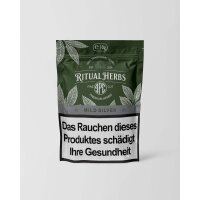
- For Mild and Mild Silver, Ritual Herbs says what is missing (tobacco, nicotine) and makes no statement about whether the smoke is harmless.
Table of contents
- Loading...
FTC and herbal cigarettes: there is a file on record that you can read in the original. In 2000 the US Federal Trade Commission took action against advertising for herbal cigarettes and agreed warning labels with the companies. Here is what the FTC documents say, what they do not say, and why we make no claims about harmlessness for Mild and Mild Silver.
What happened in 2000?
In short: what did the FTC decide on herbal cigarettes in 2000?
On 27 April 2000 the Federal Trade Commission accepted settlement agreements with Alternative Cigarettes, Inc. (Buffalo, New York) and the Santa Fe Natural Tobacco Company (Santa Fe, New Mexico). Both agreements required the companies to state on packaging and in advertising for herbal cigarettes that they produce tar and carbon monoxide and are dangerous. On 16 June 2000 the FTC finalised both agreements.1, 4
| Date | Step | Source |
|---|---|---|
| 27 April 2000 | The FTC accepts the settlements with Alternative Cigarettes, Inc. (FTC File No. 992-3022) and Santa Fe Natural Tobacco (992-3026) for public comment; vote 5–0, comment period until 30 May 2000 | 1 |
| 14 June 2000 | Date of issue of the Decision and Order in the Alternative Cigarettes case (Docket C-3956) | 3 |
| 16 June 2000 | The FTC finalises both agreements after the comment period | 4, 6 |
Besides the company, the documents also name Joseph Pandolfino personally as a party.3, 6 The FTC’s case page lists the complaint, exhibits, order and press releases; anyone who wants to read the originals can start there.6
What did the FTC object to in herbal cigarette advertising?
The two cases had two strands. The first concerned tobacco cigarettes advertised as having “no additives” (Natural American Spirit from Santa Fe); for these the FTC prescribed a separate notice, see below. The second concerned herbal cigarettes, and that is what this article is about.1, 2, 5
| Tobacco cigarettes “without additives” | Herbal cigarettes | |
|---|---|---|
| Brands according to the FTC | Natural American Spirit (Santa Fe); two tobacco brands from Alternative Cigarettes (names not given) | Herbal Gold and Magic (Alternative Cigarettes); at Santa Fe, tobacco-free herbal cigarettes without brand names in the announcement |
| Claim objected to | Advertising with “no additives” | Smoking them does not carry the health risks of tobacco cigarettes |
| FTC response | Mandatory notice “No additives in our tobacco does NOT mean a safer cigarette.” | “this claim is false” (Analysis) |
| Reasoning | According to the FTC analysis, the smoke of the tobacco brands contains carcinogens and toxins, including tar and carbon monoxide | According to the FTC analysis, the smoke contains numerous carcinogens and toxins, including tar and carbon monoxide |
| Source | 1, 5 | 1, 2 |
The complaint accuses the company of falsely representing that smoking these herbal cigarettes does not carry the health risks associated with tobacco cigarettes.1, 2 What the FTC did not do is notable: the press release describes a complaint, not a smoke measurement. The FTC analysis describes the smoke content only qualitatively and gives no measured values.
Jodie Bernstein of the FTC summed it up in the press release: “These cigarettes are marketed with a ‘natural’ aura, but they’re neither healthy nor safe.”1 The quote explains why we do not use the word “natural” as a quality promise for something you smoke.
Which warning labels did the FTC prescribe?
In short: which warning did herbal cigarettes have to carry?
Under the Decision and Order against Alternative Cigarettes, the mandatory text for herbal cigarettes on packaging and in advertising reads: “Herbal cigarettes are dangerous to your health. They produce tar and carbon monoxide.” For other herbal smoking products it reads: “Smoking this product is dangerous to your health. It produces tar and carbon monoxide.”3
| Product | Mandatory text under the Decision and Order |
|---|---|
| Herbal cigarettes | “Herbal cigarettes are dangerous to your health. They produce tar and carbon monoxide.” |
| Other herbal smoking products | “Smoking this product is dangerous to your health. It produces tar and carbon monoxide.” |
| Tobacco cigarettes with “no additives” advertising | “No additives in our tobacco does NOT mean a safer cigarette.” |
| Other tobacco products | “No additives in our tobacco does NOT mean safer.” |
For herbal products, the notice is triggered when advertising or packaging presents them as free of tobacco or nicotine. The list of triggers in the order includes “herbal”, “tobacco-free”, “no tobacco”, “no nicotine” and “nicotine-free”, among others.3 The Santa Fe analysis describes the same for its tobacco-free products: the notice belongs on the packaging and in advertising, there in a rectangle the size of the US Surgeon General’s warning (according to the draft settlement).5
There is one exception: the notice is not required if the companies possess and rely on “competent and reliable scientific evidence” that their herbal smoking products “do not pose any material health risks”.3 The exception therefore presupposes that the company has such evidence.
What is a consent order and who does it bind?
A consent order is a settlement. The FTC writes in its press release: “A consent agreement is for settlement purposes only and does not constitute an admission of a law violation.” So the companies admitted nothing. On the final order, the FTC writes: “Each violation of such an order may result in a civil penalty of $11,000.” Each violation can therefore result in a civil penalty of 11,000 US dollars.1
The addressees are the parties to the proceedings: Alternative Cigarettes, Inc. and Joseph Pandolfino, or Santa Fe Natural Tobacco.3 For Alternative Cigarettes there was also a letter to resellers: the company was to inform its customers that certain existing advertising materials should no longer be used.2 The order’s duration is given in the decision as 14 June 2020 or 20 years after the most recent complaint filed after the order, whichever is later.3 We have not checked what effect it has today.
What does this mean for Ritual Herbs?
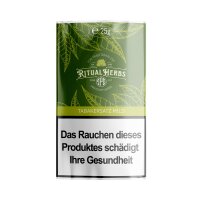
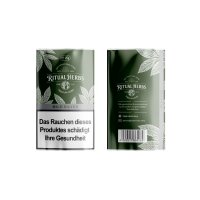
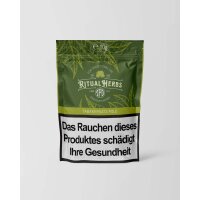
Mild and Mild Silver are tobacco-free and nicotine-free and consist of seven plant ingredients: mullein leaves, blackberry leaves, lotus leaves, hollyhock leaves, turmeric leaves, liquorice root and liquorice leaves. Those are the facts, and they are on the packaging. We go no further.
The FTC file shows why. The FTC prescribed notices where the absence of a substance (additives, tobacco, nicotine) was advertised.1, 2 That terms such as “tobacco-free” and “nicotine-free” appear in the order’s list of triggers means this for us: the terms may be accurate, but they must not claim anything about the smoke. That is why our texts contain no “less harmful”, no “harmless” and no promises of effects. Ritual Herbs sells blends for smoking as a pleasure product, not as a health product.
How German law classifies herbal blends for smoking is explained in Tobacco Products Act and herbal blends. That is orientation, not legal advice. You can find the range under Tobacco substitute; what we say about the blend itself is in Herbal tobacco substitute blend.
What we do not know
- We do not know the wording of the ads at the time. We have not read Exhibits A to I of the complaint; we only know how the FTC summarises the claims.
- In the documents we read, the FTC does not show with its own measurements what is in the smoke of the products. The agency’s argument is: plant material burns, and tar and carbon monoxide are found in the smoke.
- We have not checked whether the notices are still on the packaging of the brands named or how the orders have effect today.
- How a comparable case would look in Germany or the EU is not answered by this article.
Mild and Mild Silver: the blends in the shop
Frequently asked questions
“Herbal cigarettes are dangerous to your health. They produce tar and carbon monoxide.” It applied on packaging and in advertising for herbal cigarettes presented as free of tobacco or nicotine. For other herbal smoking products, the order provided a slightly different wording.3
No. The FTC is a US agency, and the orders are addressed to the companies named. Germany has its own law, which we classify in a separate article. That is not legal advice.3
Our honest take
Tobacco-free does not mean risk-free. In 2000 the FTC stated that herbal cigarettes produce tar and carbon monoxide, and prescribed a warning label for them. This article reports what is in the FTC documents. It does not assess any individual product and is not legal advice for Germany.1, 3
Mild and Mild Silver are not a health product and not an aid to quitting smoking. If you want to quit, you can find information and advice at rauchfrei-info.de, the portal of the German Federal Institute for Public Health (in German), and by phone on 0800 8 31 31 31 (Germany).7 Ritual Herbs is aimed at adults.
Further reading


Sources
- Federal Trade Commission: FTC Accepts Settlements of Charges that “Alternative” Cigarette Ads Are Deceptive. Press release of 27 April 2000. Retrieved October 2026. Companies, charges, requirements, Bernstein quote, vote, comment period, civil penalty.
- Federal Trade Commission: Alternative Cigarettes, Inc. – Analysis of Proposed Consent Order to Aid Public Comment. Retrieved October 2026. Herbal Gold and Magic, assessment of the claim, letter to resellers.
- Federal Trade Commission: Alternative Cigarettes, Inc. – Decision and Order, Docket C-3956. Retrieved October 2026. Mandatory texts, triggers, exception, duration.
- Federal Trade Commission: Announced Actions for June 16, 2000. Retrieved October 2026. Final acceptance of both agreements.
- Federal Trade Commission: Santa Fe Natural Tobacco Company, Inc. – Analysis of Proposed Consent Order to Aid Public Comment. Retrieved October 2026. Natural American Spirit, Part II on tobacco-free products.
- Federal Trade Commission: Alternative Cigarettes, Inc., and Joseph Pandolfino (case page). Retrieved October 2026. Docket, sequence of documents.
- Bundesinstitut für Öffentliche Gesundheit (German Federal Institute for Public Health): rauchfrei-info.de. Retrieved October 2026.



x
Please sign in to write a comment.