Key points
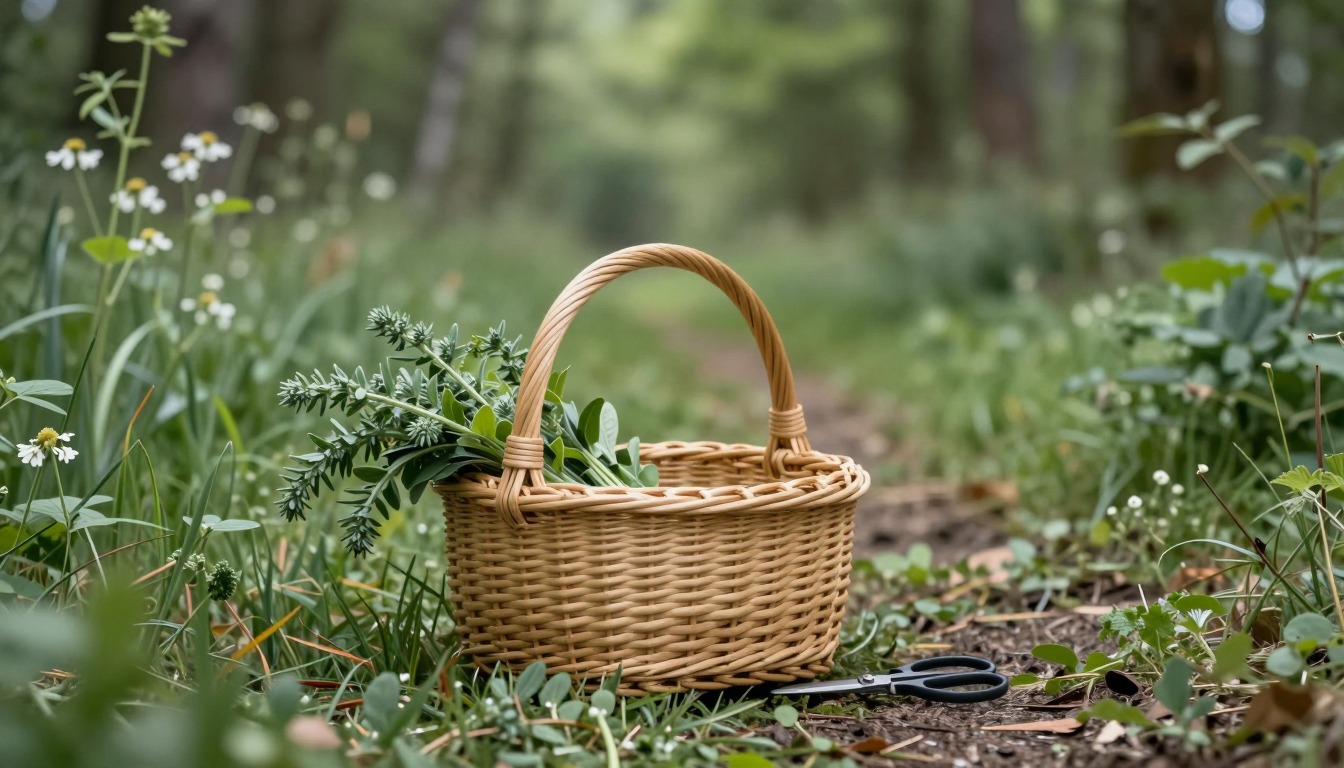
- The “handful rule” (Section 39(3) of the German Federal Nature Conservation Act, BNatSchG) lets you gather certain wild plants “in small quantities for personal use” in a careful way. This applies only at places where entry is not prohibited.1
- Specially protected species, such as arnica, may not be taken from the wild even in small amounts.2, 14
- In nature reserves, national parks and other protected areas, the ordinance for that area sets out what is prohibited. If in doubt, ask the responsible nature conservation authority.4, 5
- The law has no nationwide closed season for picking plants. Fixed periods exist for cutting woody plants and reed beds.1
- This article is no substitute for legal advice or for help with identifying plants, and it is not a guide to smoking wild plants.
Table of contents
- Loading...
Foraging wild herbs: allowed or not? Mostly yes, but only on a small scale and not everywhere. The basis is the Federal Nature Conservation Act (BNatSchG), joined by the Federal Species Protection Ordinance, the ordinances of protected areas and state law. This article sets out what the statutes themselves say, and where the law leaves open what “small” means. The statutes are in German; the quotations below are our own translations.
What does the handful rule allow?
In short: What is the handful rule?
The handful rule is found in Section 39(3) of the Federal Nature Conservation Act. Under it, anyone may carefully take and keep flowers, grasses, ferns, mosses, lichens, fruits, fungi, herbs and twigs of wild plants “in small quantities for personal use”, provided the place is not subject to a ban on entry.1
The starting point is a prohibition. Under Section 39(1) no. 2 it is forbidden to take or use wild plants from their location without a reasonable cause, or to destroy stands of plants.1 Subsection 3 exempts private gathering, “notwithstanding subsection 1 no. 2”. So the exception lifts only this one prohibition. Our reading of the wording: the ban on taking specially protected species in Section 44, the ban for species from Annex V of the Habitats Directive in Section 39(2), and any ban on entry all remain in force.1, 2
What do “small” and “careful” mean?
The statute gives no figure in grams. What is meant is what you can hold in your hand or in a small container for yourself. Careful means that the plant can keep growing and reproduce: you pick single leaves or shoot tips and do not tear out whole plants by the roots. This is our reading of the statutory wording, not legal advice.
Which plants are specially protected?
In short: May I pick protected plants?
No. Under Section 44(1) no. 4 BNatSchG it is forbidden to take wild plants of specially protected species from the wild. The handful rule is no exception to this, not even for a single flower.1, 2
Which species count as “specially protected” is set out in Section 7(2) no. 13 BNatSchG: species in Annexes A and B of EC Species Protection Regulation 338/97, species in Annex IV of the Habitats Directive, and species listed in a statutory ordinance under Section 54.3 One of these ordinances is the Federal Species Protection Ordinance. Its Annex 1 lists animal and plant species in two columns: specially protected and strictly protected.13, 14 An extract of the plants:
| Common name | Scientific name | Protection status under Annex 1 BArtSchV |
|---|---|---|
| Arnica, mountain arnica | Arnica montana | specially protected |
| Yellow gentian | Gentiana lutea | specially protected |
| Gentians (genus entry) | Gentiana spp. | specially protected |
| Primroses, cowslips (genus entry) | Primula spp. | specially protected |
| Snowflakes, including the spring snowflake (genus entry) | Leucojum spp. | specially protected |
| Daphnes (genus entry) | Daphne spp. | specially protected |
| European white water lily | Nymphaea alba | specially protected |
| Peat mosses (genus entry) | Sphagnum spp. | specially protected |
| Clubmosses | Lycopodiales spp. | specially protected |
| Spring pasqueflower | Pulsatilla vernalis | specially and strictly protected |
| Source | 14 | |
For most of these entries the protection applies only to wild populations; a gentian from a garden centre does not fall under it.14 Genus entries (“spp.”) cover several species, and individual exceptions are listed in the annex itself. The list above is an extract and not a complete enumeration. Further species are protected through the EU annexes, so Annex 1 alone is not enough. You can look up the status of a particular species in the Scientific Information System on International Species Protection (WISIA) of the Federal Agency for Nature Conservation.17
On arnica, the Federal Agency for Nature Conservation writes that its population has shrunk “through loss of habitat, intensive use and illegal wild harvesting” (our translation).15 For arnica the rule is therefore: hands off, even a single stem.
How to recognise plants is covered in Identifying wild plants: features, books and apps. How to document what you find is covered in Making a herbarium. And because mix-ups are a risk of their own: which plants are poisonous is listed in the warning list of poisonous plants.
Where is gathering off limits in protected areas?
The federal law has no single rule that says “picking is forbidden in protected areas”. Under Section 22 BNatSchG, the declaration for each area, usually an ordinance, sets the object of protection, the purpose of protection and the requirements and prohibitions.4 The law only provides the framework:
| Type of area | Provision | What the law says |
|---|---|---|
| Nature reserve | Sec. 23 | Prohibited are actions that may destroy, damage, alter or lastingly disturb the area or its components, “in accordance with more detailed provisions”.5 |
| National park | Sec. 24 | Protected like a nature reserve, taking into account its purpose of protection and the exceptions required by its size and settlement.6 |
| Landscape protection area | Sec. 26 | Prohibited are actions that change the character of the area or run counter to its special purpose of protection.7 |
| Natural monument | Sec. 28 | Individual objects or areas of at most five hectares; prohibited are actions that may destroy, damage or alter it.8 |
| Legally protected biotope | Sec. 30 | Protected by law, without an ordinance, for example moors, swamps, reed beds and dry grasslands; prohibited are actions that may lead to destruction or significant impairment.9 |
What follows for your plans is set out only in the ordinance for the area, and these differ from area to area. Whether picking is allowed there cannot be read from the federal law across the board. Under Section 22(4), protected areas must be marked; the details are left to state law.4 The map application “Protected areas in Germany” of the Federal Agency for Nature Conservation shows which areas exist near you.16 The categories partly overlap, so a piece of woodland can lie in several areas at once.
Are there closed seasons?
In short: Is there a closed season for wild plants?
Section 39 BNatSchG names no period for gathering wild plants. Fixed periods apply to something else: hedges, living fences, shrubs and other woody plants may not be cut off, cut back to the stump or removed from 1 March to 30 September, and neither may trees outside forests, short-rotation plantations and horticultural land (Section 39(5) no. 2). Gentle shaping and maintenance cuts remain permitted. Reed beds may not be cut back during this period (no. 3).1
According to Section 39(5), the state governments may set longer prohibition periods and shift the period by up to two weeks for climatic reasons.1 If you want to cut shrub branches, check the date first. And where an area ordinance sets its own periods or quantities, these take precedence.
Forest, meadow, private land: where may you go?
The handful rule applies only where you are not breaching a ban on entry. Whether you may enter an area at all is governed by other provisions:
- Open countryside: Under Section 59(1) BNatSchG, everyone may enter for recreation on roads and paths and on unused land. Under subsection 2, restrictions on entry are possible for important reasons, for example to safeguard legitimate interests of the landowner.10
- Forest: Entering for recreation is permitted under Section 14 of the Federal Forest Act, at your own risk. The states regulate the details and may restrict it for an important reason.12
- Garden, field, managed meadow, fenced area: Section 59(1) names only paths and unused land. Where there is no right of entry, the handful rule does not apply; you then need the permission of the owner or tenant. This is our reading of the wording; the details are governed by state law.
It becomes unclear when the land is managed or the right of entry is restricted. In that case, ask the owner or the authority.
What does a breach cost?
A breach is a regulatory offence under Section 69 BNatSchG. Anyone who takes a wild plant without a reasonable cause, contrary to Section 39(1) no. 2, can be fined up to 10,000 euros. Anyone who takes specially protected plants from the wild, contrary to Section 44(1) no. 4, risks up to 50,000 euros.11 These are upper limits, not standard amounts; the authority sets the actual amount case by case.
For specially protected species there is also a second prohibition: under Section 44(2) no. 1 it is also forbidden to take such plants into possession. No. 2 prohibits selling, buying, offering and exchanging them for the species under Section 7(2) no. 13 letters b and c, which include the species of the Federal Species Protection Ordinance; for species from EU Annexes A and B, Article 9 of the EC Species Protection Regulation remains unaffected.2, 3
And what if you want to sell wild plants?
That is something different from gathering for your own use. Under Section 39(4) BNatSchG, commercial taking, processing or working of wild plants requires the permit of the responsible nature conservation authority, without prejudice to the owners’ rights. It is to be granted if the stock of the species at the place of removal is not endangered and the balance of nature is not significantly impaired.1 The handful rule does not cover this.
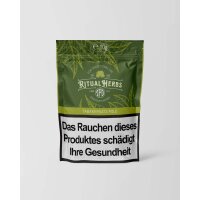
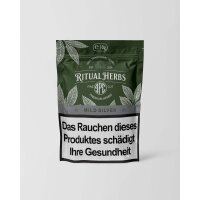
Mild and Mild Silver: the blends in the shop
Frequently asked questions
Yes, in a small quantity for your own use and in a careful way (Section 39(3) BNatSchG), as long as it is not a specially protected species and no ban on entry applies. Entering the forest is governed by Section 14 of the Federal Forest Act, for recreation and at your own risk; the states may restrict it for an important reason.1, 12
The law gives no figure in grams or pieces, only “small quantities for personal use”. What is meant is what you need yourself without harming the population; that is our reading. What is still “small” in an individual case is decided by the authority in a dispute. Area ordinances or state law may set their own limits; if in doubt, ask the responsible nature conservation authority.1
No. Arnica (Arnica montana) is listed as specially protected in Annex 1 of the Federal Species Protection Ordinance, for wild populations. Taking it from the wild is forbidden under Section 44(1) no. 4 BNatSchG, even in a small amount. A breach is a regulatory offence under Section 69 that can be punished with a fine of up to 50,000 euros.2, 14
That depends on the ordinance for the area. In nature reserves the federal law prohibits actions that may destroy, damage, alter or lastingly disturb the area, “in accordance with more detailed provisions”. The details are set out in the ordinance for the area; protected areas must be marked, and the specifics are governed by state law.4, 5
A general closed season for gathering is not in Section 39 BNatSchG. Fixed periods (1 March to 30 September) apply to cutting woody plants outside forests and reed beds. The states may set longer periods and shift the period by up to two weeks; area ordinances may contain their own rules.1
Not without further ado. Commercial taking and processing of wild plants requires the permit of the nature conservation authority under Section 39(4) BNatSchG. For species of the Federal Species Protection Ordinance, such as arnica, possession, sale and exchange are forbidden under Section 44(2).1, 2
An honest assessment
This article summarises statutes as they stood on gesetze-im-internet.de in October 2026. It is not legal advice. Not covered are the nature conservation and forest laws of the individual states, the ordinances of specific protected areas, and mushroom picking. What “small quantity” means in an individual case is decided by the responsible authority. If you are unsure, ask it before you pick.
Foraging and identifying are not an invitation to smoke wild plants. Tobacco-free does not mean risk-free: a review article in ACS Omega (2022) lists carbon monoxide and polycyclic aromatic compounds, among other hazardous substances, in herbal cigarettes.18 Smoke is still smoke. You can find our range under Tobacco substitute. Ritual Herbs is aimed at adults.
Read more

Sources
- Federal Nature Conservation Act (BNatSchG), Section 39 General protection of wild animals and plants (in German). Retrieved in October 2026. Subsection 1 no. 2, subsections 2 to 5.
- BNatSchG, Section 44 Provisions for specially protected and certain other animal and plant species (in German). Retrieved in October 2026. Subsection 1 no. 4, subsection 2.
- BNatSchG, Section 7 Definitions (in German). Retrieved in October 2026. Subsection 2 no. 13.
- BNatSchG, Section 22 Declaration of the protected part of nature and landscape (in German). Retrieved in October 2026.
- BNatSchG, Section 23 Nature reserves (in German). Retrieved in October 2026.
- BNatSchG, Section 24 National parks, national natural monuments (in German). Retrieved in October 2026.
- BNatSchG, Section 26 Landscape protection areas (in German). Retrieved in October 2026.
- BNatSchG, Section 28 Natural monuments (in German). Retrieved in October 2026.
- BNatSchG, Section 30 Legally protected biotopes (in German). Retrieved in October 2026.
- BNatSchG, Section 59 Entering the open countryside (in German). Retrieved in October 2026.
- BNatSchG, Section 69 Provisions on fines (in German). Retrieved in October 2026. Subsection 2 no. 4, subsection 3 no. 8, subsection 7.
- Federal Forest Act (BWaldG), Section 14 Entering the forest (in German). Retrieved in October 2026.
- Federal Species Protection Ordinance (BArtSchV), Section 1 Specially and strictly protected species (in German). Retrieved in October 2026.
- BArtSchV, Annex 1 (to Section 1): Protection status of wild animal and plant species (in German). Retrieved in October 2026.
- Federal Agency for Nature Conservation: Project profile on arnica (in German). Retrieved in October 2026.
- Federal Agency for Nature Conservation: Protected areas (in German). Retrieved in October 2026.
- Federal Agency for Nature Conservation: WISIA, Scientific Information System on International Species Protection (in German). Retrieved in October 2026.
- Abdel Rahman RT, Kamal N, Mediani A, Farag MA: How Do Herbal Cigarettes Compare To Tobacco? ACS Omega 7(50), 2022. PMC9773184.

x
Please sign in to write a comment.