Key points
- The first coffeehouses in Istanbul opened in the early 1550s; two entrepreneurs from Aleppo and Damascus are named as the founders.
- People played backgammon, listened to storytellers and read poems. That smoking took place there can only be shown indirectly in our sources, through the tobacco bans from 1609 onwards.
- In Isfahan, coffeehouses were built from 1598 to 1606 under Shah Abbas I; later, tea replaced coffee in Persia.
- The water pipe appears only at the edge. Mild and Mild Silver are tobacco-free and nicotine-free.
Table of contents
- Loading...
Smoking culture in the Oriental coffeehouse was above all a culture of sitting together. Anyone who stepped into a coffeehouse in Istanbul or Isfahan in the 16th and 17th centuries found carpets, game boards, storytellers and authorities watching the goings-on with suspicion. By “Orient” we mean the Ottoman Empire and Safavid Persia. Here is what can be documented, and what cannot.
How did the coffeehouse come about in the Ottoman Empire?
Quick answer: When did the first coffeehouse open in Istanbul?
The first coffeehouses in Istanbul opened in the early 1550s: two entrepreneurs from Aleppo and Damascus founded them. The exact year is given differently depending on the source.1
The earliest evidence of coffeehouses comes from Mecca and Cairo, from the 1510s. After the Ottoman conquest of the Arab lands, the coffeehouse also became popular in Istanbul and spread into small towns of Anatolia.1 The place was new: men otherwise spent their time at work, in the mosque or at home. Peçevi recorded that at least scholars and literati preferred the coffeehouse to their own homes as a meeting place, because it meant less effort and expense.1
What did an Ottoman coffeehouse look like inside?
Karababa and Ger describe carpets, a stove in the corner and wall niches in which porcelain cups stood. The regulars, mostly older men of higher standing, sat on a raised platform next to the stove, reached by two narrow staircases with railings. Young guests who made too much noise were not allowed to sit there.1 The French traveller Thévenot observed that anyone could go in regardless of occupation, religion or rank.1
What happened there besides drinking coffee?
Quick answer: What was a meddah?
A meddah is a storyteller who performs alone. He adapts his stories to the place and the audience. Meddahs performed in coffeehouses, among other places, and often voiced social and political criticism. UNESCO has listed the art of the meddah on the Representative List of the Intangible Cultural Heritage since 2008.3
A miniature in the Chester Beatty Library in Dublin shows a coffeehouse of the late 16th century with 45 men. Two are playing backgammon, one of them has taken off his turban for it; a dervish chats with lovers of poetry. Chess, mancala, dancers and shadow plays were added to this.1
Poetry gatherings also moved into the coffeehouse: at home they cost the host a lot, and a tavern was not suitable for Muslims, as the Koran forbids wine.1 A poem of the 17th century gets to the point:1
“The heart fancies neither coffee nor coffeehouse / The heart fancies companionship [or conversation], coffee is an excuse.”
Roughly (our translation): the heart wants neither coffee nor coffeehouse, it wants company. Coffee is the excuse.
Where does tobacco come in?
Tobacco reached Ottoman territories across the Mediterranean. The encyclopaedia cites contemporaries who place its arrival in Istanbul between 1598 and 1606, and stresses that this shows mass imports rather than the first import; the latter lay in the 1570s at the latest. The bans followed quickly:2
Schritt 1
1609
First prohibition edict (ferman), justified among other things by people neglecting their work because of smoking and by rising illness and deaths; the protection of traditional production was added. [2]
Schritt 2
1610 to 1619
Further fermans; in 1619 a ferman based on a fatwa. [2]
Schritt 3
1633
Fire in Istanbul, for which tobacco was blamed; under Murad IV stricter controls, with penalties up to the death penalty. [2]
Schritt 4
Mid-17th century
After Murad’s death in 1640 the effect of the bans faded; a fatwa of the Sheikh ul-Islam Bahâî Mehmed Efendi declared tobacco permitted (the encyclopaedia dates it inconsistently, once to 1649). There was no formal repeal. [2]
Schritt 5
1688
First official tax on tobacco. [2]
The Turkish Islamic Encyclopaedia says little about the coffeehouse itself: opponents of tobacco accused people who sat there with useless pastimes of wasting time.2 How much was actually smoked in which house, we could not document. One detail on craft: the pipes of the Ottoman pipe makers were made of clay; with the cigarette paper of the 1860s and the production in Beykoz from 1887 they largely disappeared.2
And the water pipe?
It has an article of its own: Water pipe: from Persia and India into the world. Only this much here: where it comes from is disputed. A handed-down story links it to the court of the Mughal emperor Akbar around 1604; the Persian Safavid kings are said to have been keen users.9 That is not a recommendation to consume.
Why were coffeehouses banned?
Quick answer: Why did the authorities ban coffeehouses?
The authorities saw coffeehouses as places of disorder. A decree to the governor of Bursa from 1578 calls them gathering places of sinners, where backgammon, chess and gambling were played and wine was drunk.1
The decree had to be issued again in 1578. Karababa and Ger read the constant repetitions as a sign that the bans could not be enforced. In 1582 a coffeehouse guild performed a play before the sultan at a festival in Istanbul, and he lifted the ban temporarily afterwards. By the late 17th century the bans had been lifted entirely.1
And in Persia? From coffeehouse to teahouse
Quick answer: What did the Persian coffeehouse look like?
In Isfahan, coffeehouses were built in the first building phase under Shah Abbas I, from 1598 to 1606, on the north side of the Royal Square: six connected, cross-shaped rooms with niches and water basins. People played games and talked about news and politics; preachers, poets and storytellers performed.6 This part relies on secondary sources.
These details come from Farshid Emami’s article in Muqarnas (2016), which we know only through an exhibition page of Loyola University Chicago. A scholarly review in Abstracta Iranica confirms the six coffeehouses on the Royal Square and the building programmes of Shah Abbas I. According to it, the shah visited them himself, for entertainment and to show himself as a visible ruler, and ordered a mullah to be present as a means of control.7
The storytelling coffeehouse has a name in Iran: Naqqâli, dramatic storytelling in verse or prose with gestures, partly music and painted scrolls. UNESCO added it to the List of Intangible Cultural Heritage in Need of Urgent Safeguarding in 2011; the decline of coffeehouses is one of the reasons given there.5
And tobacco? According to Matthee, as a review summarises him, the authorities and the clergy first resisted tobacco, but softened their criticism when the shah began to tax it and clerics used it themselves. In the Qajar period Iran shifted gradually from coffee to tea, also because its price fell; the coffeehouses of this time actually served tea.8 This is how the coffeehouse became the teahouse.
| Istanbul | Isfahan | |
|---|---|---|
| Beginning | Early 1550s, entrepreneurs from Aleppo and Damascus [1] | 1598 to 1606, building programme of Shah Abbas I [6] |
| Performances | Meddah, dancers, shadow plays [1], [3] | Preachers, poets, naqqâl [5], [6] |
| Authorities | Repeated bans [1] | Shah as visitor, mullah for control [7] |
| Later | Meeting place to this day [4] | Tea replaces coffee [8] |
What remains of it today?
The Turkish coffeehouse lives on as a place where people meet, chat, exchange news and read; UNESCO added Turkish coffee culture to its Representative List in 2013.4 More on the break as cultural history is in The smoke break.
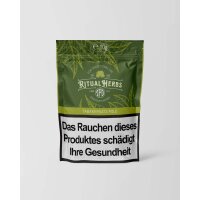
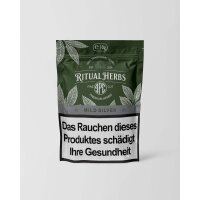
Ritual Herbs does not sell a re-creation of these places. Mild and Mild Silver are nicotine-free blends with the same seven plant components: mullein leaves, blackberry leaves, blue lotus petals, hollyhock leaves, turmeric leaves, liquorice root and liquorice leaves. Tobacco, water-pipe tobacco and coffee are not included. Cutting and blending take place in Germany, the cut loose enough for airflow and firm enough for rolling. If you have smoked tobacco so far, you will find the range under Tobacco substitute and the Mild blend under Herbal tobacco substitute blend.
Mild and Mild Silver: the blends in the shop
Frequently asked questions
The early 1550s. At that time two entrepreneurs from Aleppo and Damascus opened two coffeehouses in the city; the exact year is given differently depending on the source. The earliest coffeehouse evidence at all comes from Mecca and Cairo in the 1510s. After that the coffeehouse spread across Istanbul and into small towns of Anatolia.1
How much was smoked in which house could not be established in our sources. What is documented is that opponents of tobacco accused people pursuing useless pastimes in the coffeehouse of wasting time, and that a guild of pipe makers was founded in the first quarter of the 18th century.2
After a great fire in Istanbul in 1633, for which tobacco was blamed, he tightened controls; penalties ranged up to the death penalty. On his motives and on whether he also closed coffeehouses at that time, we have not opened a scholarly source.2
No. Even without tobacco and nicotine, burning plant material produces carbon monoxide, polyaromatic compounds and N-nitrosamines. A review in ACS Omega (2022) names them as hazardous substances in herbal cigarettes.10 More in Is smoking herbs harmful?
Honest assessment
What we do not know or have not checked. The founding year of the first Istanbul coffeehouse is given differently depending on the source, as is the dating of Murad IV’s bans in the 1630s. We give no figures on executions because we have not opened a reliable source. The statements on Persia rest on an exhibition page and two reviews; we have not read Emami and Matthee ourselves. “Orient” is a collective term from the outside for many regions with histories of their own.
Tobacco-free does not mean risk-free. Smoke from plant material contains combustion products such as carbon monoxide. It forms when carbon-containing substances burn incompletely and binds more strongly to the red blood pigment than oxygen does.12 A Korean study (2015) found more carbon monoxide and benzo[a]pyrene in the smoke of a nicotine-free herbal cigarette than in the smoke of a tobacco cigarette; the smoke condensate showed a higher mutagenic potential in the test. This concerns a single product, but it shows that “nicotine-free” is not a free pass.11
With Mild and Mild Silver, tobacco and nicotine are left out. We claim nothing more. They are not a health product and not a means of quitting smoking. If you want to stop, you can find counselling at rauchfrei-info.de (in German), the information portal of the German Federal Institute for Public Health, and by phone on 0800 8 31 31 31 (German-language service).13 Ritual Herbs is aimed at adults.
Further reading
Sources
- Eminegül Karababa, Güliz Ger: Early Modern Ottoman Coffeehouse Culture and the Formation of the Consumer Subject. Journal of Consumer Research 37(5), 2011, S. 737–760. doi:10.1086/656422; Full text: Bilkent University Repository. Retrieved in October 2026 (pp. 737–754 read). Origin p. 744, furnishings and games pp. 741 and 745, Thévenot and poem p. 745, poetry gatherings p. 746, decree of 1578 p. 748, plays of 1582 pp. 750–751 and 753, lifting of the bans p. 753.
- TDV İslâm Ansiklopedisi: Tütün. Retrieved in October 2026. Arrival, bans 1609 to 1619, Murad IV, fatwa 1649, tax 1688, pipe makers and guilds, cigarette paper.
- UNESCO, Intangible Cultural Heritage: Arts of the Meddah, public storytellers (Türkiye, 2008). Retrieved in October 2026.
- UNESCO, Intangible Cultural Heritage: Turkish coffee culture and tradition (Türkiye, 2013). Retrieved in October 2026.
- UNESCO, Intangible Cultural Heritage: Naqqâli, Iranian dramatic story-telling (Iran, 2011). Retrieved in October 2026.
- Loyola University Chicago, Digital Exhibits (Honors 212): Catalogue Entry: Coffeehouses in the Maydan-i Naqsh-I Jahan Royal Square. Retrieved in October 2026. The details there rest on Farshid Emami, Coffee Houses, Urban Spaces, and the Formation of a Public Sphere in Safavid Isfahan, Muqarnas 33 (2016), S. 177–220, and on Rudi Matthee; neither original opened.
- Alexandra Van Puyvelde: Review of Farshid Emami, Coffee Houses, Urban Spaces, and the Formation of a Public Sphere in Safavid Isfahan. Abstracta Iranica, 2018. journals.openedition.org. Retrieved in October 2026.
- Joshua Lourence: Review of Rudi Matthee, The Pursuit of Pleasure: Drugs and Stimulants in Iranian History, 1500–1900 (Princeton University Press, 2005). The Undergraduate Historical Journal at UC Merced 2(1), 2014, S. 92–93. escholarship.org. Retrieved in October 2026. The book itself not opened.
- Baijayanti Chatterjee: Hookah smoking in colonial Calcutta. Wellcome Collection, 22.02.2022. wellcomecollection.org. Retrieved in October 2026. Origin disputed, Akbar court around 1604, Persian terms and Safavid kings as users.
- Abdel Rahman RT, Kamal N, Mediani A, Farag MA: How Do Herbal Cigarettes Compare To Tobacco? ACS Omega 7(50), 2022. PMC9773184. Retrieved in October 2026.
- Bak JH, Lee SM, Lim HB: Safety assessment of mainstream smoke of herbal cigarette. Toxicological Research 31(1), 2015, S. 41–48. doi:10.5487/tr.2015.31.1.041. Retrieved in October 2026 (abstract via Europe PMC).
- Wikipedia (in German): Kohlenstoffmonoxid. Retrieved in October 2026.
- Federal Institute for Public Health (in German): rauchfrei-info.de. Retrieved in October 2026.
x
Please sign in to write a comment.