
Key points
- Before the match, fire came from sparks and tinder: flint and pyrite or steel struck the spark, and a dry fungus caught it.
- The history of the match in dates: Döbereiner's platinum lighter in 1823, the first recorded sale of John Walker's friction lights on 7 April 1827, the safety match with red phosphorus on the striking surface in 1844 (Pasch's patent).
- White phosphorus made match workers ill. The Viennese physician Lorinser described jaw necrosis in 1845; the ban was signed in Bern on 26 September 1906.
- The spark came back: Auer von Welsbach's ferrocerium of 1903 is still the flint in lighters today.
- This article tells the history of the technology. Which lighter suits which blend is covered in a separate text.
Table of contents
- Loading...
The history of the match is shorter than you might think, and it came at a higher price. For thousands of years fire was a craft of spark, tinder and patience. The friction match you strike from the box today has existed for only about 200 years. Here is what can be documented: from the tinder fungus in the Iceman's kit to the flint in the lighter.
How did people make fire before the match?
Short answer: How did people make fire before the match?
By striking fire: a flint is struck against an iron sulphide such as pyrite or marcasite, later against a fire steel. The spark falls onto tinder, a material that glows easily, made for example from tree fungus, and turns it into an ember.3, 4, 2
The Iceman, Ötzi, lived more than 5,300 years ago.1 Remains of the tinder fungus (Fomes fomentarius) were found with him. That he carried it as tinder is an interpretation, not direct proof of fire-making.3 From the Neolithic site of La Draga in Catalonia, from the oldest settlement phase (5324 to 4977 cal. BC), come 86 fungus remains that archaeologists mostly interpret as tinder fungi. They write that strike-a-light fire needs a material that mediates between spark and flame.3
Tinder often came from tree fungi: the dry, hard mass was made supple by long boiling in lye, and in some cases followed by a bath in hydrochloric acid.2 The tinder material lay in a tin box; with it came a flint and a steel from which sparks were struck.2 With the later fire steel, the steel is struck across the sharp edge of the flint.4
The fidibus: a flame to carry
Anyone who smoked a pipe could take a flame from an open fire. For this there was the fidibus, a folded strip of paper, more rarely a wood shaving, which was lit at the fire in order to light the pipe. According to the Duden dictionary, where the word comes from is unclear; it is probably a jocular Latinised coinage of student slang.5
How did Döbereiner's platinum lighter work?
The Jena professor of chemistry Johann Wolfgang Döbereiner found in 1822/23 that finely divided platinum ignites a stream of hydrogen as soon as air reaches it. From this came the platinum lighter named after him; the Neue Deutsche Biographie describes the ignition of an oxyhydrogen mixture with platinum sponge.6 The device had drawbacks: it occasionally exploded.4
The history of the match: who was John Walker?
Short answer: Who invented the match?
The Science Museum in London lists John Walker of Stockton-on-Tees as the original inventor of the friction match. His idea dates from 1826, and he entered the first recorded sale in his day book on 7 April 1827. The question of the inventor is not answered the same way in all sources; the years and names differ.7, 8
According to an online exhibition on Walker, a dried stick he rubbed on the hearth at home ignited in 1826. On 7 April 1827 the solicitor John Hixon bought 100 matches, and on 7 September 1827 Walker first called his product “Friction Lights”. The matches were drawn through sandpaper. An analysis from 1927 found equal parts by weight of potassium chlorate and antimony sulphide in the ignition mass, mixed with starch and gum. The first pack cost one shilling, plus two pence for the metal tin. Walker did not take out a patent, although he was advised to.7 A specimen of his matches from 1826 is held in the Bryant and May collection of the Science Museum in London, which comprises around 1,200 objects related to fire-making.8
What did white phosphorus cost?
Many early friction matches contained white phosphorus. In 1845 the Viennese physician Friedrich Wilhelm Lorinser published in the Medicinische Jahrbücher his paper “Necrose der Kieferknochen, in Folge der Einwirkung von Phosphor-Dämpfen” (necrosis of the jawbones as a result of exposure to phosphorus fumes). In it he described nine cases from the years 1839 to 1845; it is regarded as the first published description of the jaw disease later called “phosphorus necrosis”.9 Charles Dickens wrote about the problem in Household Words in 1852, and in 1857 a report appeared in New York about a 16-year-old worker in a match factory.10
The countermeasures came in steps. The German law of 13 May 1884 required that matches with white phosphorus be made only in premises used exclusively for that purpose, and barred children from the rooms where they were filled and packed; violations cost up to 300 and 2,000 marks respectively.11 On 26 September 1906 the international convention on the prohibition of white (yellow) phosphorus in the manufacture of matches was signed in Bern. It obliges the contracting states to prohibit the manufacture, import and sale (the holding for sale) of such matches.12, 13 It entered into force on 1 January 1912.13
Since when has the safety match existed?
The solution was known early: red phosphorus. The Swedish chemist Gustaf Erik Pasch received a patent on 30 October 1844 for a process in which the phosphorus no longer sits in the match head but on the striking surface.14, 15 According to a Swedish handbook, the match factory in Jönköping was founded by Johan Edvard Lundström in 1844; it made safety matches from 1852, and in 1855 they were declared the best of their kind at the Paris World Exhibition.15 In principle it is still like this today: the striking surface of the box contains mainly red phosphorus and powdered glass, the match head a mixture of sulphur (or antimony sulphide) and potassium chlorate plus glue. Only when you strike do the two parts meet.16
Where does the spark in a lighter come from?
The spark came back, as metal. Carl Auer von Welsbach discovered ferrocerium in 1903, also called lighter flint or Auer metal, an alloy that gives easily igniting sparks when struck. It was obtained from residues of the monazite sand that the gas mantle industry used up.17, 4 This principle is still found today in nearly every disposable lighter.4
A lighter with a windshield is younger. The US businessman George G. Blaisdell of Bradford, Pennsylvania, hit in 1932 on the idea of improving a bulky Austrian lighter.18 In the patent specification (filed on 17 May 1934, granted on 3 March 1936) the side walls of the inner body form a windshield, and a toothed wheel rubs on the flint.19
Timeline and comparison
Schritt 1
Over 5,300 years ago
The Iceman carries tinder fungus. [1], [3]
Schritt 2
1822/23
Döbereiner discovers the ignition of hydrogen on platinum and builds the platinum lighter. [6]
Schritt 3
1826/1827
Walker's friction matches; first recorded sale on 7 April 1827. [7], [8]
Schritt 4
30 Oct 1844 and 1845
Pasch receives his patent for the safety match (30 Oct 1844). In 1845 Lorinser describes jaw necrosis. [14], [15], [9]
Schritt 5
1884 to 1906
1884: German law on the manufacture of matches. 1903: Auer von Welsbach discovers ferrocerium. 26 Sep 1906: the Bern convention against white phosphorus is signed. [11], [17], [4], [12], [13]
Schritt 6
1932 to 1936
Blaisdell develops a lighter with a windshield; patent granted on 3 Mar 1936. [18], [19]
The techniques at a glance:
| Strike-a-light fire | Platinum lighter | Friction match | Flint lighter | |
|---|---|---|---|---|
| Spark or flame from | Flint and pyrite or steel | Hydrogen on platinum sponge | Match head, striking surface | Ferrocerium, toothed wheel |
| Fuel | Tinder | Hydrogen | Wood or card | Gas or petrol |
| Period | since prehistory | from 1823 | from 1826/27 | from 1903 |
| Source | 3, 4 | 6, 4 | 7, 16 | 17, 4 |
Fire and smoke today
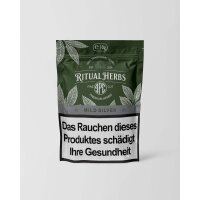
Today, too, craft decides how an ember behaves. With Mild and Mild Silver the cut is chosen so that it stays loose enough for air and firm enough to hold together; material cut too coarse forms hollow spaces, material cut too fine burns too fast. Then there is the residual moisture: too dry, and a blend ignites at once and burns hard; too damp, and it keeps going out.20 Both varieties consist of the same seven plant ingredients: mullein leaves, blackberry leaves, lotus flower petals, hollyhock leaves, turmeric leaves, licorice root and licorice leaves. They are tobacco-free and nicotine-free.20 How to bring blend and accessories together sensibly is explained in How to roll tobacco substitute; the question of the right flame is answered by the article Lighter, match, candle. You can find the range under tobacco substitute. How tobacco itself reached Europe is told in How tobacco came to Europe; the bigger picture is drawn in The history of smoking before tobacco.
Mild and Mild Silver: the blends in the shop
Frequently asked questions
The friction match has existed since 1826/27. With the safety match, the red phosphorus sits on the striking surface of the box instead of in the head; Gustaf Erik Pasch received a patent for it on 30 October 1844. According to a Swedish handbook, the factory in Jönköping made safety matches from 1852.7, 14, 15
A fidibus is a folded strip of paper, more rarely a wood shaving, that you light at an open fire in order to light, for example, a pipe. The word is regarded as dated today. According to the Duden dictionary its origin is unclear; it is probably a jocular Latinised coinage of student slang.5
An honest assessment
What we do not know: the early inventors' names and years diverge between sources, for example at the beginnings of the safety match. We name only what a museum, an authority, a legal text or a scientific publication documents. For Lundström, for instance, sources give different years; we follow the Swedish handbook. Whether the Iceman actually used his tinder fungus to make fire remains an interpretation.
Tobacco-free does not mean risk-free. Smoke from plant material contains combustion products such as carbon monoxide. Carbon monoxide arises from incomplete combustion and, according to the German Environment Agency, binds to the red blood pigment about 200 times more strongly than oxygen.23 A review in ACS Omega (2022) names, among the hazardous substances in herbal cigarettes, carbon monoxide, polyaromatic compounds and N-nitrosamines.21 A Korean study (2015) found more carbon monoxide and benzo[a]pyrene in the smoke of a nicotine-free herbal cigarette than in a tobacco cigarette with the same tar content; the condensates were more strongly mutagenic. That concerns a single product, but it shows that “nicotine-free” is no free pass.22
With Mild and Mild Silver, tobacco and nicotine are left out. We claim nothing more. They are not a health product and not a means of smoking cessation. If you want to quit, you can find advice at rauchfrei-info.de (German-language), the portal of the Federal Institute for Public Health, and by telephone on 0800 8 31 31 31.24 Ritual Herbs is aimed at adults.
Read more
Sources
- South Tyrol Museum of Archaeology: The Iceman. Retrieved in October 2026. Age “over 5300 years”.
- Schwarzwaldportal (in German): Die Zunderherstellung (making tinder). Retrieved in October 2026. Local-history page on tree fungi, lye, flint and steel.
- Berihuete-Azórin M, Girbal J, Piqué R, Palomo A, Terradas X: Punk's not dead. Fungi for tinder at the Neolithic site of La Draga (NE Iberia). PLoS One 13(4), 2018. PMC5918798. Also on the Iceman's tinder fungus.
- Planet Wissen (in German): Feuerzeug (lighter). Retrieved in October 2026. Fire steel and flint, Döbereiner lighter, ferrocerium 1903.
- Duden (in German): Fidibus. Retrieved in October 2026. Meaning and origin.
- Deutsche Biographie (in German): Döbereiner, Johann Wolfgang (NDB 4, 1959; ADB 5, 1877). Retrieved in October 2026.
- Phillumeny.com: Walker the man, Walker the inventor. Retrieved in October 2026. Online exhibition on John Walker, with reference to his day book.
- Science Museum Group: Bryant and May collection of fire-making appliances. Retrieved in October 2026.
- historyofmedicine.com: Lorinser, Friedrich Wilhelm: Necrose der Kieferknochen… (Medicinische Jahrbücher 3, Vienna 1845). Retrieved in October 2026.
- Royal College of Surgeons of England: Phossy jaw and the matchgirls. Retrieved in October 2026.
- Wikisource (Reichsgesetzblatt, in German): Gesetz, betreffend die Anfertigung und Verzollung von Zündhölzern, of 13 May 1884 (RGBl. 1884, no. 14). Retrieved in October 2026.
- Austrian Federal Legal Information System (in German): Internationales Übereinkommen zur Unterdrückung der Verwendung von weißem (gelbem) Phosphor bei der Streichholzfabrikation, Bern, 26 September 1906, Article 1. Retrieved in October 2026.
- Verdragenbank (Netherlands): Convention prohibiting the use of white (yellow) phosphorus in the manufacture of matches. Retrieved in October 2026. Signed 26 Sep 1906, entered into force 1 Jan 1912.
- Tekniska museet (KulturNav): Pasch, Gustaf Erik. Retrieved in October 2026.
- Sweden: Historical and Statistical Handbook, part 2, industries: Match industry (in German: Zündholzindustrie) (Project Runeberg). Retrieved in October 2026. Pasch patent of 30 Oct 1844, factory in Jönköping 1844, safety matches from 1852.
- Lernhelfer (in German): Rund ums Zündholz (all about the match). Retrieved in October 2026. Structure of match head and striking surface.
- TU Wien (in German): Karl Freiherr Auer von Welsbach. Retrieved in October 2026. Raw material monazite sand, sparks on friction.
- Family Business Magazine: Article on the company history of Zippo. Retrieved in October 2026. Blaisdell, Bradford, 1932.
- US patent 2,032,695: Pocket Lighter (Gimera, Blaisdell; Zippo Manufacturing Co.), filed 17 May 1934, granted 3 March 1936. Retrieved in October 2026.
- Ritual Herbs: Product pages Mild and Mild Silver (manufacturer information on cut, residual moisture and ingredients). As of October 2026.
- Abdel Rahman RT, Kamal N, Mediani A, Farag MA: How Do Herbal Cigarettes Compare To Tobacco? ACS Omega 7(50), 2022. PMC9773184.
- Bak JH, Lee SM, Lim HB: Safety assessment of mainstream smoke of herbal cigarette. Toxicological Research 31(1), 2015. doi:10.5487/tr.2015.31.1.041.
- Umweltbundesamt (German Environment Agency, in German): Kohlenmonoxid. Retrieved in October 2026.
- Bundesinstitut für Öffentliche Gesundheit (Federal Institute for Public Health, in German): rauchfrei-info.de. Retrieved in October 2026.
x
Please sign in to write a comment.