The short version
- The hobbits' pipe-weed is a fictional herb. After the prologue, the hobbits call it pipe-weed or leaf; as a plant, Tolkien places it, in essence, in the genus Nicotiana, which means tobacco.1, 2
- In the book, Tobold Hornblower introduces the herb in the Southfarthing of the Shire, around the year 1070 by Shire Reckoning. According to the tradition, the hobbits of Bree were the first to smoke it.2, 3
- According to the text, pipe-weed has nothing to do with cannabis. That reading comes from outside.4
- Tobacco is originally native only to the Americas. That it turns up in Middle-earth is an anachronism, which fans explain through Númenor.5, 6
Table of contents
- Loading...
Tolkien's pipe-weed is, in truth, tobacco with a history of its own. In the prologue to The Lord of the Rings, the hobbits' herb gets a section to itself, with origin, varieties and growing region, almost like a wine guide for the Shire. Here is what the book says about it, what botanists read into it, and where the sources run out.
What is pipe-weed in Tolkien?
Short answer: What is pipe-weed?
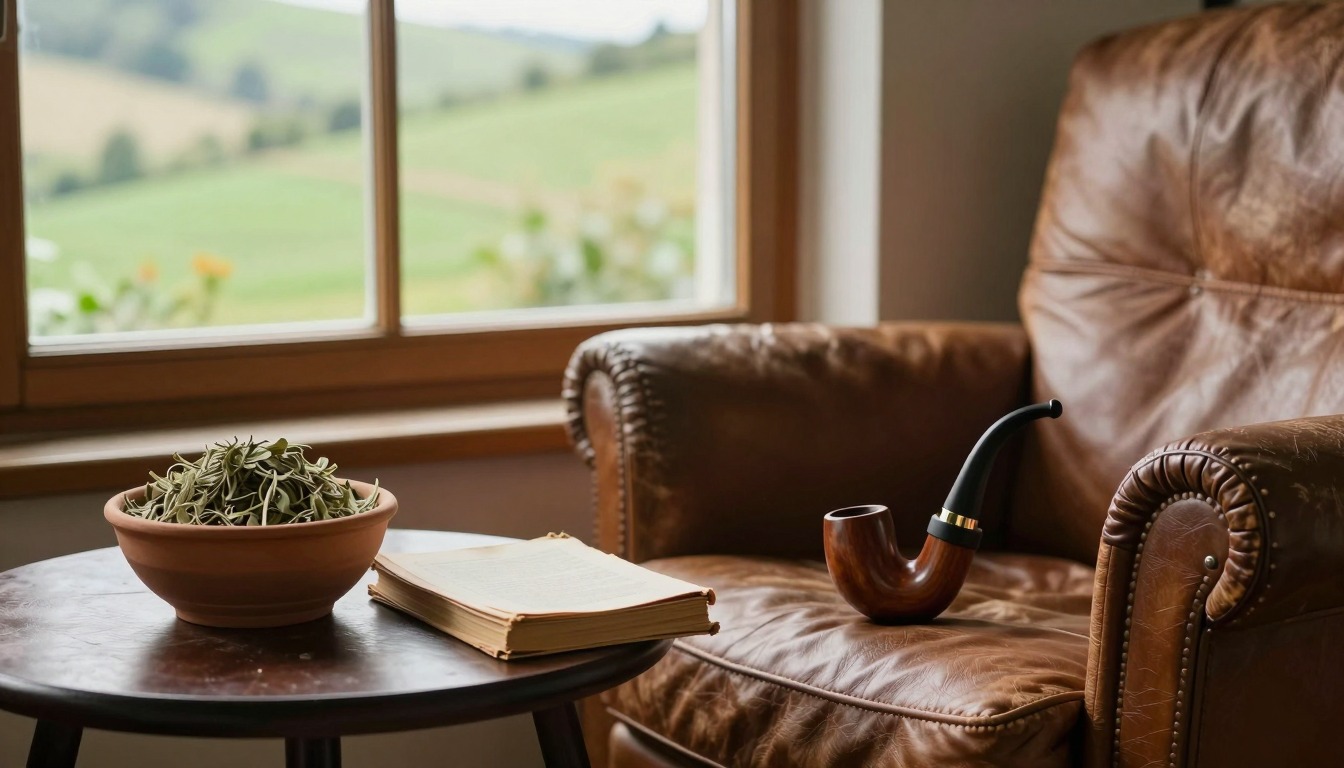
Pipe-weed (also called leaf) is the herb whose smoke the hobbits draw from pipes of clay or wood. According to the prologue (the section “Concerning Pipe-weed”), it is, in essence, a plant probably belonging to the genus Nicotiana. In 2017, the botanist Walter Judd reads it as tobacco in Flora of Middle-Earth.1, 2, 4
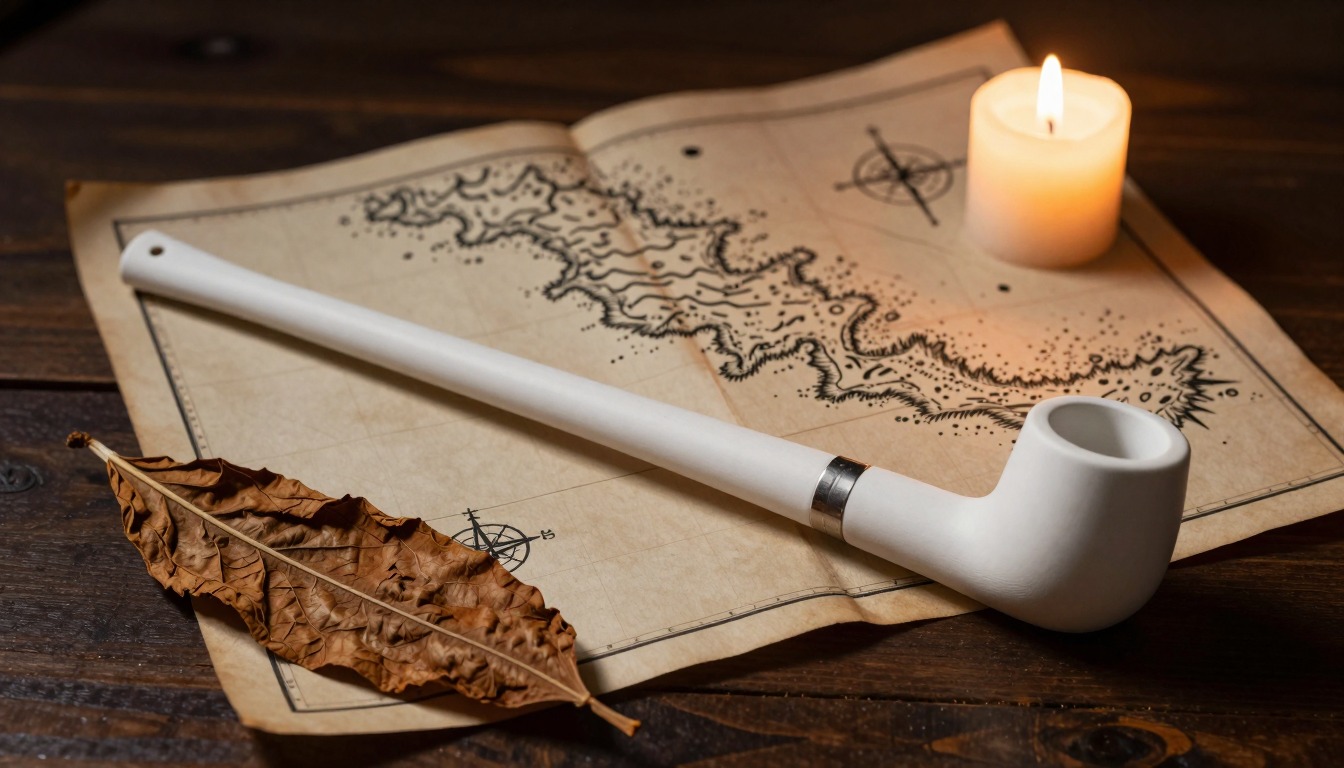
The section appears in the prologue to The Lord of the Rings as the second part after “Concerning Hobbits”. It presents itself as an excerpt from a work within the work: Herblore of the Shire, written by Meriadoc “Merry” Brandybuck in the early Fourth Age.7 The hobbits dry the leaves and smoke them in the pipe. Hence the names Halflings’ Leaf and Leaf.8
Where does the Shire's pipe-weed come from?
The prologue tells a chain of stations. This is the timeline as shown by the fan encyclopedia and an analysis of the prologue:
Schritt 1
Second Age
Númenoreans bring the plant to Middle-earth on their ships. Hence the name Westmansweed. (Sources 6, 9)
Schritt 2
Gondor
The herb grows wild and is valued for the scent of its flowers, not smoked. (Sources 2, 9)
Schritt 3
Bree
The hobbits of Bree are the first to smoke it in pipes. (Source 2)
Schritt 4
The Shire, Shire Reckoning 1070
Tobold Hornblower of Longbottom in the Southfarthing plants the first “true” pipe-weed. (Sources 2, 3)
The encyclopedia converts the year into the Third Age (2670). This conversion is not in the prologue; it is an aid from the editors.2, 3 Where Tobold got his plants, he does not reveal, it says there. The clues point to the land around Bree, where he is said to have travelled in his youth.8 The family name is the translation of the Westron word Raspûta, “horn-blower”.10
Which varieties does the prologue name?
The prologue lists three varieties that count as the best in the Shire: Longbottom Leaf, Old Toby and Southern Star.2 The Encyclopedia of Arda classifies them as follows:
| Variety | Origin according to the encyclopedia |
|---|---|
| Longbottom Leaf | Bred by the Hornblowers, named after Longbottom in the Southfarthing; probably one of the oldest varieties |
| Old Toby | Linked to Tobold Hornblower (his nickname in later years), probably also from the early growing period |
| Southern Star | Little known; the name probably refers to the Southfarthing and to star-shaped flowers |
| Southlinch | The only attested variety from outside the Shire, from the Bree-land, described as weaker than the Southfarthing varieties |
Source: 8
The classification as “probably the oldest variety” and the interpretations of the names are the encyclopedia’s conjectures, not Tolkien’s text.
That the Hornblowers stayed linked to the herb shows later: Merry and Pippin find barrels bearing the family’s mark in the ruins of Isengard.10
Is pipe-weed cannabis?
Short answer: Do hobbits smoke cannabis?
No, not according to the text. Tolkien names the genus Nicotiana, which means tobacco, and the narrative text explicitly speaks of tobacco. Walter Judd, a botanist at the University of Florida, records this in Flora of Middle-Earth in 2017.2, 4
Where does the other reading come from, then? In his article on Judd’s book, the author Peter Hess suspects it stems from dorm-room student culture. That is not proof; it is his conjecture.4 The blogger Nancy Frye, who quotes the prologue in her post, also rejects the reading and points out that the genus Nicotiana includes many species, from the crop tobacco to small ornamental plants, but none of them is cannabis.11
How does an American plant end up in Middle-earth?
This is the question that bothers botanists about pipe-weed. The genus Nicotiana is American: its roughly 75 species are mostly native to South America, a few also to Australia and North America. Europe got to know tobacco through the voyages of Columbus.5 Tobacco therefore does not fit a world before Columbus. How it reached Europe is told in How tobacco came to Europe; the plant itself is explained in Tobacco plant: the botany of the genus Nicotiana.
The fan encyclopedia resolves this within the story: the Númenoreans brought the plant along in the Second Age, and the name Westmansweed points to this origin across the western sea. After that, tobacco is said to have vanished from Middle-earth again and to have been reintroduced much later.6, 9 That is a reading by the editors. That Tolkien himself explains it this way is not proven by the page; the entry contains no direct statement from him on tobacco.6
More on the real history of tobacco and the pipe can be found in Peace pipe and calumet: history and, for the European side, in The clay pipe in Holland.
Sweet galenas: Gondor only smells it
In Gondor the herb is called sweet galenas. According to the prologue, people there value it only for the scent of its flowers.2 The literary scholar John C. Ryan counts pipe-weed, in a chapter on plants in Tolkien, among the plants that work mainly through their scent, and notes that it was not smoked in Gondor.12 Smoking is therefore, in the book, a peculiarity of the North, one that Bree and the Shire develop.
Tolkien and his pipe
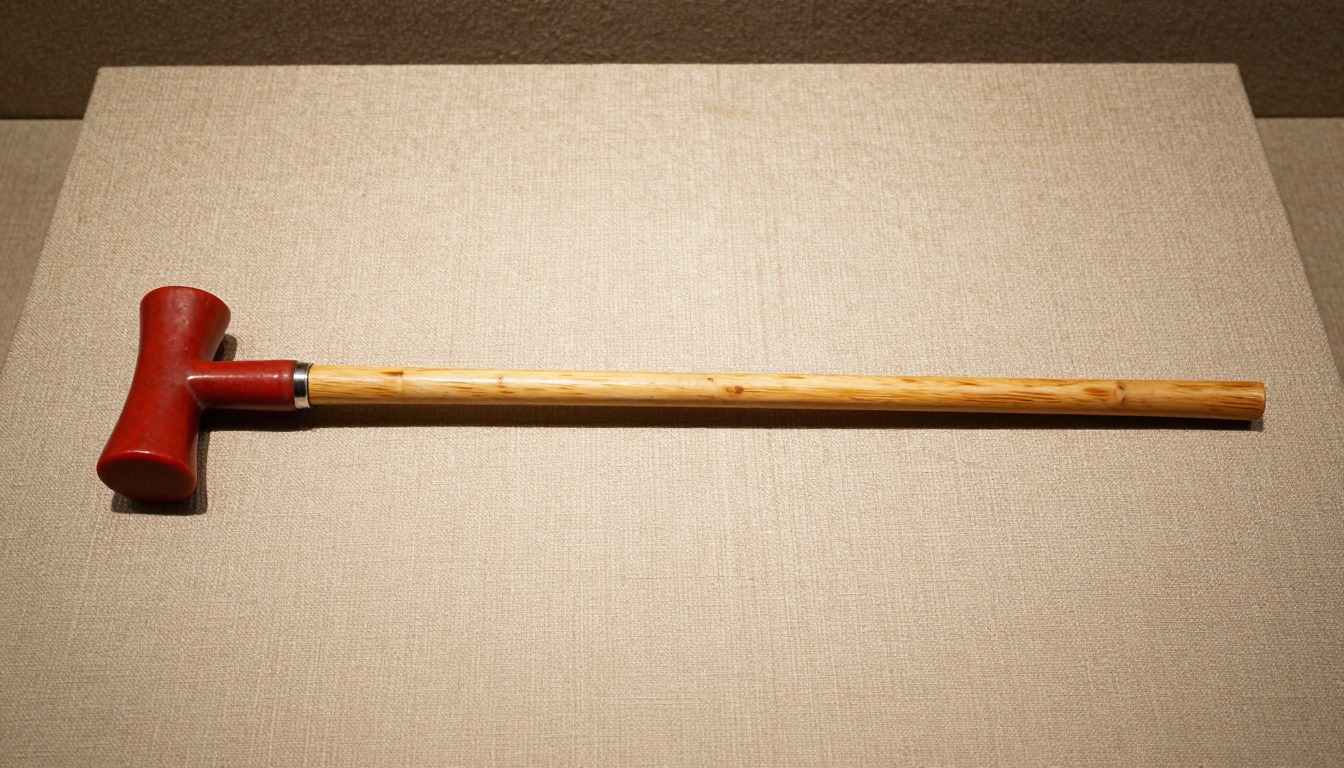
Tolkien smoked a pipe himself. According to a letter to Deborah Webster dated 25 October 1958 (no. 213 in the letters edited by Humphrey Carpenter), he lists his preferences there, including pipe smoking, and describes himself as a hobbit in everything except size.13 In the book, the pipe is part of the Shire’s cosiness, just as it was part of the author’s. More on the history of the pipe itself can be found in Meerschaum pipes: the white mineral from Eskişehir.
What we do not know
- We could not check the wording of the prologue against a printed edition. We have therefore reproduced the statements about the prologue only in essence, following pages that quote it verbatim (sources 2 and 11). The same applies to letter no. 213. The year 1070 appears in two sources; the conversion to the Third Age is an addition by the editors.
- We know the variety names and their origin from the fan encyclopedia, not from printed Tolkien scholarship.
- How tobacco got to Middle-earth is not explained by the text, according to our sources. The Númenor reading is an interpretation.
- We make no statement about the effect of pipe-weed in the book. Anyone who reads something about it should ask for the passage.
Frequently asked questions
No. The prologue names the genus Nicotiana. The botanist Walter Judd states in Flora of Middle-Earth (2017) that pipe-weed is tobacco.4
Yes. According to his letter to Deborah Webster of 25 October 1958 (no. 213 of the letters edition), pipe smoking is among his preferences.13
An honest assessment
Pipe-weed is literature. Tolkien describes a plant that he conceives as tobacco, and a smoking culture that belongs to the Shire. Nothing about the smoke of a real plant can be learned from the book.
Smoke is smoke: burning plant material produces combustion products such as carbon monoxide, even without tobacco. A review in ACS Omega (2022) lists carbon monoxide, polycyclic aromatic compounds and N-nitrosamines among the harmful substances in the smoke of herbal cigarettes.14 Carbon monoxide forms when carbon-containing substances burn incompletely and binds more strongly to the red blood pigment than oxygen does.15
If you want to quit smoking, you can find free counselling at rauchfrei-info.de, the portal of the German Federal Institute for Public Health (in German), and by phone on 0800 8 31 31 31 (Germany).16 Ritual Herbs is aimed at adults.
Further reading
For clarity: Mild and Mild Silver from Ritual Herbs are tobacco-free and nicotine-free and contain no Nicotiana. They are not a health product and not a means of smoking cessation. Ritual Herbs is aimed at adults.
Sources
- J.R.R. Tolkien: The Lord of the Rings, prologue, section “Concerning Pipe-weed”. The content is reproduced in essence after sources 2 and 11; we could not check the book edition itself.
- Ranger of the Realms: Pipeweed: How Saruman Corrupted the Shire, Research. Retrieved October 2026. Prologue quotations (Nicotiana, Bree hobbits, Tobold Hornblower, Gondor, variety names); fan podcast research, not a primary text.
- The Encyclopedia of Arda: Pipe-weed. Retrieved October 2026. Cultivation in the Shire around III 2670 (Shire Reckoning 1070), Tobold Hornblower, Bree.
- Peter Hess: Pipe-weed in Lord of the Rings is tobacco, not weed, Inverse, 15 Aug 2017, on Walter S. Judd and Graham A. Judd: Flora of Middle-Earth, Oxford University Press 2017. Retrieved October 2026.
- Wikipedia (de): Tabak. Retrieved October 2026. Genus Nicotiana, origin in the Americas, route to Europe.
- The Encyclopedia of Arda: FAQ: New World plants in Middle-earth. Retrieved October 2026. Númenor explanation; the entry contains no direct statement by Tolkien.
- The Encyclopedia of Arda: Herblore of the Shire. Retrieved October 2026. Author Meriadoc Brandybuck, reference to the prologue.
- Same site (Pipe-weed), sections on names, varieties, Tobold’s travels, Southlinch. Fan encyclopedia by Mark Fisher, not Tolkien scholarship.
- The Encyclopedia of Arda: Westmansweed and Tobacco. Retrieved October 2026. Name, Númenor, Gondor.
- The Encyclopedia of Arda: Hornblower Family. Retrieved October 2026. Family name, Raspûta, barrels in Isengard.
- Nancy Frye: Concerning Pipeweed, Substack. Retrieved October 2026. Prologue quotation, genus Nicotiana.
- John C. Ryan: Tolkien’s Sonic Trees and Perfumed Herbs: Plant Intelligence in Middle-earth, in: Vieira, Gagliano, Ryan (eds.): The Green Thread, Lexington Books 2015, pp. 37–58. Catalogue entry: rune.une.edu.au. Retrieved October 2026, abstract only.
- J.R.R. Tolkien to Deborah Webster, 25 October 1958, letter 213 in: Humphrey Carpenter (ed.): The Letters of J.R.R. Tolkien. Number, date and recipient after A Pilgrim in Narnia; wording not checked against the letters edition, hence reproduced in essence. Retrieved October 2026.
- Abdel Rahman RT, Kamal N, Mediani A, Farag MA: How Do Herbal Cigarettes Compare To Tobacco? ACS Omega 7(50):45797–45809, 2022. PMC9773184. Retrieved October 2026.
- Wikipedia (de): Kohlenstoffmonoxid. Retrieved October 2026.
- Bundesinstitut für Öffentliche Gesundheit (German Federal Institute for Public Health): rauchfrei-info.de. Retrieved October 2026.

x
Please sign in to write a comment.