The short version
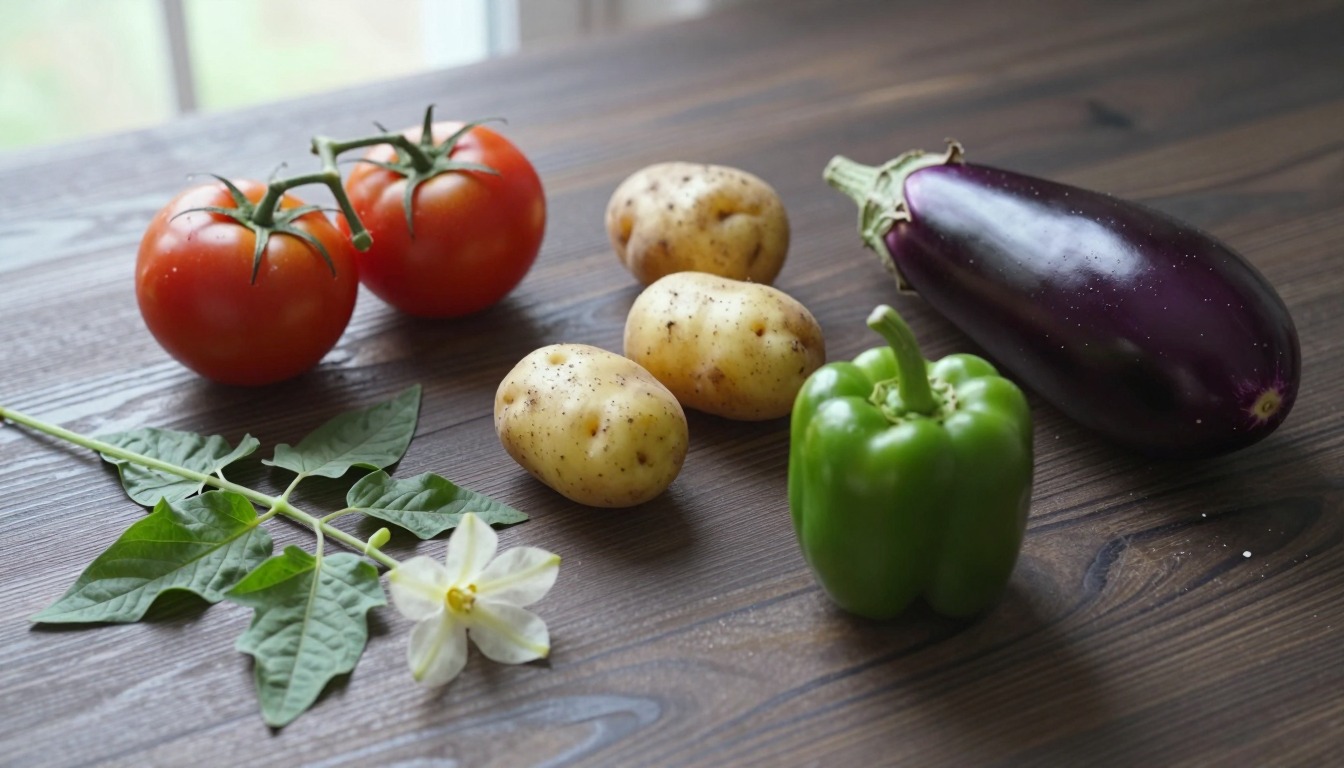
- The nightshade family (Solanaceae) has roughly 90 to 100 genera and, depending on the count, 2,300 to 2,700 species. It includes potato, tomato, bell pepper, aubergine and tobacco.
- Deadly nightshade, thorn apple, henbane and angel’s trumpet belong to the same family. The Bonn poison information centre classes them as “very poisonous”. They are not plants for smoking.
- The family produces many alkaloids, including tropane alkaloids and solanine. Whether a species is a vegetable or a poison depends on the substance and the plant part, not on the family.
- None of the seven plants in Mild and Mild Silver belongs to the nightshade family. This article is a plant portrait, not instructions and not a recommendation to smoke.
Table of contents
- Loading...
The nightshades are one of the largest plant families in the world, and you have probably eaten one today. Potato, tomato and bell pepper belong to it, and so does tobacco – and with deadly nightshade and thorn apple, so do plants the poison information centre classes as “very poisonous”. Here you will find what unites the family, which genera and crop plants belong to it, and why the poisonous species have no place in a smoking blend.
What are nightshades?
Short answer: What are nightshades?
Nightshades (Solanaceae) are a plant family with about 90 to 100 genera and 2,300 to 2,700 species, depending on the source. The largest genus is Solanum; it covers more than half of the species. The centre of diversity lies in Central and South America.1, 2, 3
- Scientific name: Solanaceae1
- Order: Solanales; the sister family is the bindweed family (Convolvulaceae)1
- Size: over 90 genera; species figures: about 2,700 (source 1), over 2,500 (source 2), 2,460 in 102 genera (source 3)1, 2, 3
- Largest genus: Solanum2
- Centre of diversity: Central and South America1, 2
- In our blends: no species from this family
The name comes from the genus Solanum, the nightshade. The German word “Nachtschatten” goes back to Old High German nahtscato. What exactly the name stumbled over is not known for certain: there are several interpretations. The origin of the Latin Solanum is also considered unresolved.1
The species count is so blurry for a reason: the classification is not settled, and the figures change depending on how the genera are delimited. A single number would therefore be false precision.
How do you recognise a nightshade?
At first glance, a potato plant hardly resembles deadly nightshade. The relationship shows in the structure of the flower: the flowers usually have five parts, the leaves are alternate and have no stipules, and the fruit is a berry or a capsule.1, 3
| Feature | Typical for the family | Source |
|---|---|---|
| Growth form | herbs, subshrubs, shrubs, small trees and climbers; usually 0.5 to 4 m tall | 1, 3 |
| Leaves | alternate, without stipules | 3 |
| Flower | usually five-parted, often radially symmetrical, usually hermaphrodite | 1, 3 |
| Fruit | berry or capsule | 2, 3 |
The family is so varied that single features will not get you to an identification. What matters: belonging to the family says nothing about whether a species is edible.
Which genera and crop plants belong to it?
The family ranges from vegetable plants to species the poison information centre classes as “very poisonous”. The sources name potato, tomato, aubergine and bell pepper as food plants.2, 3 A selection of the genera:
| Genus | Common name | Examples | Source |
|---|---|---|---|
| Solanum | nightshade | the most species-rich genus of the family; includes potato and aubergine | 2, 8, 9 |
| Capsicum | bell pepper, chilli | vegetable and spice peppers | 3 |
| Nicotiana | tobacco | tobacco plants | 1 |
| Atropa | deadly nightshade | very poisonous | 3, 4 |
| Datura | thorn apple | very poisonous | 5 |
| Hyoscyamus | henbane | very poisonous | 6 |
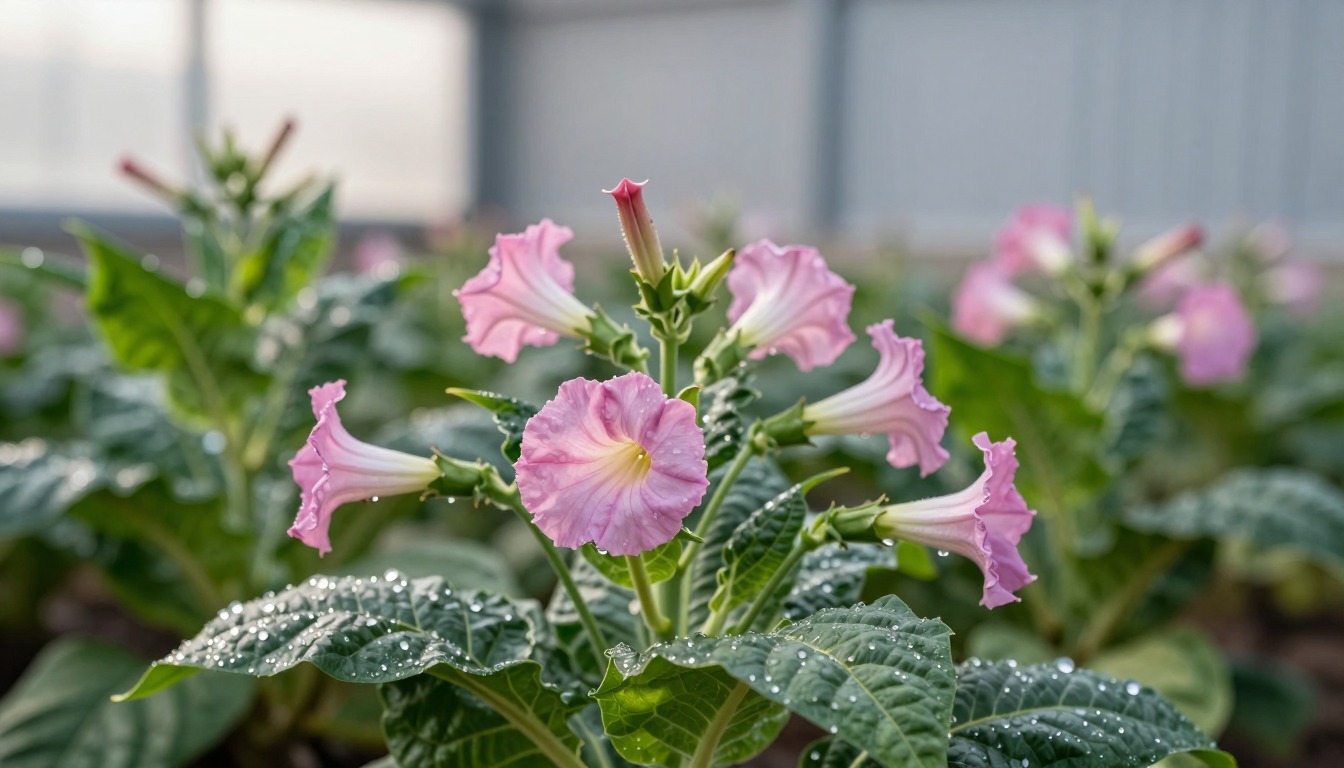
| Brugmansia | angel’s trumpet | very poisonous, ornamental plant | 7 |
The family has its centre in Central and South America. Many of its crop plants only reached Europe with the voyages of discovery. The tomato, for instance, is first described in Europe by the physician Pietro Andrea Mattioli in 1544, in his commentary on Dioscorides. Where exactly it was domesticated is, as things stand, not conclusively settled; much points to Mesoamerica.9
Crop plants have poisonous parts too
For the potato, the Bonn poison information centre gives the solanine content in this order: highest in the sprouts, then in flowers, fruits and leaves, lowest in the tuber. Green or long-stored tubers contain more solanine; fresh, well peeled and cooked, they are the least hazardous.8 That is why you eat only the part the plant was bred for.
Which nightshades are poisonous?
Warning: poisonous, not for smoking, not for eating.
The poison information centre in Bonn classes deadly nightshade, thorn apple, henbane and angel’s trumpet as “very poisonous”. If you suspect poisoning, the centre advises: go to the nearest (children’s) hospital immediately. The poison emergency line in Bonn (German-language service) can be reached around the clock on +49 228 19240.4, 5, 6, 7
What these species have in common is a group of substances, the tropane alkaloids. The poison information centre describes the four plants like this:
| Plant | Classification | Toxins | Where is the poison? | Source |
|---|---|---|---|---|
| Deadly nightshade (Atropa bella-donna) | very poisonous | tropane alkaloids | all plant parts; in children, as few as 3 to 4 berries can trigger symptoms | 4 |
| Thorn apple (Datura stramonium) | very poisonous | scopolamine and related alkaloids | all plant parts; even small amounts can trigger serious symptoms | 5 |
| Black henbane (Hyoscyamus niger) | very poisonous | mainly hyoscyamine and scopolamine | all plant parts, especially roots and seeds | 6 |
| Angel’s trumpet (Brugmansia) | very poisonous | tropane alkaloids, mainly scopolamine, plus hyoscyamine and atropine | all plant parts | 7 |
Deadly nightshade
The poison information centre describes the berries of deadly nightshade as black, shiny, round and cherry-sized, with purple juice. It is exactly this appearance that is the problem: in children, as few as three to four berries can lead to symptoms.4
Thorn apple
In thorn apple, the toxins are present in all parts of the plant. The poison information centre warns: serious symptoms are to be expected even with smaller amounts, and deaths are described in the specialist literature.5
Henbane and angel’s trumpet
In black henbane, all parts of the plant are poisonous, especially roots and seeds.6 Angel’s trumpet is grown as an ornamental plant. According to the poison information centre, a single flower contains about 0.65 milligrams of scopolamine and about 0.2 milligrams of atropine.7 If you have one in your garden, keep children away from it. Collecting, drying or using these plants is not an option.
For more on which plants are ruled out as smoking herbs and why, see Poisonous plants: what you should not smoke.
Why does one family contain so many opposites?
The family is rich in alkaloids. The tropane alkaloids include atropine and scopolamine, for example; solanine belongs to the alkaloid glycosides.3 Plants form such substances as protection against herbivores; they act on the nervous system.2
Solanine in a potato sprout, scopolamine in thorn apple: the same family produces very different substances. Whether a plant ends up counted as a vegetable or a poison depends on the substance and the amount in the respective plant part, not on the family.
Tobacco in the family
Tobacco is a nightshade too: the genus Nicotiana belongs to the family Solanaceae.1, 2 How the tobacco plant is built is covered in Nicotiana: the tobacco plant portrait. Where nicotine comes from and what it is is explained in Nicotine: where does it come from? How tobacco reached Europe is told in Tobacco comes to Europe.
Mild and Mild Silver contain no tobacco and no nicotine.
Nightshades and Ritual Herbs
Mild and Mild Silver contain the same seven plant ingredients: mullein leaves, blackberry leaves, lotus petals, hollyhock leaves, turmeric leaves, licorice root and licorice leaves. None of them is a nightshade: mullein belongs to the figwort family, blackberry to the rose family, lotus to the lotus family, hollyhock to the mallow family, turmeric to the ginger family and licorice to the legumes.10 All ingredients are listed in full on the pack; more in The ingredients of Mild and Mild Silver.
This article does not recommend any plant from the family for smoking. For plant families in our blends, see Plant families of smoking herbs. You will find the range under Tobacco substitute.
Mild and Mild Silver: the blends in the shop
Frequently asked questions
The German word goes back to Old High German nahtscato. Several explanations are given; none is certain. The origin of the scientific genus name Solanum is also considered unresolved.1
The Bonn poison information centre classes the potato plant as poisonous. The sprouts contain the most solanine, the tuber the least. Green or long-stored tubers contain more solanine; fresh, well peeled and cooked, they are the least hazardous.8
An honest assessment
This article presents a plant family. It contains no usage instructions and no recommendation to smoke. What we do not know: the figures for genera and species vary by source, and the exact place of tomato domestication is open.
Tobacco-free does not mean risk-free. Smoke from plant material contains combustion products. A review in ACS Omega (2022) lists among the hazardous substances in herbal cigarettes carbon monoxide, polyaromatic compounds and N-nitrosamines, and concludes that herbal cigarettes are “at least as dangerous as normal cigarettes”; the authors also stress that the data are limited.11 Smoke is smoke.
With Mild and Mild Silver, tobacco and nicotine are left out. We claim nothing more. They are not a health product and not a means of quitting smoking. If you want to stop, you can find free counselling at rauchfrei-info.de (in German), the portal of the German Federal Institute for Public Health, and by phone on 0800 8 31 31 31 (German-language service).12 Ritual Herbs is aimed at adults.
Read more
Sources
- Wikipedia (in German): Nachtschattengewächse (nightshades). Retrieved on 24 October 2026. Size, name, flower structure, order, centre of diversity.
- EBSCO Research Starters: Solanaceae. Retrieved on 24 October 2026. Size, Solanum, features, alkaloids, crop plants.
- DocCheck Flexikon (in German): Solanaceae. Retrieved on 24 October 2026. Size, flower, leaf, fruit, constituents.
- Informationszentrale gegen Vergiftungen, Bonn (poison information centre; in German): Tollkirsche (Atropa belladonna) (deadly nightshade). Retrieved on 24 October 2026.
- Informationszentrale gegen Vergiftungen, Bonn (in German): Stechapfel (Datura stramonium) (thorn apple). Retrieved on 24 October 2026.
- Informationszentrale gegen Vergiftungen, Bonn (in German): Bilsenkraut, schwarzes (Hyoscyamus niger) (black henbane). Retrieved on 24 October 2026.
- Informationszentrale gegen Vergiftungen, Bonn (in German): Engelstrompete (Brugmansia) (angel’s trumpet). Retrieved on 24 October 2026.
- Informationszentrale gegen Vergiftungen, Bonn (in German): Kartoffel (Solanum tuberosum) (potato). Retrieved on 24 October 2026.
- Sixteenth-century tomatoes in Europe: who saw them, what did they look like, and where did they come from? PMC8772448. pmc.ncbi.nlm.nih.gov/articles/PMC8772448. Retrieved on 24 October 2026.
- Wikipedia (in German), the article on each plant, retrieved on 24 October 2026: Königskerzen (mullein), Brombeeren (blackberry), Indische Lotosblume (sacred lotus), Stockrose (hollyhock), Kurkuma (turmeric), Süßholz (licorice). Family membership.
- Abdel Rahman RT, Kamal N, Mediani A, Farag MA: How Do Herbal Cigarettes Compare To Tobacco? ACS Omega 7(50), 2022, pp. 45797–45809. PMC9773184.
- Bundesinstitut für Öffentliche Gesundheit (Federal Institute for Public Health; in German): rauchfrei-info.de. Retrieved on 24 October 2026.

x
Please sign in to write a comment.